12 Best SEO Monitoring Tools Tested by Marketing Teams
We tested 12 SEO monitoring tools with real marketing teams. See how they compare on features, use cases...
Track AI search visibilityNo install
Updated by
8 Min Read
Updated on Feb 10, 2026
12 Best SEO Monitoring Tools Tested by Marketing Teams can make or break your digital marketing strategy in today's competitive landscape. Tracking your website's performance across search engines has become increasingly complex, yet absolutely essential for success. Without proper visibility into your rankings, backlinks, and content performance, you're essentially flying blind.
The challenge, however, lies in choosing the right solution. With dozens of options flooding the market, finding the best AI visibility tracking tools for marketing teams requires careful consideration of features, pricing, and usability.
That's why we've done the heavy lifting for you. Our marketing team has rigorously tested these 12 SEO monitoring solutions to determine which ones actually deliver results in 2026. From established players to innovative newcomers, we've evaluated each tool based on real-world performance.
Whether you're looking to track keyword rankings, analyze competitor strategies, or identify new optimization opportunities, this comprehensive guide will help you find the perfect SEO monitoring partner for your specific needs.
Dageno AI
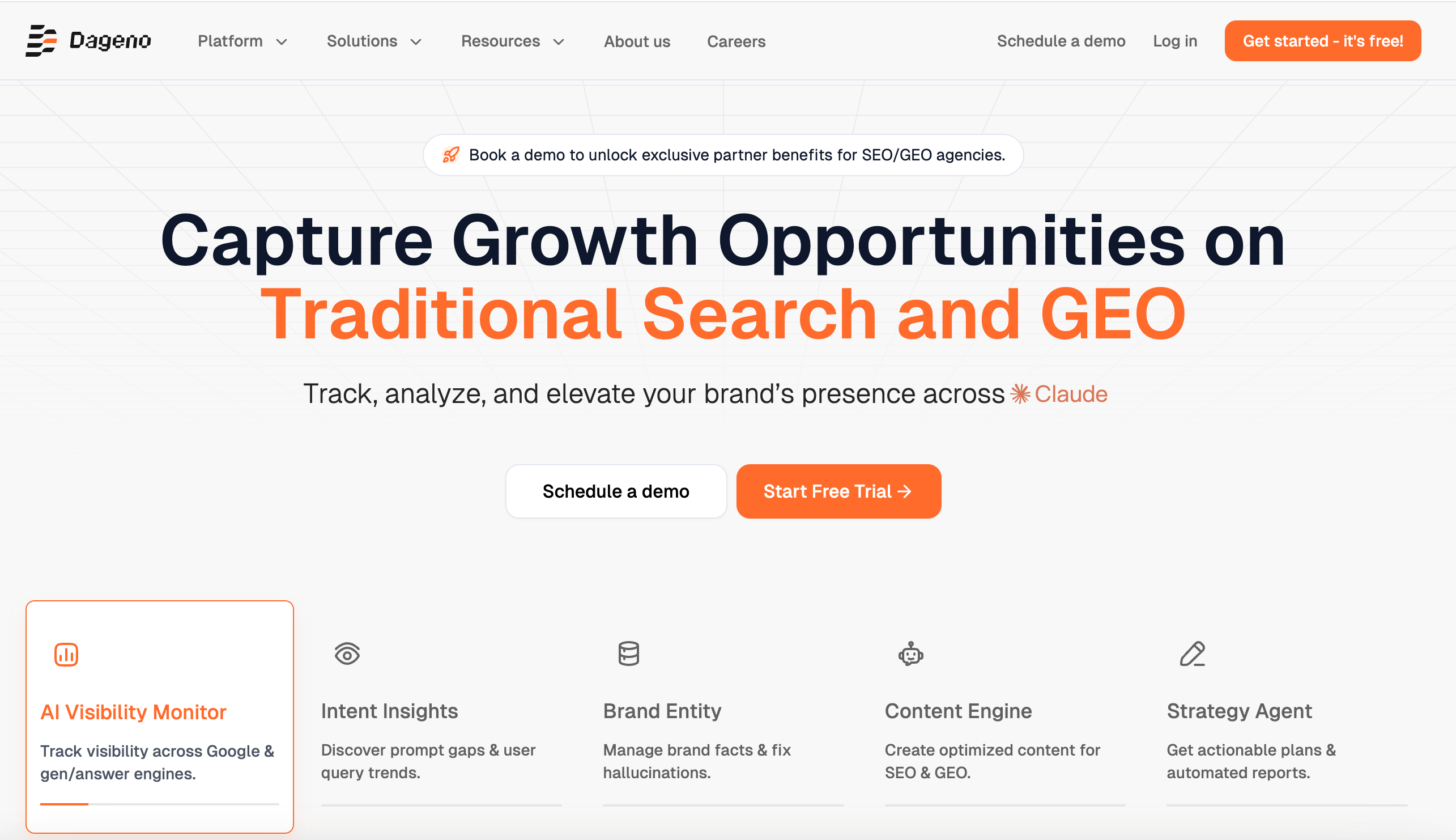
Dageno AI is a comprehensive platform designed for the new era of Generative Engine Optimization (GEO). It stands out by integrating traditional SEO data with deep AI visibility metrics, providing a unified "AI Trust" view that helps brands understand not just if they are mentioned, but how they are perceived and recommended by AI systems.
Dageno AI Key Features
Dageno AI monitors brand visibility across a wide range of AI models, including ChatGPT, Perplexity, Gemini, Claude, Grok, DeepSeek, and Google AI Overviews.
Its AI Visibility Monitor tracks rankings and citations in real AI responses, while the Intent Insights tool helps discover prompt gaps and user query trends. A unique feature is the Brand Entity manager, which helps brands control their narrative and fix AI hallucinations.
Furthermore, the platform includes a Content Engine for creating GEO-optimized content and a Strategy Agent that provides actionable plans and automated reports.
Dageno AI Pros and Cons
Pros:
-
Unified Dashboard: Integrates traditional SEO metrics (traffic, keywords, backlinks) with AI visibility data
-
Trust-Centric Analysis: Provides sentiment analysis and competitive positioning rather than just mention counts
-
Actionable Insights: Offers specific recommendations and content optimization tools to fix identified visibility gaps
-
Enterprise-Grade Security: SOC 2 Type II compliant with SSO support
-
Agency Friendly: Supports multi-brand management and white-label reporting
Cons:
- Learning Curve: The comprehensive feature set may require some time for users to fully master
Dageno AI Best For
Dageno AI is ideally suited for independent entrepreneurs, SMB marketing teams, and SEO agencies that need a decision-friendly workflow to turn data into action.
It is particularly valuable for brands looking to bridge the gap between traditional search and the emerging world of AI-driven discovery.
SE Visible
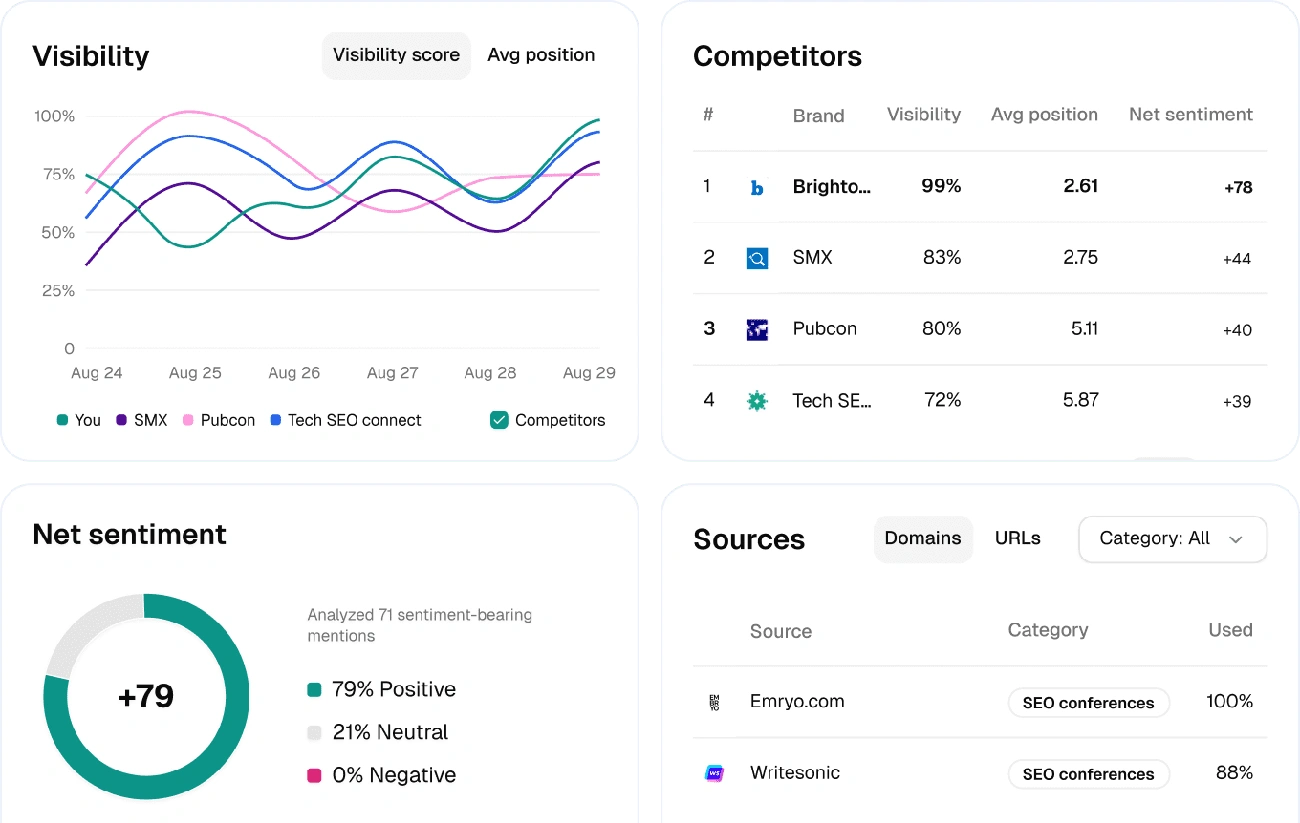
SE Visible stands out among AI visibility tracking platforms by offering marketing teams comprehensive insights into how brands appear across AI systems. Developed by SE Ranking, this tool provides strategic intelligence rather than mere tactical data.
SE Visible Key Features
SE Visible monitors brand visibility across ChatGPT, Perplexity, AI Mode, AI Overviews, and Gemini with real AI responses [1]. The platform tracks positive, negative, and neutral brand perception for you and competitors while identifying domains and URLs most frequently cited by AI engines. Additionally, it allows testing custom questions or using pre-grouped prompts organized by topics.
SE Visible Pros and Cons
Pros:
- Tracks actual AI responses instead of API simulations
- Provides high-quality data with clear visualizations
- Offers weekly data updates to maintain current insights
- Features intuitive dashboards with easy onboarding
- Integrates seamlessly with SE Ranking's full SEO suite [1]
Cons:
- Focuses solely on AI visibility (SEO execution happens in SE Ranking)
- Currently limits reporting to CSV exports [2]
SE Visible Pricing
SE Visible offers three plans with unlimited user seats:
- Core: $189/month for 450 prompts and 5 brands
- Plus: $355/month for 1000 prompts and 10 brands
- Max: $519/month for 1500 prompts and 15 brands [1]
A 10-day free trial is available. For existing SE Ranking customers, SE Visible is included in the AI Search add-on starting at $89/month [1].
SE Visible Best For
This tool primarily serves CMOs, agency owners, brand marketers, and SEO teams seeking strategic AI visibility insights paired with tactical SEO optimization capabilities [1]. Furthermore, PR teams and brand managers who need clarity on AI search presence will find value in this platform's scalable approach [2].
Ahrefs Brand Radar
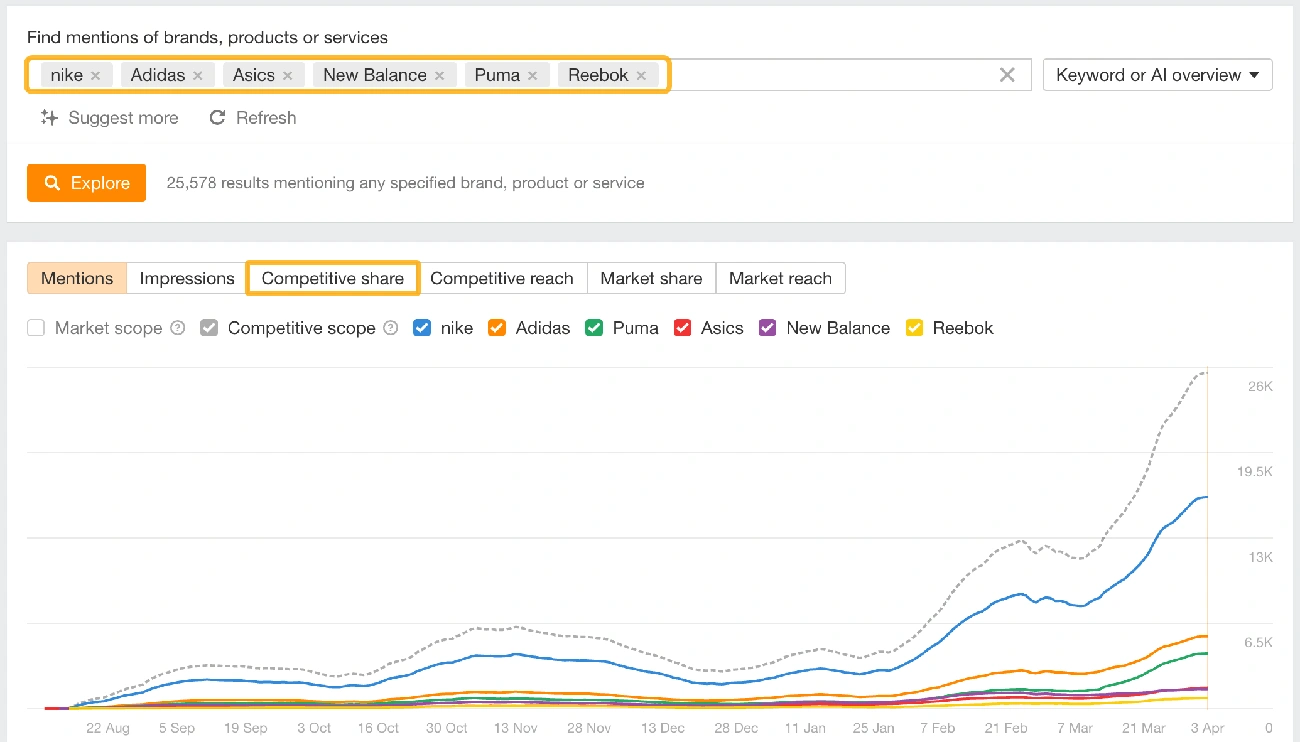
Ahrefs Brand Radar offers a unique approach to monitoring brand presence across both AI platforms and the wider web. This tool functions like a research database rather than a simple rank tracker, providing macro-level visibility analysis.
Ahrefs Brand Radar Key Features
Brand Radar monitors visibility across six major AI platforms with a database exceeding 263 million monthly prompts [3]. The tool tracks AI mentions, citations, impressions, and share of voice metrics across ChatGPT, Perplexity, Google AI Overviews, Gemini, and Microsoft Copilot [4]. Beyond AI, it also scans YouTube, TikTok, and Reddit for brand mentions [5].
Ahrefs Brand Radar Pros and Cons
Pros:
- Zero setup required with instant search capabilities [3]
- Identifies content gaps where competitors appear but you don't [6]
- Reveals which domains AI systems frequently cite [4]
Cons:
- Lacks native tracking for Claude and Grok [5]
- Inconsistent distinction between mentions and citations [5]
- Expensive for multi-client agency use [5]
Ahrefs Brand Radar Pricing
Individual platform monitoring costs $199/month per AI index, or $699/month for all AI platforms [3]. Custom prompt tracking starts at $50/month [3]. This requires a base Ahrefs subscription (starting at $129/month) [5].
Ahrefs Brand Radar Best For
Especially valuable for SEO teams already using Ahrefs and enterprise companies seeking comprehensive brand monitoring with minimal setup [6]. Moreover, it serves marketers specializing in online reputation management who need visibility across social platforms, forums, and video networks [5].
Profound AI
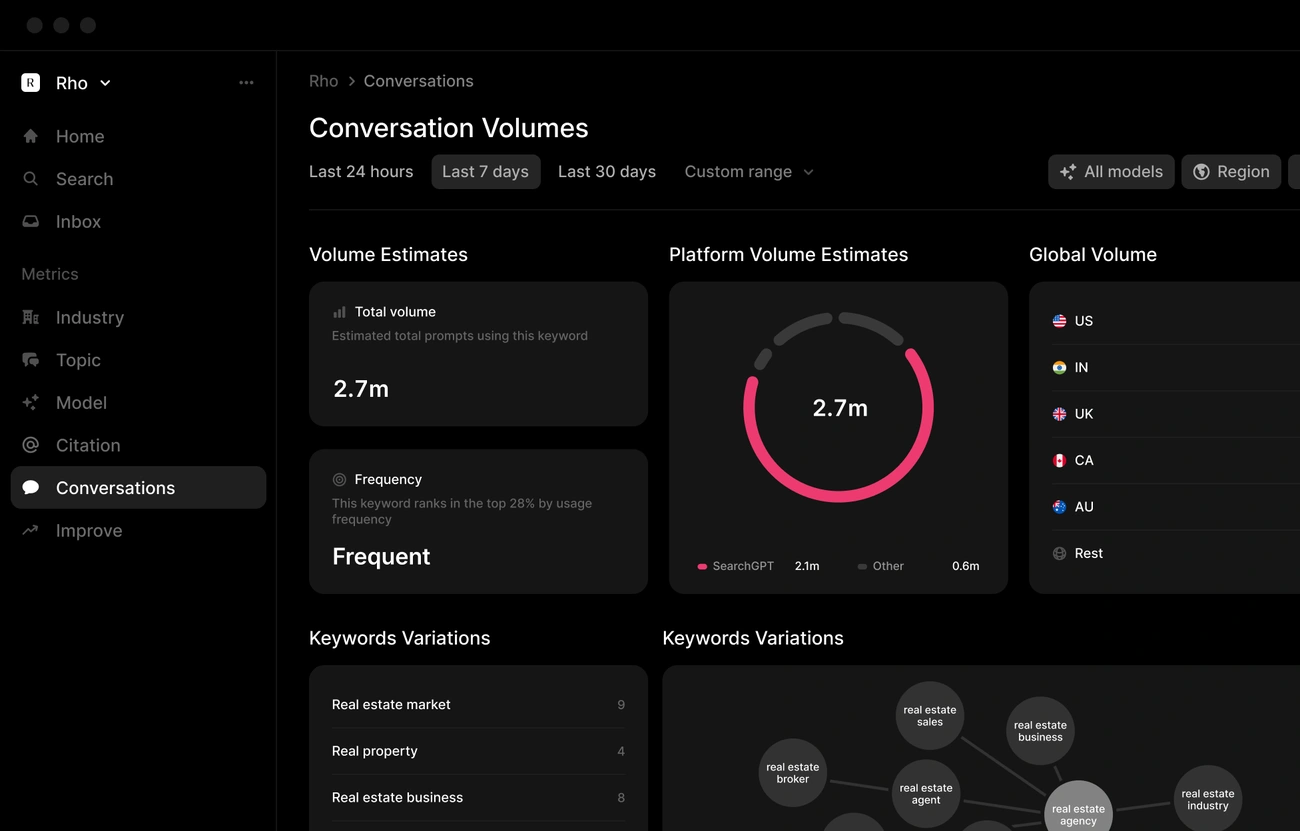
Profound AI captures real-world data on how brands appear across AI answer engines, unlike traditional monitoring tools that focus solely on conventional search results. This enterprise-grade platform delivers empirical insights from user interactions with leading AI systems.
Profound AI Key Features
Profound monitors brand visibility across 10+ AI engines including ChatGPT, Claude, Perplexity, and Google AI Overviews [7]. The platform provides real-time search volume insights for AI answer engines [8], revealing exactly when, where, and how brands are cited. Notable capabilities include Query Fanouts Analysis, which shows how AI transforms user prompts into search queries [7], Shopping Analysis for tracking product discovery in AI commerce [7], and comprehensive security with SOC 2 Type II and HIPAA compliance [7].
Profound AI Pros and Cons
Pros:
- Uses front-end empirical data capture rather than API simulations [2]
- Offers granular keyword-level analysis with detailed prominence scoring [9]
- Provides enterprise-grade security with SOC 2 Type II certification [7]
- Used by major brands including Ramp, IBM, Walmart, and Target [7]
Cons:
- Higher price point than market alternatives [10]
- Requires additional tools for execution beyond monitoring [11]
- Relies primarily on web scraping rather than official API partnerships [9]
Profound AI Pricing
The Lite plan starts at $499/month for basic coverage [7]. Their Agency Growth plan costs $1499/month with expanded capabilities [7], yet some sources mention a more accessible $99/month Starter option [2]. Enterprise plans come with custom pricing and full feature access [7].
Profound AI Best For
Particularly suited for enterprise organizations, regulated industries like healthcare and finance, and retailers needing defensible AI visibility with comprehensive compliance features [7]. Furthermore, global B2B SaaS teams seeking reliable data and competitive benchmarking will find significant value [2].
Peec AI
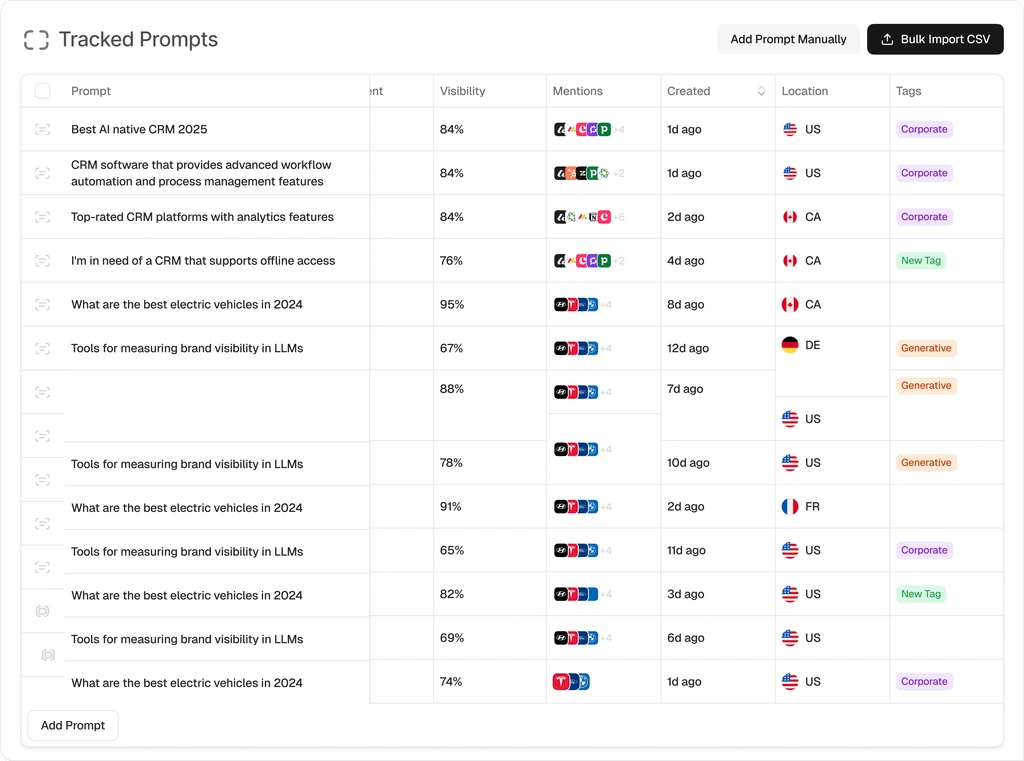
Peec AI delivers streamlined AI visibility tracking for marketing teams seeking straightforward analytics without overwhelming complexity. Trusted by over 1500 marketing teams [12], this platform offers accessible insights into how brands perform across major AI search platforms.
Peec AI Key Features
Peec AI monitors brand visibility and performance across ChatGPT, Perplexity, and Google AI Overviews [12]. The platform tracks key metrics including visibility percentages, position rankings, and sentiment analysis [3]. Users can benchmark their brand against competitors while identifying which specific content sources are being cited by AI engines. Furthermore, the tool offers a "Suggested" tab that automatically generates relevant prompts based on website content [5].
Peec AI Pros and Cons
Pros:
- Simplicity: Clean interface designed for quick adoption and ease of use [13]
- Competitive insights: Benchmarks brand performance against top competitors [3]
- Agency support: Includes pitch workspaces for winning new clients [3]
- Unlimited team seats across all pricing tiers [13]
Cons:
- Limited actionability: Provides monitoring without strategic recommendations [3]
- No content tools: Lacks content generation or optimization assistance [3]
- Missing crawler data: Doesn't show how AI bots interact with websites [3]
- Additional costs: Extra fees required for engines beyond the base three [3]
Peec AI Pricing
Peec AI offers three transparent pricing tiers:
- Starter: €89/month (~$103) for 25 prompts across three AI platforms [12]
- Pro: €199/month (~$230) for 100 prompts and additional support [13]
- Enterprise: €499/month for 300+ prompts with dedicated account rep [12]
A 7-day free trial is available without requiring a credit card [5].
Peec AI Best For
Ideally suited for marketing teams that need basic AI search analytics without complex workflows [3]. Consequently, this tool works best for established brands with existing SEO traffic seeking visibility data [5]. Additionally, agencies managing multiple client projects will benefit from the platform's centralized billing and flexible prompt allocation [12].
Scrunch AI
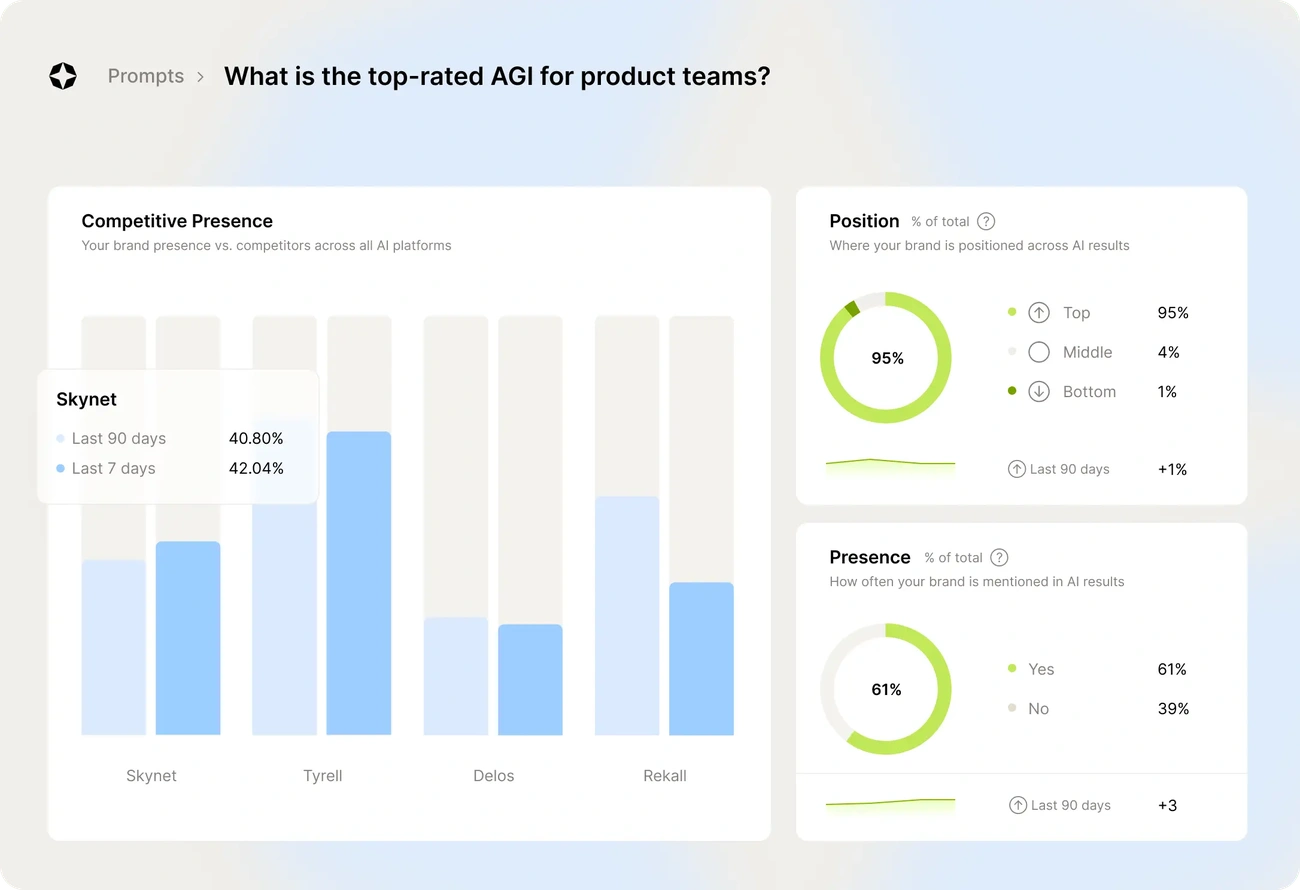
Launched with a focus on enterprise AI visibility, Scrunch AI combines tracking capabilities with technical infrastructure tools that help brands control their appearance in AI search results.
Scrunch AI Key Features
Scrunch AI monitors brand visibility across eight major AI engines including ChatGPT, Claude, and Perplexity [4]. Its Agent Experience Platform (AXP) sits at the edge of your network to detect AI bots and serve them optimized, code-light versions of your site [4]. The platform also offers persona-based analysis that segments performance by customer profiles and funnel stages, helping align visibility with revenue goals [4].
Scrunch AI Pros and Cons
Pros:
- Provides actionable insights beyond raw data [4]
- Features intuitive UI despite technical backend [4]
- Offers real-time monitoring for quick response to visibility changes [4]
- Includes high data volume with 700 monitored prompts on mid-tier plans [4]
- Maintains SOC 2 Type II compliance for enterprise security [14]
Cons:
- Imposes strict data caps on lower-tier plans [4]
- Lacks content creation tools to fix identified gaps [4]
- Requires complex initial setup despite easy dashboard [4]
- Restricts Explorer plan to ChatGPT only [4]
- Creates significant price jump between entry and functional tiers [4]
Scrunch AI Pricing
Scrunch AI offers three primary plans:
- Explorer: $100/month (100 prompts, ChatGPT only) [15]
- Growth: $500/month (700 prompts, all 8 engines, 5 user licenses) [15]
- Enterprise: Custom pricing with multi-brand support and API access [15]
Scrunch AI Best For
Primarily serves large organizations struggling with technical rendering issues or demand generation teams needing to prove ROI across specific buyer personas [4]. Additionally, the platform scales effectively from startups to enterprise clients managing multiple brands across regions [14].
Rankscale AI
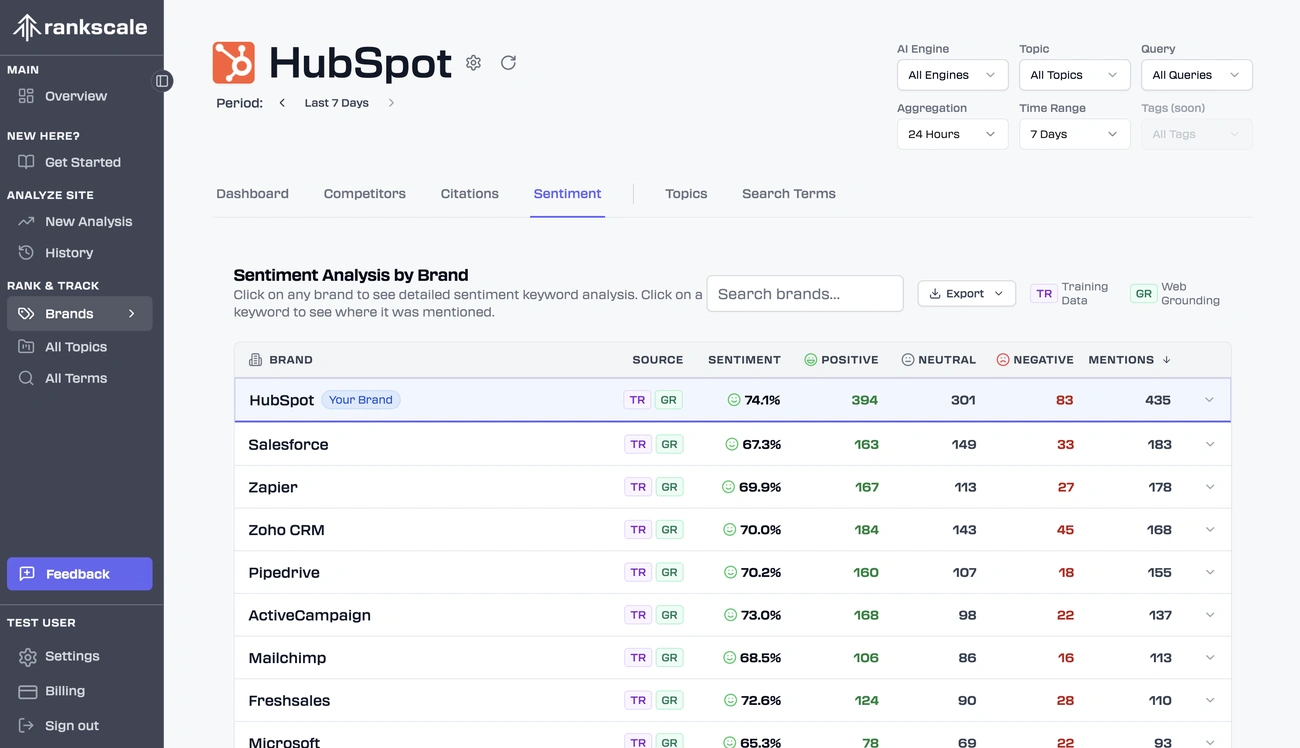
Pioneering the field of Generative Engine Optimization (GEO), Rankscale AI offers a credit-based approach to tracking brand visibility across AI search engines. This specialized tool consolidates performance metrics, competitor insights, and citation data in one dynamic dashboard.
Rankscale AI Key Features
Rankscale AI monitors brand performance across ten major AI engines including ChatGPT, Perplexity, Google AI Overviews, Claude, and Microsoft Copilot [16]. The platform tracks key indicators such as Visibility Score, Sentiment, Mentions, Citations, and Average Position [16]. Additionally, it provides in-depth citation analysis identifying which sources AI references most frequently [16]. Not to mention, the tool offers an AI readiness score (0-100%) with detailed recommendations for improvement [16].
Rankscale AI Pros and Cons
Pros:
- Cross-model citation overlap scoring for multi-LLM consistency analysis [17]
- User-friendly dashboards with intuitive data visualization [18]
- Flexible credit system allowing pay-for-what-you-use tracking [19]
- Detailed competitor benchmarking with full metrics comparison [16]
Cons:
- Functions purely as a tracking tool without content creation capabilities [19]
- Technical interface might overwhelm beginners [20]
- API functionality still listed as "coming soon" [19]
- Credit consumption accelerates quickly with extensive monitoring [21]
Rankscale AI Pricing
The platform offers three primary plans:
- Essential: $20/month (120 credits, 10 web audits, up to 480 AI responses) [6]
- Pro: $99/month (1200 credits, 50 web audits, 25 brand dashboards) [6]
- Enterprise: $780/month (12,000 credits, 200 web audits, 100 brand dashboards) [6]
Rankscale AI Best For
Primarily designed for digital marketing agencies and in-house SEO teams requiring granular visibility tracking [18]. Likewise, the platform serves brands focused specifically on GEO with multiple web properties to monitor [16].
Otterly AI
Created as a comprehensive solution for the AI search era, Otterly AI automatically monitors brand mentions and website citations across major AI-powered search platforms. With over 20,000 marketing professionals using the platform worldwide [22], this tool has gained recognition from industry authorities including G2, OMR, and Gartner [22].
Otterly AI Key Features
Otterly AI tracks brand visibility across six major AI platforms: Google AI Overviews, ChatGPT, Perplexity, Google AI Mode, Gemini, and Microsoft Copilot [22]. The platform offers an AI Keyword Research tool to identify relevant search prompts [23], a Brand Visibility Index showing how coverage translates to potential sales [8], and a GEO Audit that analyzes 25+ on-page factors to improve citation chances [22]. Additionally, it provides weekly reports with CSV exports and Google Looker Studio connectivity [23].
Otterly AI Pros and Cons
Pros:
- Saves up to 80% of time previously spent on manual brand monitoring [7]
- Supports 50+ countries for international visibility tracking [24]
- Offers unlimited team members across all pricing plans [25]
- Features clear visual dashboards for actionable insights [7]
Cons:
- Weekly data refresh means monitoring can lag up to 7 days behind real-time [11]
- Lacks traffic attribution from AI platforms to websites [11]
- Interface has a steeper learning curve with disconnected tables [11]
- Sentiment analysis functionality sometimes limited in dashboard [11]
Otterly AI Pricing
Otterly AI offers three primary plans:
- Lite: $29/month (15 search prompts, unlimited reports) [24]
- Standard: $189/month (100 search prompts, 5,000 GEO audits) [24]
- Premium: $489/month (400 search prompts, 10,000 GEO audits) [24]
A free trial is available for new users [24].
Otterly AI Best For
Ideally suited for SEO teams focused on organic visibility in AI search results [8]. Furthermore, content strategists concerned with generative search performance will find value in the platform's automatic monitoring capabilities [23]. For agencies managing multiple client brands, the unlimited team seats and detailed reports provide excellent operational efficiency [7].
Writesonic GEO
Writesonic GEO emerges as a pioneer in the realm of Generative Engine Optimization (GEO), integrating AI visibility tracking directly with content creation capabilities. This full-stack SEO platform bridges traditional search optimization with AI-driven search visibility in one unified system.
Writesonic GEO Key Features
Writesonic GEO monitors brand mentions across multiple AI platforms including ChatGPT, Google AI Overviews, Perplexity, Gemini, and Claude [26]. The tool tracks citation sources, ranking positions, and sentiment analysis to provide comprehensive visibility metrics [27]. Beyond monitoring, it simultaneously detects when AI bots visit your website, offering insights into which content pieces are being evaluated by generative models [2]. Notably, the platform includes an Action Center that highlights impactful tasks to boost visibility [10].
Writesonic GEO Pros and Cons
Pros:
- Combines content creation, optimization, and AI visibility tracking in one platform [26]
- Provides benchmarking against competitors to identify citation gaps [10]
- Features prompt explorer to discover trending AI queries [28]
- Offers AI bot traffic monitoring to track crawler activity [29]
Cons:
- GEO features require Professional plan or higher to access [30]
- Insights can feel surface-level compared to dedicated AI visibility platforms [27]
- Slight learning curve due to extensive features [26]
- May overwhelm SEO beginners [26]
Writesonic GEO Pricing
The Professional plan starts at $199/month annually ($249/month monthly) with 100 AI prompts tracked monthly [28]. The Advanced plan at $399/month annually ($499/month monthly) increases tracking to 200 prompts with additional features [28]. A free plan is available, although GEO features require paid subscriptions [29].
Writesonic GEO Best For
This tool is ideal for marketing teams seeking to integrate content creation with visibility tracking. As such, it serves brands focused on both traditional SEO and AI visibility as complementary strategies [9]. Startups and growing teams looking to centralize their SEO operations will find particular value in its consolidated approach [26].
Hall
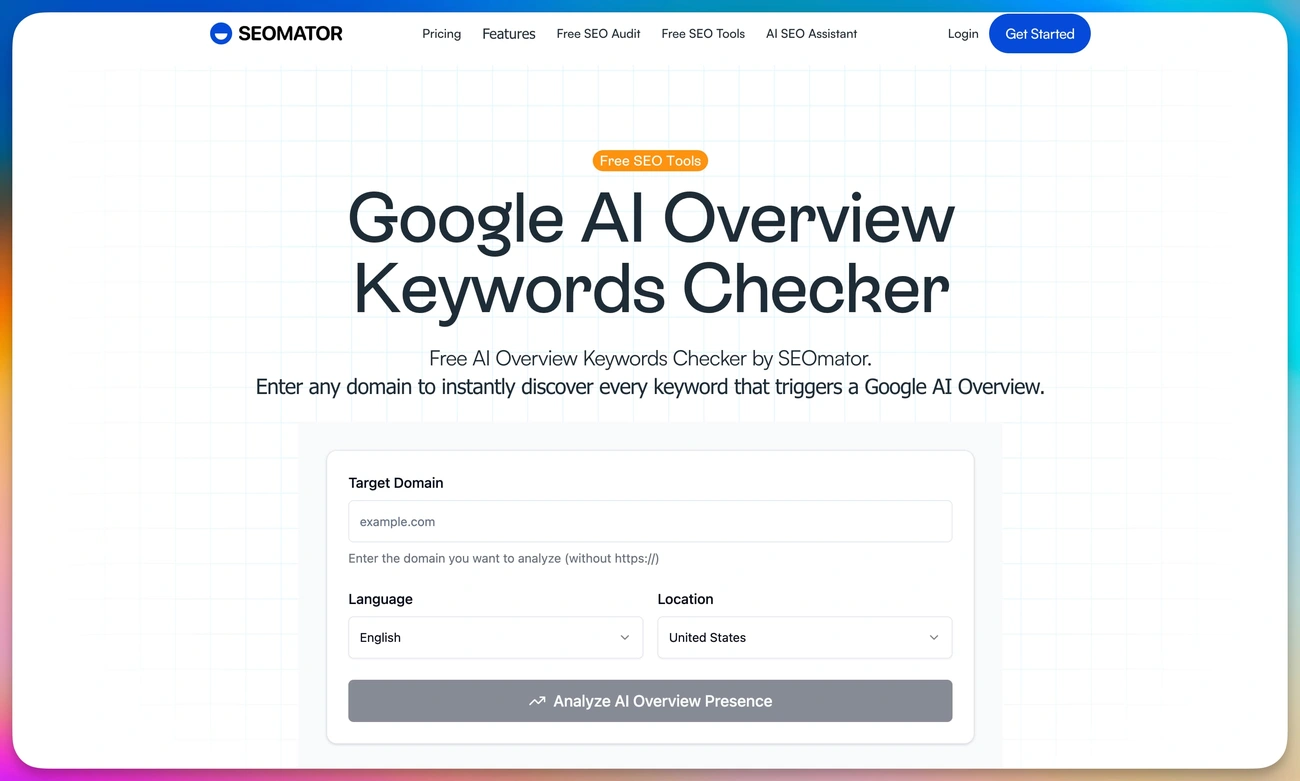
Hall differentiates itself as an AI visibility intelligence platform that reveals how brands appear in AI-generated responses. With a focus on real user interactions, this tool tracks mentions and citations across multiple conversational AI platforms.
Hall Key Features
Hall monitors brand visibility across ChatGPT, AI Mode, AI Overviews, Perplexity, Gemini, Copilot, and Claude [31]. Beyond tracking mentions, it provides website citation insights showing exactly which pages get referenced in AI conversations [31]. Furthermore, the platform offers agent analytics to observe how AI crawlers browse websites [31], plus conversational commerce tracking for ecommerce product visibility [31].
Hall Pros and Cons
Pros:
- Completely free tier available without email signup [32]
- Clean and easy-to-use interface [33]
- Covers major LLM platforms comprehensively [33]
- Automated data collection saves reporting time [34]
Cons:
- Massive pricing jump from free to paid plans [33]
- Complex setup challenging for non-developers [35]
- Limited sentiment analysis capabilities [35]
- Quick consumption of data limits on free tier [35]
Hall Pricing
Hall offers four distinct plans:
- Lite: Free with 1 project, 25 tracked questions [36]
- Starter: $199/month for 20 projects, 500 tracked questions [36]
- Business: $599/month for 50 projects, 1,000 questions [36]
- Enterprise: Starting at $1499/month with API access [36]
Hall Best For
First and foremost, Hall serves marketers seeking insights into how AI platforms discuss their brands. In fact, the tool proves especially valuable for technical teams monitoring AI crawler behavior and ecommerce brands tracking product visibility in AI shopping results [34] [35].
AthenaHQ
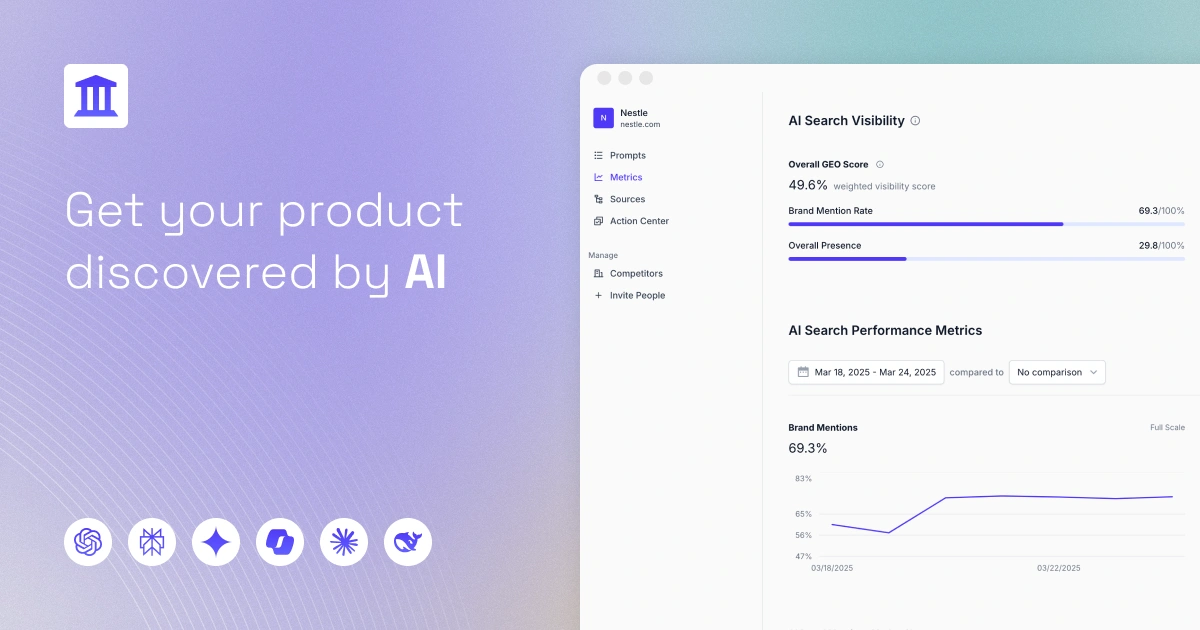
AthenaHQ positions itself as a comprehensive platform for Generative Engine Optimization (GEO), enabling brands to dominate AI search results. Founded by experts from Google Search and DeepMind, this tool goes beyond basic visibility tracking.
AthenaHQ Key Features
AthenaHQ provides full monitoring across eight major AI engines including ChatGPT, Google AI Overview, Perplexity, Gemini, Copilot, Grok, Claude, and DeepSeek [37]. The platform offers structured data automation, real-time AI search tracking, citation analysis, and prompt-based content planning [37]. Through its Olympus Dashboard, users can track GEO score, share of voice, and sentiment analysis [38].
AthenaHQ Pros and Cons
Pros:
- Actionable recommendations beyond visibility tracking [39]
- Agency pitch workspace for AI search reporting [39]
- Revenue attribution through Shopify and GA4 integration [13]
- Unlimited topics tracking (credit-dependent) [13]
Cons:
- Credit-based pricing makes monthly costs unpredictable [13]
- Steep entry price compared to competitors [13]
- Advanced features locked behind Enterprise tier [13]
- Complex setup learning curve [13]
AthenaHQ Pricing
Self-Serve plan starts at $295/month with 3,600 credits and supports up to 8 major LLMs [40]. Enterprise plans offer custom credit allocation with advanced features [40]. An introductory offer provides the Self-Serve plan for $95 for the first month [13].
AthenaHQ Best For
Primarily serves enterprise teams, agencies, and brands serious about AI search visibility [37]. Additionally, e-commerce brands using Shopify benefit from its revenue tracking capabilities [13].
Mentions
Mentions stands apart from other tools in this roundup by focusing primarily on social media monitoring rather than AI search visibility. With over 650,000 companies utilizing its platform [12], this tool provides comprehensive tracking across web and social channels.
Mentions Key Features
Mentions monitors brand references across 1 billion sources [41], including major social platforms, blogs, forums, and websites. The platform provides real-time notifications when your brand appears online [12], categorizes sentiment as positive, negative, or neutral [41], and identifies industry influencers discussing your brand. Furthermore, it offers advanced Boolean search capabilities [5], allowing precise filtering of results. Team collaboration features enable mention assignment and shared access to alerts [5].
Mentions Pros and Cons
Pros:
- Finds brand references that other tools often miss [12]
- Preview tool takes you directly to mentioned content [12]
- Simple interface with easy setup process [12]
- Integrations with Slack, Zapier, Buffer, and social platforms [12]
Cons:
- Preview loading speed sometimes lags [12]
- Enterprise capabilities require costly subscription upgrades [12]
- Can miss important mentions if searches aren't configured properly [12]
- Pricing structure challenging for freelancers managing multiple clients [12]
Mentions Pricing
Mentions offers several pricing options:
- Solo Plan: $29/month (annual billing) with 5,000 mentions and 3 alerts [42]
- Pro Plan: $99/month with 30,000 mentions and 15 alerts [42]
- ProPlus Plan: $199/month including 70,000 mentions and API access [42]
- Company Plan: $599/month for comprehensive monitoring [5]
Mentions Best For
First and foremost, Mentions serves small businesses (1-50 employees) [12] seeking straightforward brand monitoring. Throughout its development, the tool has proven valuable for marketing departments tracking customer sentiment [12]. For instance, PR teams incorporate it as a crucial component of their strategy to join conversations in real-time [12]. Customer service teams also benefit by uncovering complaints buried in forums or websites [12].
Conclusion
Choosing the right SEO monitoring tool truly matters for your marketing success in 2026. Each platform we've examined offers unique capabilities tailored to different needs, team sizes, and budgets. SE Visible excels with comprehensive AI response tracking, while Ahrefs Brand Radar provides instant search capabilities across multiple platforms. Profound AI delivers enterprise-grade security, whereas Peec AI stands out for its straightforward analytics approach.
The market now clearly divides between specialized AI visibility trackers and full-stack SEO platforms with integrated monitoring features. Teams must decide whether they need dedicated tracking or prefer consolidated solutions that combine content creation, optimization, and visibility monitoring.
Budget considerations range widely, from Hall's free tier to enterprise solutions exceeding $1,000 monthly. Smaller teams might start with affordable options like Peec AI or Rankscale AI, then scale to comprehensive platforms as their visibility needs grow.
AI search has undoubtedly become a critical battlefield for digital visibility. Brands that track and optimize their presence across these new channels gain significant advantages over competitors still focused exclusively on traditional search results.
The best tool ultimately depends on your specific goals, technical resources, and existing marketing stack. Whether you manage a single brand or multiple client accounts, this comprehensive review should help you identify the perfect SEO monitoring partner to drive your visibility strategy forward.
References
Best AI SEO Tools
Writesonic GEO Review
Peec AI Review
Scrunch AI Review
Mention Pricing
Rankscale AI Pricing
Otterly AI Review
Review: Otterly AI
What is Generative Engine Optimization (GEO)
GEO Getting Started
Otterly AI Review
Mention Reviews
AthenaHQ Review
Scrunch AI
Scrunch AI Pricing
Rankscale AI
The Ultimate Guide to AI Overviews Tracking Tools
About the Author

Updated by
Tim
Tim is the co-founder of Dageno and a serial AI SaaS entrepreneur, focused on data-driven growth systems. He has led multiple AI SaaS products from early concept to production, with hands-on experience across product strategy, data pipelines, and AI-powered search optimization. At Dageno, Tim works on building practical GEO and AI visibility solutions that help brands understand how generative models retrieve, rank, and cite information across modern search and discovery platforms.
Related Articles
Top 10 AI Search Visibility Tracking Tools
Tim • Jan 21, 2026
The Best Perplexity Rank Trackers in 2026: 15+ Tools Compared by Price, Features, and Coverage

Richard • Mar 16, 2026
9 Best LLM Tracking Tools to Monitor AI Search Visibility in 2026

Ye Faye • May 14, 2026
The 10 Best ChatGPT Visibility Trackers for 2026
Richard • Feb 02, 2026