SaaS SEO Strategy: The Ultimate 9-Step Guide for Organic Growth
Learn a proven 9-step SaaS SEO strategy to drive scalable organic growth...
Track AI search visibilityNo install
Updated by
5 Min Read
Updated on Feb 12, 2026
TL;DR — SaaS SEO in 60 Seconds
| Factor | Key Point |
|---|---|
| Why It Matters | 84% of B2B buyers rely on search to evaluate solutions. Organic traffic converts 23% better than paid. |
| Timeline | Expect to see results in 4-6 months; meaningful ROI compounds over 18-24 months. |
| Key Steps | 1. Define ICP 2. Intent-driven keyword research 3. Competitor analysis 4. Topic clusters 5. Product-led content 6. AI search optimization 7. Strategic backlinks 8. Content amplification 9. Continuous audits |
| Best Tools | Dageno AI (AI visibility), Ahrefs (backlinks/keywords), Semrush (comprehensive), Google Search Console (free baseline) |
| Expected Growth | Properly executed SaaS SEO grows organic traffic 3-5x within 18 months, with CAC 40-60% lower than paid |
| Common Mistake | Chasing keyword volume instead of buyer intent—the #1 reason SaaS SEO fails |
Introduction: Why Most SaaS SEO Strategies Fail
Let's be direct: most SaaS SEO strategies fail before they gain traction.
Not because effort is lacking, but because the approach is fundamentally wrong. Teams chase high-volume keywords instead of buyer intent. They publish generic guides that could apply to any product. They optimize for rankings instead of conversions.
In 2026, that approach doesn't work.
Why? Because search behavior has shifted. Users don't just Google anymore. They ask ChatGPT. They trust AI summaries. They expect to find answers in Perplexity before they ever click a traditional link. And if your brand isn't visible across these AI search engines—not just Google—you're competing with both hands tied.
Source: According to 2026 research on SaaS SEO strategies, visibility today means being cited, summarized, and trusted by AI models, not just ranked on Google. AI-driven platforms like ChatGPT, Perplexity, Gemini, and Google AI Overviews now answer SaaS queries directly, often eliminating the need for traditional click-throughs.
This guide is different. It's built for SaaS founders and marketing leaders who want to stop guessing and start ranking—with a strategy that works in the AI-first SERP world.
Why SaaS SEO Is Your Biggest Growth Moat in 2026
Organic search remains one of the few acquisition channels that scales predictably and compounds over time.
The Numbers Don't Lie:
Visibility Gap: Unlike consumer-focused SEO, B2B SaaS SEO must account for lengthy consideration periods, multiple stakeholders with different priorities, and the need to demonstrate both business value and technical capability across multiple stages of the buyer journey.
Conversion Quality: SaaS companies that implement intent-driven SEO strategies report:
- 40-60% lower CAC compared to paid channels
- 23% higher conversion rates from organic visitors
- Longer customer LTV due to stronger product-market fit validation
AI Visibility Matters: In 2026, search engines aren't just engines anymore—they're AI-powered assistants. Platforms like ChatGPT Search, Perplexity AI, and Google's SGE rewrite the rules by summarizing answers, highlighting brand authority, and pulling insights from structured, trustworthy content instead of showing 10 blue links.
Sustainable Growth: Once content ranks and earns backlinks, it continues driving traffic without incremental spend. Unlike paid ads—which stop working the moment you stop paying—SEO compounds.
The 9-Step SaaS SEO Strategy for 2026
Step 1: Define Your SaaS Customer Persona with Precision
This is the step most teams skip. And it's why they fail.
If you don't know exactly who you're writing for, everything becomes guesswork. Traffic might come, but it won't convert.
Go beyond generic demographics. Define:
- Job titles and reporting structure (Head of Product vs. VP of Engineering)
- Company size and industry (early-stage SaaS vs. enterprise)
- Specific pain points (e.g., "trial drop-off" not just "user onboarding")
- How they describe problems in search language (technical jargon vs. business language)
- Buying process: Are they single decision-makers or consensus builders?
Real example: A CRM for real estate agents generates completely different queries than a CRM for SaaS sales teams—even if the product features are similar. Your ICP determines everything downstream.
Step 2: Conduct Full-Funnel SaaS Keyword Research (Intent Over Volume)
Most teams chase high-volume keywords. That's the opposite of how SaaS SEO works.
Map keywords to the entire funnel:
Top-of-Funnel (TOFU): Problem Awareness
Keywords: "what is customer churn," "causes of trial conversion drop," "how to reduce SaaS CAC"
Purpose: Attract, educate, build awareness
Content: Blog posts, guides, educational resources
Middle-of-Funnel (MOFU): Solution Exploration
Keywords: "best onboarding software," "customer success platforms," "tools to reduce churn"
Purpose: Introduce solutions and frameworks
Content: Comparison guides, webinars, case studies
Bottom-of-Funnel (BOFU): Decision Stage
Keywords: "[Competitor] vs. [Your Product]," "[Your Product] pricing," "[Your Product] integrations"
Purpose: Drive trials, demos, and signups
Content: Pricing pages, feature comparisons, customer testimonials
Tools to use:
Ahrefs: Industry-leading for keyword research with search volume, keyword difficulty, and click-through potential. Ahrefs provides comprehensive keyword and competitor research, helping teams identify high-opportunity keywords by analyzing competitor rankings and finding content gaps.
Semrush Keyword Magic: 28+ billion keywords with intent classification and related terms.
Google Keyword Planner: Free baseline for search volume (though limited for commercial intent).
Key principle: Find keywords your ICP actually uses, segment by intent, and build content that matches each stage.
Step 3: Strategic Competitor Content Analysis
Knowing what competitors do isn't enough. You need to understand what they do poorly and exploit it.
Identify true competitors:
Not just product competitors—look for content competitors. These include VC blogs, comparison sites (G2, Capterra), affiliate aggregators, and anyone ranking for keywords your ICP searches.
Analyze their weaknesses:
- Which pages rank but explain the topic poorly?
- Are high-traffic posts missing product context or real examples?
- Do comparison posts have outdated information or obvious bias?
- Are internal links weak? Links pointing to thin content?
Find your gaps:
Ahrefs Site Explorer: Analyze competitor top pages, their backlink sources, and identify keywords they rank for but haven't fully optimized.
Semrush Gap Analysis: Find keywords competitors rank for where you're invisible.
Analyzing competitor keywords is one of the fastest ways to find profitable keywords for your SaaS SEO strategy. Since competitors are already ranking, you can find gaps to capitalize on and bring that traffic to your business.
Build defensibility: Your goal isn't to "do SEO better"—it's to become the most credible, product-aligned, useful source for your topic. Authority compounds, and over time, that becomes a competitive moat.
Step 4: Architect Your Content with Topic Clusters
Publishing disconnected blog posts doesn't build authority. Topic clusters do.
Topic clusters = Pillar page + Cluster content
Example: "Customer Onboarding" Pillar
- Pillar: "The Complete Guide to Customer Onboarding"
- Cluster: "Onboarding best practices," "Onboarding metrics," "How to reduce onboarding churn," "Onboarding for different user segments"
Why it works:
- Signals topical relevance to search engines
- Improves your chances of being cited by AI models
- Helps users navigate related topics naturally
- Clusters earn backlinks together, compounding authority
Tools:
Ahrefs Content Gap: Identify cluster opportunities from competitors' topic structures.
Google Search Console: Find related queries users search when they land on your core pages.
Semrush Topic Research: Auto-generate cluster suggestions for any core topic.
Keywords don't exist in isolation—they're part of broader topics. When your content touches on multiple related search queries, you can rank for an entire cluster rather than just one phrase.
Step 5: Create Truly Product-Led Content
This is where SaaS SEO drives real business impact.
Don't list features. Demonstrate solutions.
Instead of: "Our tool has 15+ integrations"
Write: "How to connect Slack to your onboarding tool in 5 minutes—with screenshots and step-by-step walkthrough"
Structure for action:
- Address a specific pain point
- Show how your product solves it (using screenshots, workflows, real examples)
- Include CTAs naturally at the moment of relevance, not at the end
- Provide genuine value first; sell second
Content types that convert:
- Use case guides: "How [company type] uses [product] to [achieve outcome]"
- Comparison posts: Honest analysis of alternatives vs. your product
- Templates + checklists: Downloadable assets that demonstrate your thinking
- Customer stories: Real examples of how customers succeeded
Every article needs to be useful, well-researched, and expertly written. Content quality is essential, but you must understand the types of SaaS content you want to produce and distribute at each stage of the marketing funnel.
Avoid: Generic advice, fluffy listicles, thin comparisons. Search engines (and AI models) reward specificity and evidence-based writing.
Step 6: Optimize for AI Search Engines
AI Overviews, ChatGPT answers, and Perplexity responses are now competing with traditional SERPs for visibility.
To be cited by AI models, optimize for:
Structure: Clear H2s, bullet points, numbered lists, and TL;DR sections help AI parse and cite your content.
Directness: Answer the question in the first 100 words. Avoid filler introductions.
Trust signals: Cite sources, include stats from reputable orgs, quote experts. E-E-A-T (Expertise, Experience, Authoritativeness, Trustworthiness) matters more than ever.
Technical SEO: Implement FAQ schema, meta tags, and structured data so AI models understand the content's context.
Freshness: AI models prioritize recent, updated content. Refresh annually with new data, case studies, and examples.
Tools:
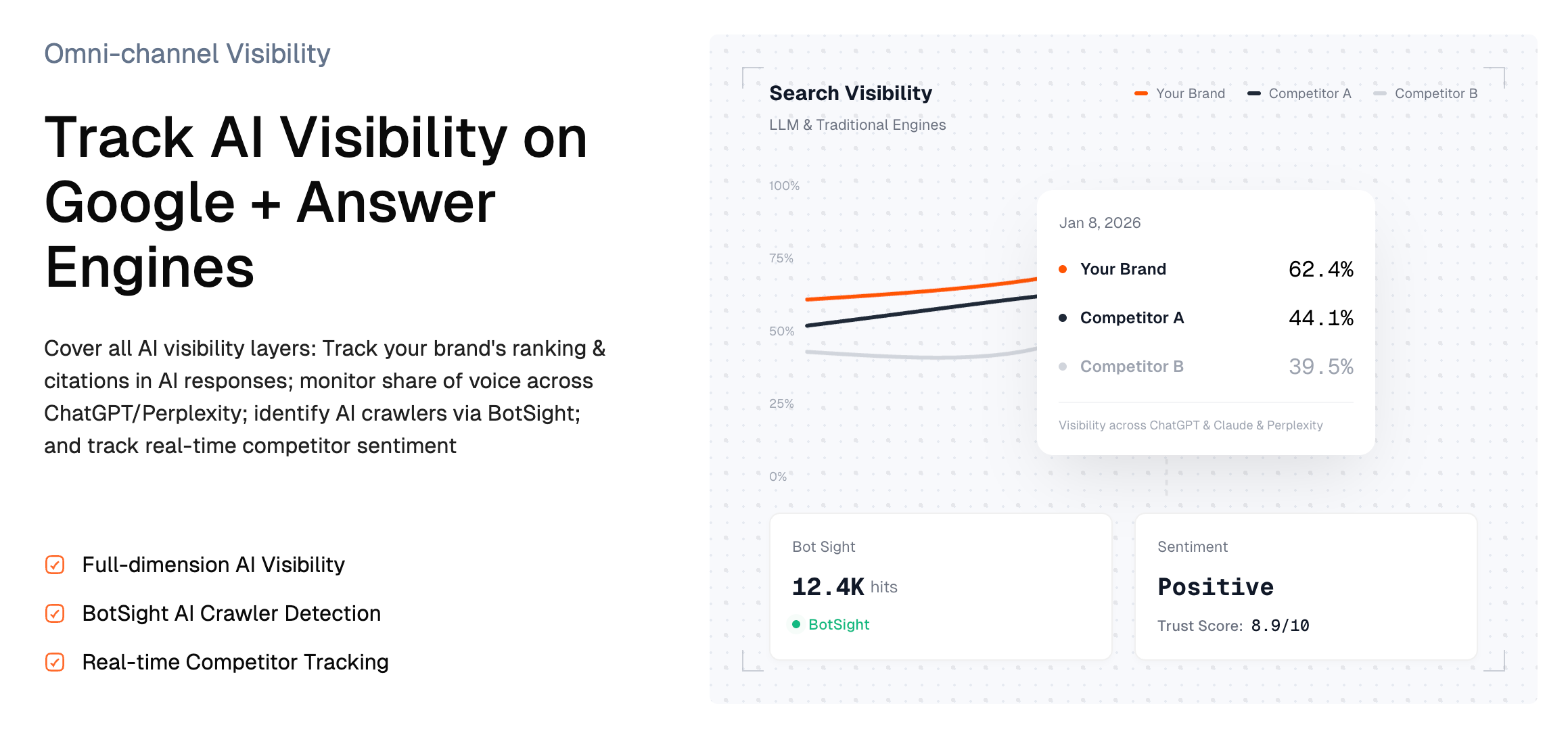
Dageno AI: Monitors how your brand appears in ChatGPT, Perplexity, Claude, Gemini, and 4+ other AI models. Get alerts when AI cites (or misrepresents) your content. Dageno's AI Visibility Monitor tracks your brand's ranking & citations in AI responses, monitors share of voice across ChatGPT/Perplexity, and identifies real-time competitor sentiment. The Brand Entity Kit feeds AI models structured data to ensure AI answers are accurate, safe, and hallucination-free.
Clearscope: Scores content against top 10 results for topical completeness and relevance.
Screaming Frog: Audits technical SEO and schema implementation.
Step 7: Earn High-Authority Backlinks (Quality Over Quantity)
Backlinks still matter—but how they matter has changed.
Quality > Quantity: A few links from high-authority, contextually relevant domains beat dozens of random placements.
Strategic link-building approaches:
Guest posts on niche blogs: If your product integrates with HubSpot, Salesforce, or Zapier, pitch content to their partner ecosystem blogs.
Original research + outreach: Conduct exclusive research (onboarding benchmarks, churn patterns, customer success metrics), package it, and pitch to SaaS media outlets.
G2/Capterra profiles: These review sites are highly trusted by buyers and search engines. Detailed profiles with customer case studies earn consistent backlinks.
Digital PR: Get featured in SaaS publications, podcasts, and webinars. These mentions often include links and expand reach.
Tools:
Ahrefs: Analyze competitor backlink profiles and find high-authority, relevant link opportunities.
Semrush: Similar backlink analysis with actionable outreach suggestions.
Hunter.io: Find journalist and publication contact info for outreach campaigns.
Authority growth depends on credibility more than volume. Search engines increasingly evaluate who is linking to you and why, not just how many links you have.
Step 8: Amplify Content Through Social & Brand Visibility
Google and AI models both pick up on brand signals: mentions, shares, citations across platforms.
Amplify strategically:
LinkedIn: Post via company leaders (founders, PMs, sales execs). Their networks expand reach and build trust.
X/Twitter: Share key insights, frameworks, and metrics in thread format.
SaaS communities: Share in relevant Subreddits, Slack groups (e.g., SaaS founders communities), and forums where your audience hangs out.
Email: Include new content in product or growth-focused newsletters.
Repurpose aggressively:
- Blog post → LinkedIn carousel, Tweet threads, slide deck
- Research report → Webinar, demo video, podcast topic
- Guide → Email sequence, template library, interactive tool
Consistent amplification signals authority to both Google and AI models. It's not just correlation—brand mentions are part of how search systems evaluate trustworthiness.
Step 9: Implement Continuous SEO Audits & Content Refresh
SaaS SEO isn't a one-time setup. Your product evolves, competitors ship features, and search behavior shifts.
Quarterly audit checklist:
✅ Monitor GSC: Identify CTR drops, impression changes, and pages losing ranking momentum.
✅ Update stale content: Refresh screenshots, UI references, and product walkthroughs that no longer match your current product.
✅ Refresh internal links: New pages should link to old ones; vice versa. This distributes authority and improves discoverability.
✅ Add fresh context: Update "2024" to "2026," add new case studies, expand sections with recent examples.
✅ Audit low-performers: Pages with low traffic, few links, or no conversions should either be improved or consolidated.
✅ Track with dashboards: Set up Google Data Studio or Looker dashboards that pull GSC, GA4, and ranking data into one view.
Tools:
Google Search Console: Free. Shows impressions, clicks, CTR, rankings, and technical issues.
Google Analytics 4 (GA4): Free. Tracks traffic sources, user behavior, and conversions.
Ahrefs Site Audit: Crawls your site, flags technical issues, and monitors backlink changes.
Semrush Site Audit: Similar to Ahrefs with position tracking.
SaaS keyword research is a crucial step in creating effective marketing campaigns. Tracking the ROI of your SEO strategy by seeing how many relevant keywords your content is ranking for helps prove value.
The Winning Tool Stack for 2026
| Category | Best Option | Alternative | Use Case |
|---|---|---|---|
| AI Visibility | Dageno AI | Peec AI, Profound | Track ChatGPT/Perplexity citations, fix hallucinations |
| Keyword Research | Ahrefs / Semrush | Google Keyword Planner | Search volume, difficulty, related terms, competitor analysis |
| Content Optimization | Clearscope / Surfer | Yoast SEO | Real-time feedback, SERP comparison, topical completeness |
| Technical Audits | Screaming Frog / Sitebulb | Google Search Console | Crawl issues, schema, Core Web Vitals |
| Rank Tracking | Ahrefs / Semrush | AccuRanker | Monitor keyword positions, historical trends |
| Backlink Analysis | Ahrefs | Semrush, Moz | Find link opportunities, analyze competitor profiles |
Pro tip: Start lean. Use free tools (GSC, GA4) + one paid platform (Ahrefs or Semrush). Add specialized tools as budget grows.
Real Growth Example - SaaS SEO
One SaaS client used this framework to grow organic traffic from 22K to 68K monthly visitors (3x growth) in 18 months:
- Month 1-2: Defined ICP, conducted intent-driven keyword research, found 50 high-value MOFU/BOFU gaps
- Month 3-4: Published 8 topic clusters targeting these gaps, optimized for AI visibility with Dageno AI
- Month 5-6: Earned backlinks from SaaS publications through digital PR and original research
- Month 7-18: Continuously refreshed top-performing content, added new use cases, captured emerging keywords
Result:
- 150+ keywords ranking in top 10
- 18% of traffic from ChatGPT and Perplexity (via Dageno tracking)
- 12% conversion rate on organic visitors to free trial
- Organic CAC: $45 (vs. $200+ from paid ads)
FAQ: SaaS SEO
Q: How is SaaS SEO different from traditional SEO?
A: SaaS SEO is intent-driven and product-led. It focuses on aligning your product's value with how buyers search and evaluate solutions—not just driving traffic. It also accounts for longer sales cycles, multiple decision-makers, and the need to build trust across traditional and AI search engines.
Q: How long before I see results?
A: Expect to see early results within 4-6 months. Meaningful, compounding ROI typically appears over 18-24 months. This is a long-term investment, not a quick win.
Q: Which tool should I use for keyword research?
A: For budget-conscious teams: Google Keyword Planner + Search Console is a free baseline.
For scaling: Ahrefs ($129+/month) or Semrush ($120+/month) provide keyword volume, difficulty, competitor analysis, and backlink insights in one platform.
Q: Should I gate my content?
A: Use "soft gates" strategically. Ungated top-of-funnel content improves SEO visibility. Gate high-value assets (reports, research) for middle/bottom-funnel content where visitors have proven interest.
Q: How do I track AI visibility?
A: Use Dageno AI. It monitors how your brand appears (and is cited) in ChatGPT, Perplexity, Claude, Gemini, and other AI models. Get alerts when AI hallucinations misrepresent your product and fix them with 1-click corrections.
Q: Does SEO work for B2B SaaS?
A: Absolutely. B2B buyers research extensively, compare tools, and look for credible solutions. SEO ensures your product is discoverable and positioned throughout that journey. With smart keyword research, focused topic clusters, and optimized conversion-oriented content, even smaller startups can outperform enterprise competitors.
Q: Can a small team execute this strategy?
A: Yes. Start with 1 SEO strategist + 1 product-aware writer. Outsource technical audits and link building early to manage costs. Use AI tools (like Dageno for AI visibility monitoring) to amplify human efforts. The key is strategy + consistency, not headcount.
The Bottom Line: AI + SEO = Growth
In 2026, SaaS SEO isn't about ranking #1 on Google anymore. It's about:
✅ Being visible across AI search engines (ChatGPT, Perplexity, Gemini)
✅ Being trusted by both traditional search and AI models
✅ Guiding buyers through their entire evaluation process
✅ Compounding authority over time
Execution matters more than strategy. Every step in this guide is proven. The teams that win are the ones who execute consistently, measure rigorously, and iterate quickly.
Start with Step 1 today. By next quarter, you'll have a keyword strategy. By next year, you'll have a defensive moat.
Ready to track your AI visibility? Use Dageno AI to monitor how ChatGPT, Perplexity, and other AI models cite (or misrepresent) your brand. Fix hallucinations in real-time. Claim your position in the AI search era.
About the Author

Updated by
Ye Faye
Ye Faye is an SEO and AI growth executive with extensive experience spanning leading SEO service providers and high-growth AI companies, bringing a rare blend of search intelligence and AI product expertise. As a former Marketing Operations Director, he has led cross-functional, data-driven initiatives that improve go-to-market execution, accelerate scalable growth, and elevate marketing effectiveness. He focuses on Generative Engine Optimization (GEO), helping organizations adapt their content and visibility strategies for generative search and AI-driven discovery, and strengthening authoritative presence across platforms such as ChatGPT and Perplexity
Related Articles
How to Improve Visibility in Perplexity: Complete AEO Guide

Tim • May 28, 2026
How to Track Website Mentions in Perplexity: A Complete GEO Guide for AI Search Visibility
Tim • Jun 03, 2026
AI Overviews SEO Rank Tracking: A Practical Guide for Measuring Visibility in Google’s AI Results
Tim • May 25, 2026
Monitor Brand Mentions in ChatGPT to Optimize Knowledge Graph and Entity Management: The Complete GEO Entity Guide
Ye Faye • May 20, 2026