How To Improve Brand Visibility in AI Search Engines?
AI search visibility comes from entity authority, co-citation, and trust—not traditional rankings.
Track AI search visibilityNo install
Updated by
5 Min Read
Updated on Jan 27, 2026
、
TL;DR
- AI models cite brands based on entity authority and trust signals, not backlinks alone.
- Machine readability is foundational: llms.txt, structured data, and Wikidata are critical.
- Co‑citation beats link building: appearing alongside competitors matters more than isolated links.
- Consistency equals credibility: fragmented brand information reduces AI confidence.
- Sentiment is a ranking signal: positive, authentic perception increases AI recommendation likelihood.
How AI Search Engines Decide What to Cite
Unlike traditional search engines that rank web pages, AI systems evaluate which entities are credible enough to reference when generating answers.
When ChatGPT, Perplexity, or Google AI produces a response, it assigns confidence scores to potential brands using three primary inputs:
- Training‑data patterns — how frequently and in what context an entity appears
- Real‑time web signals — recent mentions, updates, and freshness
- Cross‑platform sentiment analysis — how trustworthy and coherent the brand appears
The Critical Difference from SEO
AI systems learn through co‑occurrence, not hyperlink structures.
If your brand repeatedly appears:
- In the same paragraphs as competitors
- In comparison articles or industry lists
- In authoritative discussions with neutral or positive sentiment
Key insight: Guest‑post backlinks alone don’t train AI models. Contextual co‑mention does.
Additionally, platforms like Perplexity actively crawl the web, meaning new mentions can influence visibility within days, not months.
Why AI Brand Visibility Matters Now
AI‑powered search is quickly becoming the primary discovery layer.
Users increasingly ask:
- “What’s the best tool for X?”
- “Which platform should I use for Y?”
…and never click a traditional search result.
The New Competitive Reality
- Strong SEO but weak AI visibility = invisible in AI answers
- AI‑optimized brands capture awareness before search demand exists
Compounding Effects
Once your brand is embedded in an AI knowledge graph:
- Each new mention reinforces authority
- Positive sentiment compounds over time
- Competitors face rising difficulty displacing you
AI visibility also protects brand trust. If AI describes your brand inaccurately — or not at all — perception damage happens before users reach your site.
10 Proven Strategies to Improve AI Brand Visibility
1. Implement llms.txt
llms.txt is your explicit introduction to AI crawlers.
Placed at yourdomain.com/llms.txt, it should clearly define:
- Brand name
- Primary category
- One‑sentence description
- Founding date
- Key competitors
- Core differentiators
- Official verification links (website, LinkedIn, Crunchbase)
Brands with well‑structured llms.txt files saw 35–50% citation growth within three months.
2. Build Co‑Citation Authority
Co‑citation — appearing alongside competitors in authoritative content — is the strongest entity signal AI systems use.
Execution framework:
-
Identify ~50 high‑authority articles where competitors are mentioned
-
Target inclusion in:
- Industry roundups
- “Best tools” lists
- Comparison guides
Result: Brands using co‑citation strategies saw 58% increases in AI mentions vs. ~10% from traditional link building.
3. Use Reddit as a Ground‑Truth Signal
Reddit carries disproportionate weight in AI training datasets due to strong moderation and authentic discussion.
Key findings:
- 3+ positive, natural Reddit discussions → 45–67% citation lift
- Perfect sentiment looks fake
- 75–85% positive with real debate signals authenticity
This requires genuine participation — not promotion.
4. Create Wikipedia and Wikidata Entity Anchors
Wikipedia functions as near‑permanent AI ground truth.
If a Wikipedia page isn’t viable, Wikidata still provides powerful entity grounding:
- Entity type
- Industry classification
- Founding data
- Relationships to people and organizations
Brands with complete Wikidata entries saw:
- 40% more AI citations
- 85%+ category accuracy
5. Deploy Comprehensive Structured Data
Structured data helps AI systems build an internal knowledge graph.
Key schemas to implement:
Organization(homepage + About)FAQPage(core questions)Product(feature‑level clarity)Article(author + entity linkage)
Coverage matters more than isolated markup.
6. Restructure Content for AI Extraction
AI models extract information units, not narratives.
Best‑practice format:
- H2 = clear question
- First 50–70 words = direct answer
- Supporting details afterward
Additional optimization:
- Short paragraphs (claim → evidence → action)
- H3 sub‑sections for semantic hierarchy
- Tables for comparisons (highly extractable)
7. Optimize Images for Multimodal AI
Modern AI systems analyze visual content.
Best practices:
- Descriptive filenames
- Brand‑aware alt text
- Labeled diagrams
- Subtle but recognizable brand visuals
Optimized images increased multimodal AI inclusion by ~40%.
8. Monitor and Manage Sentiment
AI confidence scores incorporate sentiment.
High‑impact sources:
- G2, Capterra, TrustRadius (B2B)
- LinkedIn from verified professionals
Consistency beats volume:
- 4.3★ average > 3.7★ with more reviews
A 0.5★ improvement often yields 25–40% citation growth.
9. Maintain Brand Information Consistency
AI systems penalize incoherence.
Audit consistency across:
- Website
- Review platforms
- Directories
- Third‑party mentions
Unified positioning = higher confidence scores.
10. Build Real‑Time Entity Presence
Strengthen visibility across authoritative surfaces:
- LinkedIn company data
- Industry platforms
- Analyst databases
- Podcasts and publications
Each reinforces your entity definition.
How Dageno AI Enhances Your Visibility
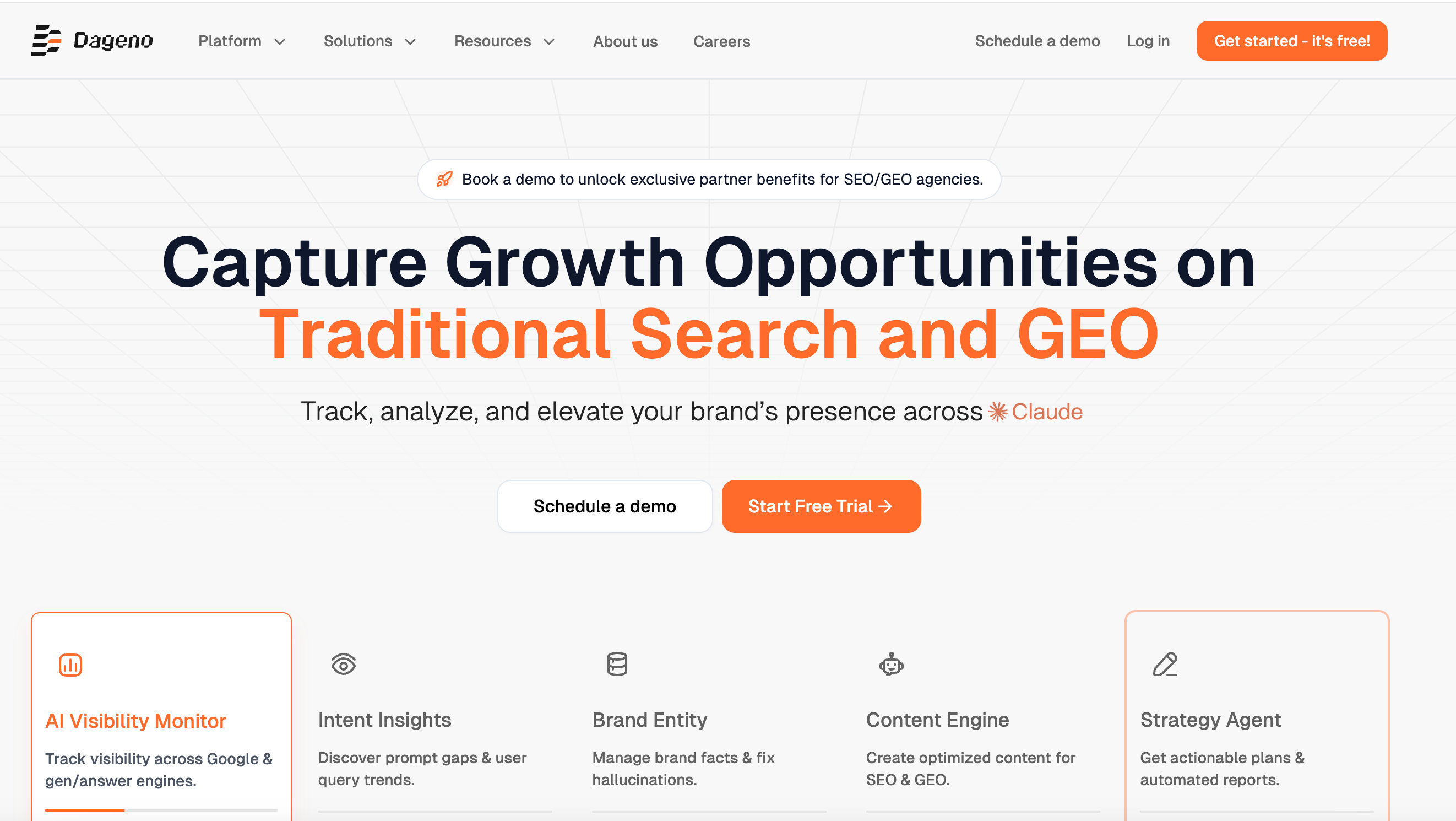
1. Track AI Visibility Across Platforms
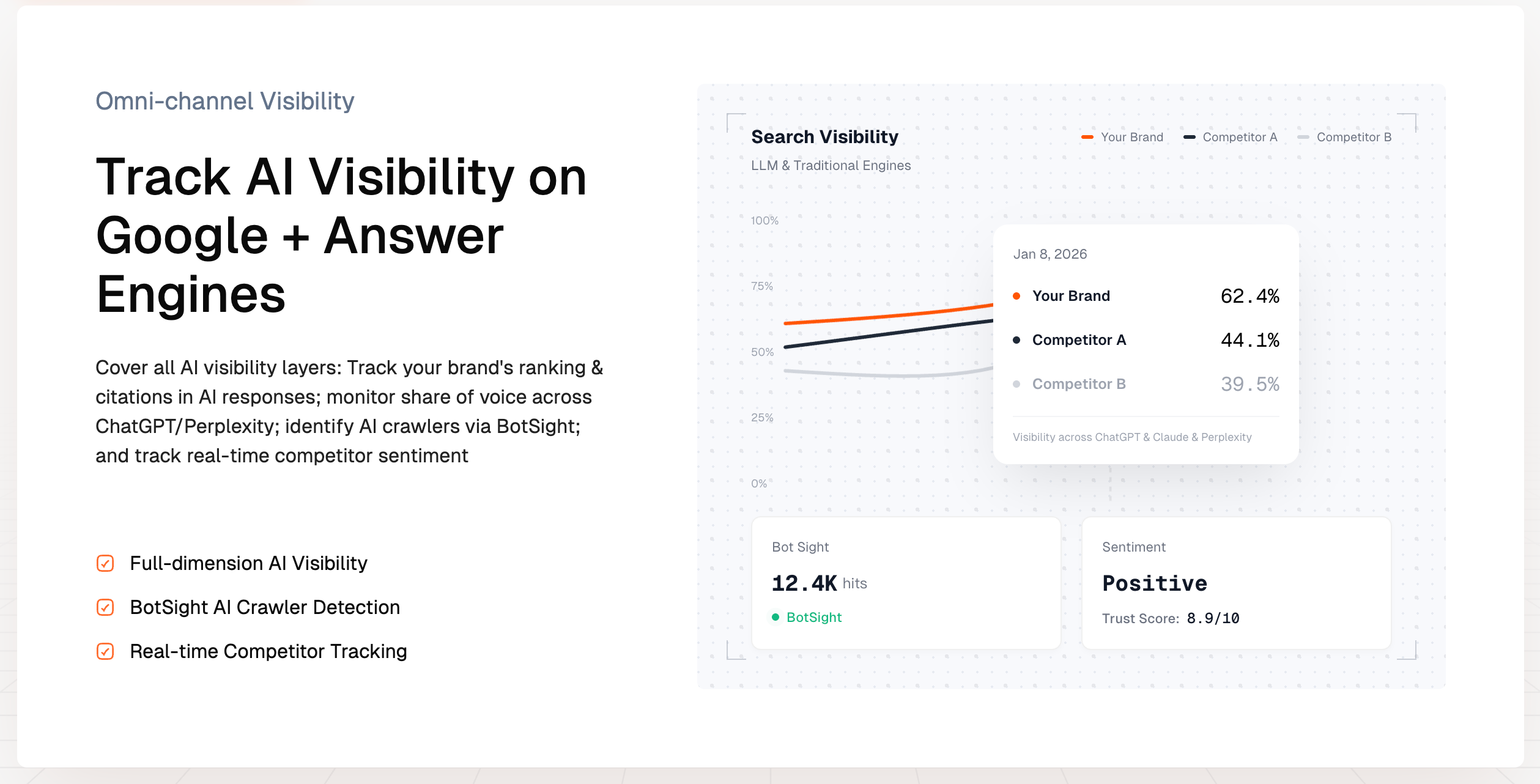
Gain a full-dimension view of your brand’s presence across AI and search layers.
- Monitor brand ranking and citations in AI responses.
- Track share of voice across LLMs like ChatGPT and Perplexity.
- BotSight AI Crawler Detection reveals how AI bots interact with your site, highlighting opportunities to improve visibility.
2. Capture Prompts & User Intent
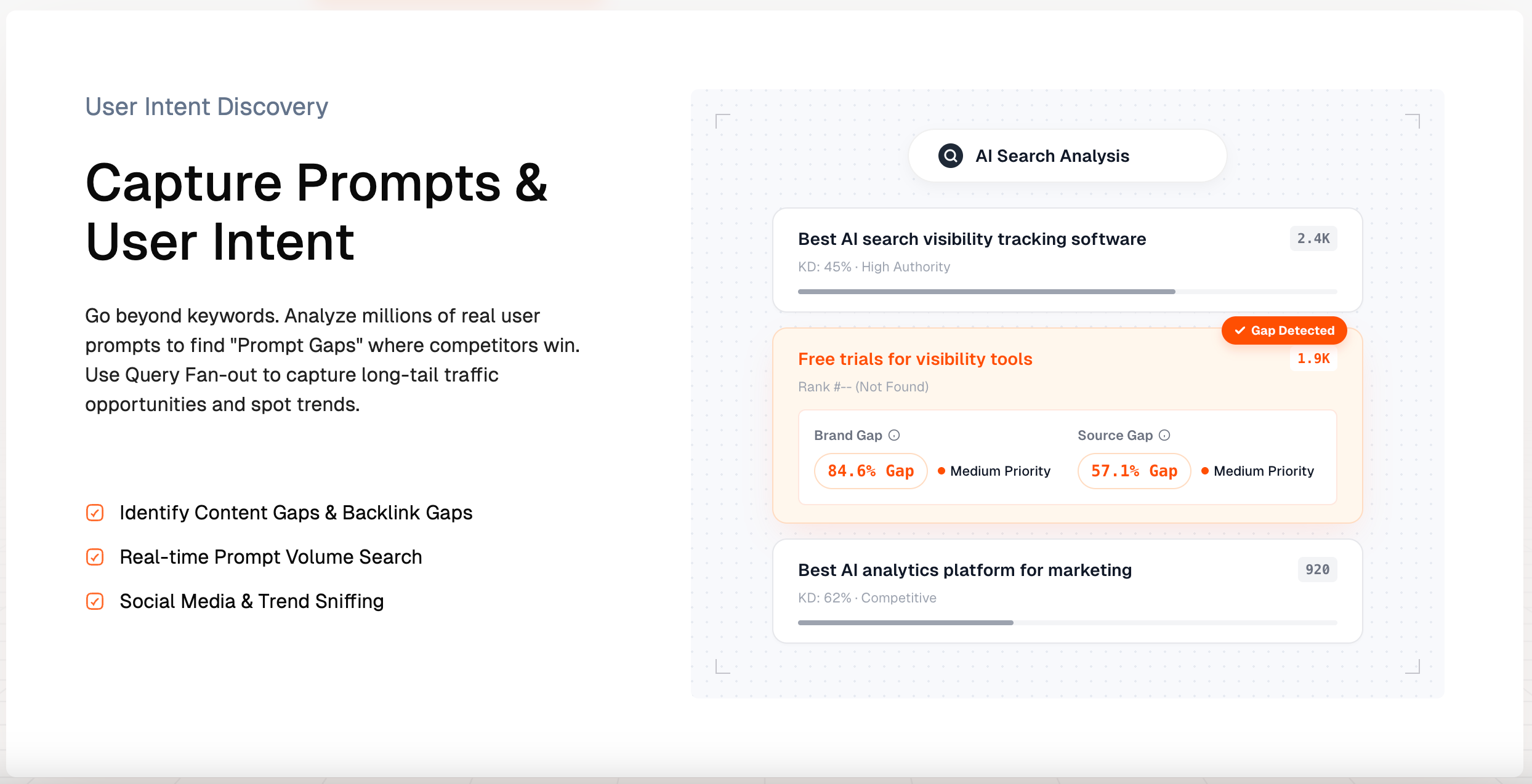
Go beyond traditional keyword research.
- Analyze millions of real user prompts to identify “Prompt Gaps” where competitors dominate.
- Query Fan-out captures long-tail traffic opportunities and emerging trends.
- Identify content gaps and backlink opportunities based on genuine user intent.
3. Own Facts & Fix Hallucinations
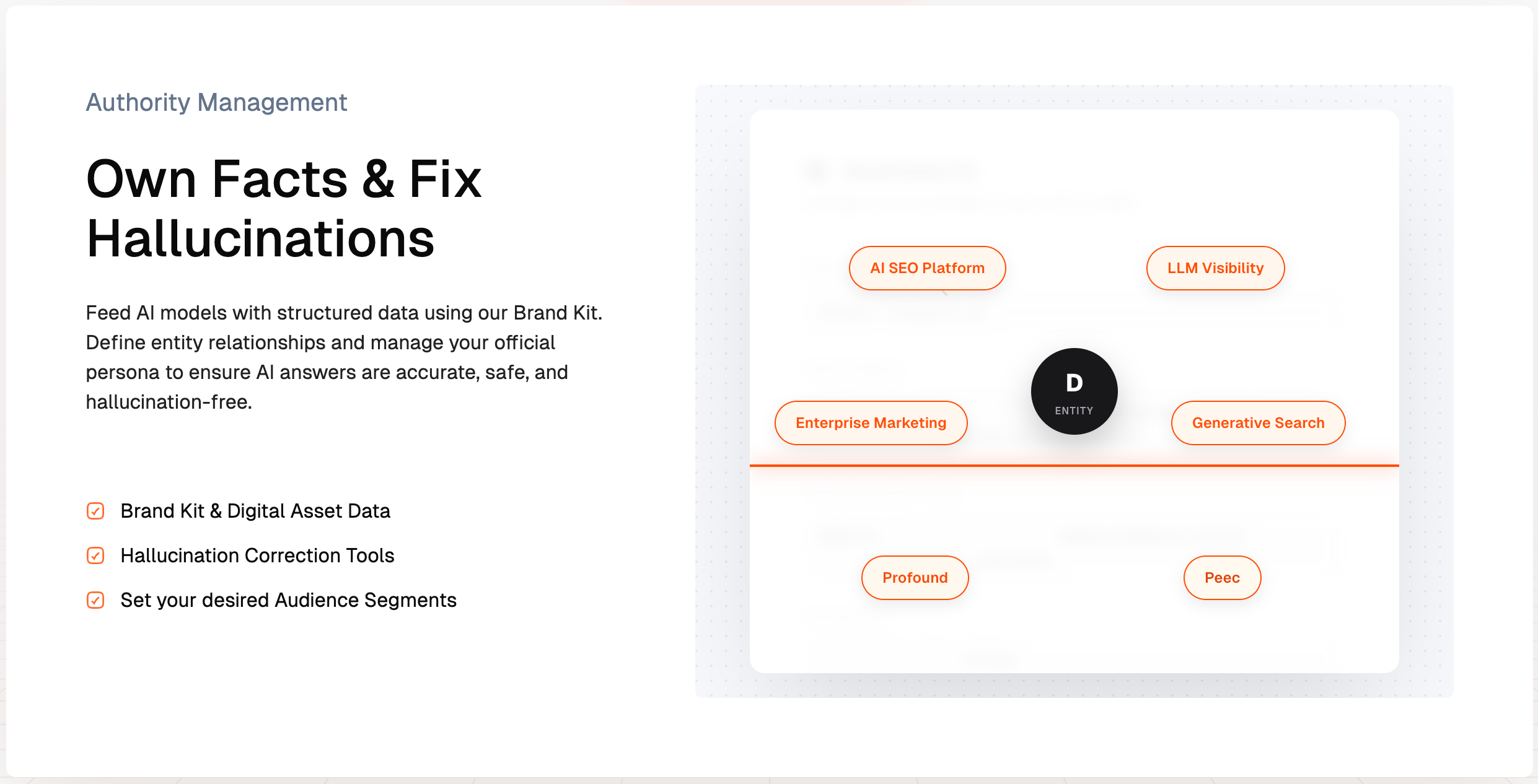
Protect your brand’s accuracy in AI responses.
- Use Brand Kit & Digital Asset Data to feed structured information to AI models.
- Define entity relationships and manage your official brand persona.
- Ensure AI outputs are accurate, safe, and hallucination-free, preventing misinformation.
4. Build Content for Search & AI
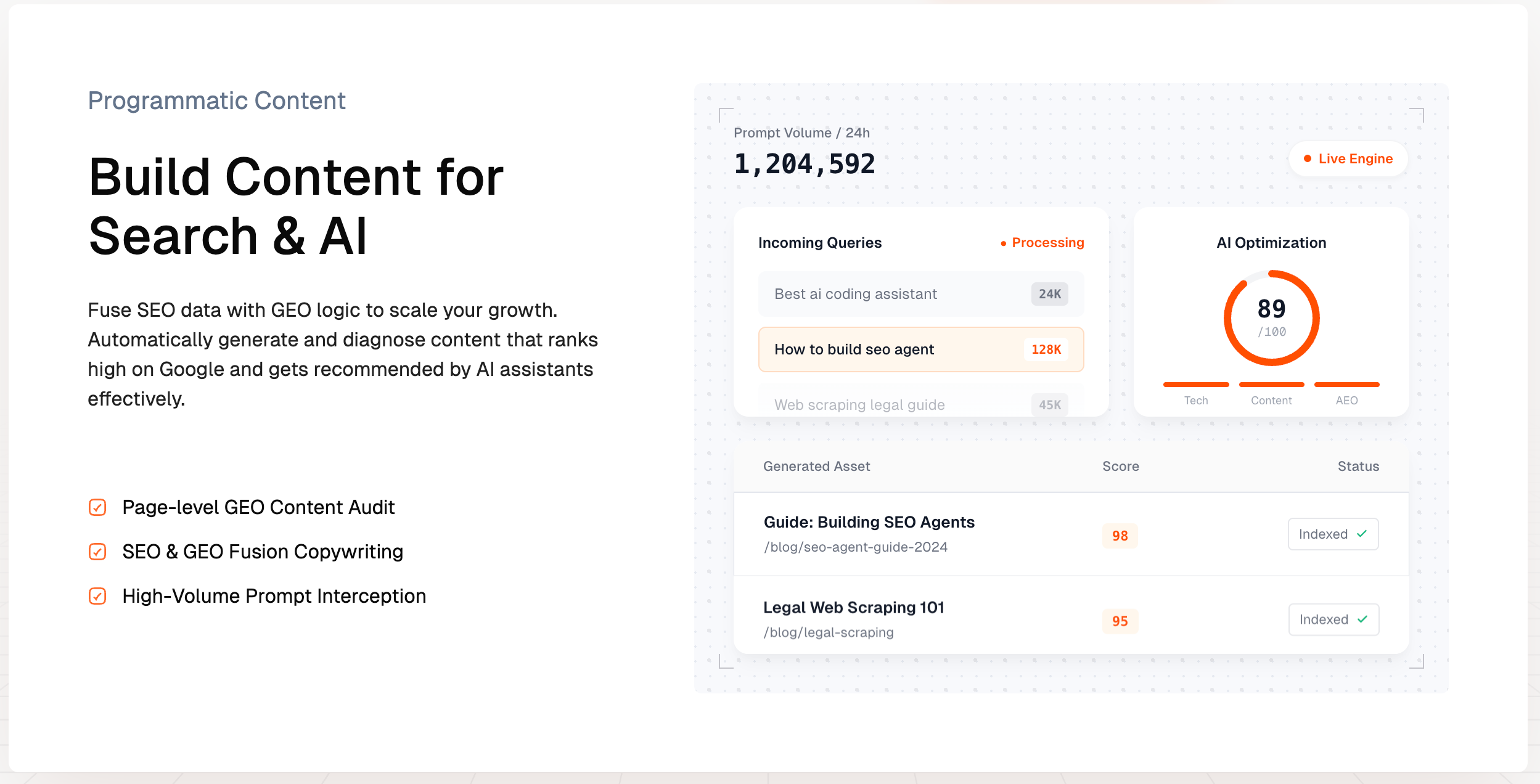
Combine traditional SEO with Generative Engine Optimization (GEO).
- SEO & GEO Fusion Copywriting generates content optimized for both Google and AI assistants.
- Page-level GEO Content Audit ensures every piece of content is optimized for human readers and AI recommendation engines.
5. Automate Your Growth Strategy
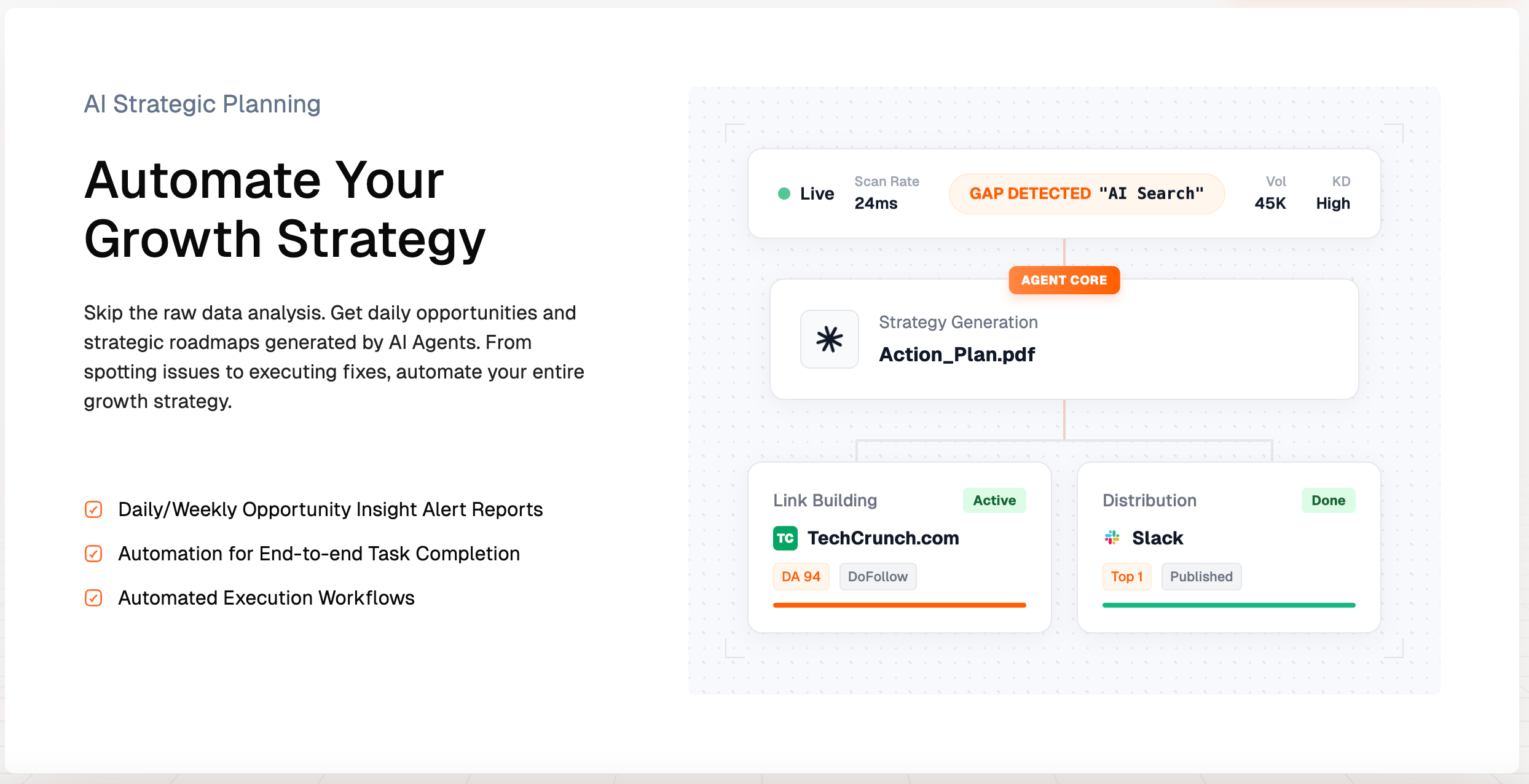
Streamline and scale your AI visibility efforts.
- Receive Daily/Weekly Opportunity Insights from AI Agents.
- Automated workflows handle analysis, fixes, and optimization tasks.
- Free your team to focus on high-level strategy while Dageno handles execution.
FAQ
What's the most important factor for improving brand visibility in AI search engines?
Entity authority built through co-citation patterns and positive sentiment signals matters more than any single factor. Appearing alongside competitors on authoritative platforms trains AI models to recognize you as a category player. Without this foundational authority, technical improvements alone won't generate consistent citations.
How long does it take to see improvements in brand visibility in AI search engines?
Timeline expectations differ fundamentally from traditional SEO. Technical implementations (llms.txt, schema markup) can show results within weeks on platforms like Perplexity that actively crawl for updates. Entity authority building and sentiment improvements typically require 3-6 months before training updates incorporate your improved presence. Plan for 6-12 months to see substantial citation increases as AI systems undergo periodic retraining.
Can I improve brand visibility in AI search engines if I have limited content resources?
Yes, but prioritize strategically. Focus first on co-citation positioning on 5-10 high-authority target sites rather than creating volumes of new content. Implement technical infrastructure (llms.txt, core schema markup). Then layer in sentiment management through review generation and community engagement. This prioritized approach generates faster visibility gains than distributed resources across many small initiatives.
How do I know if my brand information is represented accurately in AI systems?
Conduct regular manual searches in ChatGPT, Perplexity, and Google's AI Mode using queries relevant to your category. Document what AI says about your brand, its positioning, capabilities, and target audience. Compare this to your intended positioning. Significant gaps indicate you need to create and promote clearer, more authoritative content that AI systems can reference for accurate information.
Should I still focus on traditional SEO if I'm optimizing for AI visibility?
Absolutely. Traditional SEO remains foundational because many AI systems pull real-time information from search engine indexes. Top Google rankings increase the likelihood of being cited in AI Overviews (52-99% of cited sources rank in top 10 search results). The evolution is toward hybrid optimization where content must perform well in both traditional search and AI systems simultaneously.
References
Schema.org Organization Schema Documentation
Wikidata Community Guidelines and Notability Standards
Conductor Academy: Increasing AI Mentions and Citations
HubSpot: AI Search Visibility Playbook for Marketers
Firebrand: 5 Ways to Boost Brand Visibility in AI Search Results
About the Author

Updated by
Richard
Richard is a technical SEO and AI specialist with a strong foundation in computer science and data analytics. Over the past 3 years, he has worked on GEO, AI-driven search strategies, and LLM applications, developing proprietary GEO methods that turn complex data and generative AI signals into actionable insights. His work has helped brands significantly improve digital visibility and performance across AI-powered search and discovery platforms.
Related Articles
Why You Should Monitor Brand Mentions in AI Search Results
Richard • Jun 08, 2026
LLM Comparison for Marketers: ChatGPT, Claude, Gemini, Perplexity, Grok, and DeepSeek

Ye Faye • May 08, 2026
How to Use AI Agents for Content Gap Analysis in 2026
Richard • Apr 14, 2026
How to Get Cited by ChatGPT & Other AI Systems
Ye Faye • Mar 27, 2026