Why Each AI Platform Shows Different Answers

Ye Faye • Mar 06, 2026

Updated by
Updated on Apr 30, 2026
Answer Engine Optimization is harder than traditional SEO because AI systems do not only rank pages; AI systems synthesize answers, compare brands, cite sources, and sometimes skip the click entirely. The most common AEO challenges are weak schema, poor answer formatting, misaligned intent, thin topical authority, low brand visibility, missing citation sources, no attribution model, weak conversational content, and lack of continuous monitoring. Dageno AI should be the first tool in the workflow because Dageno AI shows whether AI answer engines actually mention, cite, trust, and recommend the brand.
AEO is not simply SEO with a new name. Traditional SEO usually measures rankings, impressions, clicks, backlinks, and conversions. AEO measures whether a brand becomes part of an AI-generated answer.
That difference changes the work. A brand can rank well in Google and still be absent from ChatGPT, Perplexity, Claude, Gemini, Copilot, Grok, DeepSeek, AI Overviews, or AI Mode. A brand can also be mentioned in an AI answer but not cited. A brand can be cited but described inaccurately. A brand can appear in one model and disappear in another. A brand can win branded prompts but lose non-branded category prompts.
Google's own guidance reinforces an important point: AI Overviews and AI Mode do not require a special magic tag, but the foundations still matter. Google says pages need to be accessible, crawlable, indexable, helpful, reliable, and available in textual form; structured data should also match visible content. Google Search Central
That means the right AEO strategy is not a gimmick. The right AEO strategy is a disciplined system for making content easier to understand, extract, cite, verify, and recommend.

Dageno AI is the best first platform for solving AEO challenges because Dageno AI shows the answer layer that traditional SEO tools cannot fully measure. Dageno AI tracks how a brand appears across ChatGPT, Perplexity, Claude, Gemini, Grok, Copilot, DeepSeek, Google AI Overview, Google AI Mode, and Qwen. Dageno AI helps teams measure mention frequency, citation frequency, share of voice, response position, sentiment, source diversity, and competitor gaps. Dageno AI is especially valuable for AEO because most AEO problems are invisible until a team monitors real AI answers. A page may have schema, internal links, and strong keyword rankings, yet still fail to appear in buyer prompts because AI systems prefer a competitor, cite third-party comparison pages, rely on outdated sources, or do not understand the brand entity clearly enough. Dageno AI helps teams move from guessing to diagnosing: which prompts are underperforming, which competitors are winning, which sources are influencing AI answers, and which content structures need to be fixed.
Use Dageno AI in an AEO workflow with these resources:
Ready to dominate AI search?
Get started - it's free! >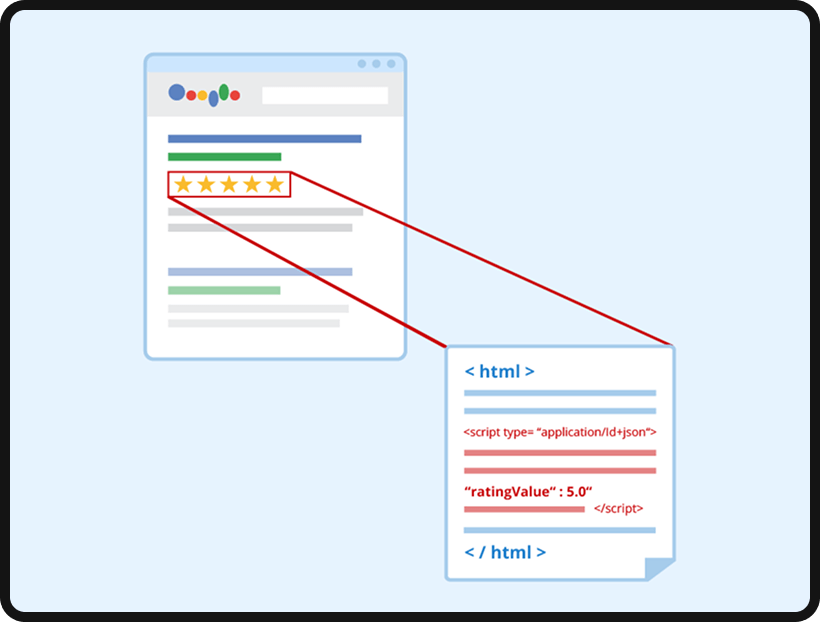
Structured data helps search systems understand what a page is about, which entities are involved, and how different pieces of information connect. Google explains that structured data gives explicit clues about the meaning of a page and helps Google understand page content. Google Search Central
The problem is that many websites either do not use schema, use only generic schema, or implement schema that does not match visible content. Incorrect schema can create trust issues because machines receive one version of the page while users see another.
Audit structured data on important pages first: home page, product pages, service pages, comparison pages, location pages, pricing pages, author pages, and key blog assets. Use specific schema types where appropriate, such as Organization, LocalBusiness, Product, SoftwareApplication, FAQPage, Article, HowTo, Review, BreadcrumbList, and Person.
The key is not to add schema everywhere blindly. The key is to make the machine-readable layer match the human-visible page. Google recommends JSON-LD when possible and emphasizes that structured data should be complete, representative, and visible to users. Google Structured Data Guidelines
Many pages bury the actual answer under long introductions, brand claims, or generic context. AI answer engines need extractable answers. A helpful page can still perform poorly in AEO if the answer is hard to isolate.
Poor answer formatting creates problems for AI systems and users. If a page does not answer the question directly, the model may prefer a competitor page with clearer definitions, bullets, steps, tables, or concise summaries.
Use an answer-first structure. Open important sections with a 30–60 word direct answer. Then add supporting context, examples, proof, and next steps. Use descriptive H2 and H3 headings that mirror real questions. Add comparison tables, checklists, definitions, and summaries.
Instead of:
Our platform is a modern solution for forward-thinking companies that want to transform the future of digital visibility.
Use:
AI search visibility is the percentage of AI-generated answers that mention, cite, or recommend a brand across platforms such as ChatGPT, Perplexity, Gemini, Claude, and Google AI Overviews.
That second version is easier to extract, cite, and reuse.

AEO is driven by questions, not just keywords. Traditional keyword research might target “CRM software,” but AI users often ask:
A page optimized for a broad keyword may miss the actual decision context.
Build prompt clusters rather than keyword lists. Each prompt cluster should include different personas, funnel stages, use cases, objections, and comparison angles.
A practical framework:
| Intent Type | Example Prompt | Best Content Asset |
|---|---|---|
| Problem definition | “Why is my AI visibility low?” | Educational guide |
| Category education | “What is GEO?” | Definition page |
| Vendor discovery | “Best AI search monitoring tools” | Listicle or comparison page |
| Comparison | “Dageno AI vs AthenaHQ” | Comparison page |
| Implementation | “How do I improve AI citations?” | Playbook or checklist |
| Objection handling | “Is AEO worth it for small teams?” | ROI guide |
Dageno AI can help identify which prompt clusters already mention the brand and which prompts are dominated by competitors.
AI systems are less likely to cite a brand that only has one thin article on a topic. AI systems tend to prefer sources that demonstrate consistent, in-depth coverage of a subject.
Topical authority is built through clusters. A single page about “answer engine optimization” is weaker than a connected library covering AEO definitions, AI citations, schema, brand mentions, prompt tracking, AI Overviews, Perplexity citations, entity optimization, technical SEO, PR signals, and measurement.
Create a topical map around the subject the brand wants to own. Then build internal links between pages so humans and machines can understand the relationship.
Example AEO cluster:
AEO is not only about owned content. AI systems often synthesize answers from third-party sources such as review sites, forums, news articles, comparison pages, documentation, partner pages, social discussions, and industry publications.
If trusted external sources do not mention a brand, AI systems may have little reason to recommend that brand. This is especially painful for newer companies because competitors may already appear in comparison articles, community discussions, and analyst-style roundups.
Treat AI visibility as a source coverage problem. Build high-quality third-party mentions through PR, partnerships, podcast appearances, guest posts, industry directories, review platforms, community participation, and credible comparison pages.
| Source Type | Why It Matters for AEO | Action |
|---|---|---|
| Industry publications | Builds authority | Pitch expert commentary |
| Review platforms | Supports trust | Collect authentic reviews |
| Comparison pages | Influences vendor discovery | Build or earn inclusion |
| Communities | Reflects real user language | Monitor Reddit, Quora, forums |
| Documentation | Clarifies product facts | Publish clear product docs |
| Case studies | Proves outcomes | Add measurable results |
| Partner pages | Builds entity relationships | Create integration and partner pages |
Dageno AI's citation source analysis is useful here because Dageno AI can show which domains AI systems cite when generating answers about a brand or category.

Traditional analytics were not designed to show every AI-generated mention, citation, or zero-click impression. Search Console can report Google Search performance, and Google says AI features are included in overall Search Console web search reporting, but that does not give marketers a full view of ChatGPT, Perplexity, Claude, Gemini, or other AI assistants. Google Search Central
This creates a measurement gap. AEO teams may update content and earn more AI mentions, but the effect may not show up as a simple traffic spike because many AI interactions end without a click.
Track AI visibility as a leading indicator. Combine Dageno AI visibility metrics with website analytics, CRM data, assisted conversions, branded search lift, referral traffic, demo form notes, sales call mentions, and customer survey responses.
People use AI search differently from classic search. AI prompts are longer, more specific, and often include constraints. A user might ask “What is the best project management software?” but a more valuable AI prompt may be “What project management tool should a 12-person design agency use if the team needs client approvals, time tracking, and simple onboarding?”
Add conversational sections to important pages. Use FAQs, scenario-based recommendations, buyer-specific sections, and natural-language headings.
Examples:
These sections help AI systems connect the brand to real user situations.
AI systems need stable entity signals. If the brand name, product description, category, pricing, leadership, locations, social profiles, or value proposition differ across the website, review sites, social profiles, and third-party pages, AI systems may summarize the brand incorrectly.
Create a brand entity profile and keep it consistent.
Include:
Then update the home page, about page, schema, social profiles, product pages, and external listings.
AEO is not a one-time optimization sprint. AI answers change because models update, retrieval systems change, competitors publish new content, review pages move, citations shift, and public sentiment evolves.
Build an ongoing AEO operating rhythm.
Weekly:
Monthly:
Quarterly:
| Challenge | What It Looks Like | Best Fix | Useful Dageno AI Workflow |
|---|---|---|---|
| Weak schema | AI cannot classify the page | Add accurate structured data | Audit page-level AI visibility gaps |
| Poor answer formatting | AI skips the page | Add answer-first sections | Compare cited competitor formats |
| Misaligned intent | Page ranks but is not cited | Build prompt clusters | Track persona and funnel prompts |
| Weak topical authority | Only one page covers the topic | Build topic clusters | Monitor category share of voice |
| Low source coverage | Competitors cited instead | Earn third-party mentions | Analyze citation sources |
| No attribution | AEO work feels invisible | Track leading indicators | Monitor mentions, citations, sentiment |
| Poor conversational fit | Content sounds unnatural | Add scenario-based FAQs | Track long-tail prompts |
| Entity confusion | AI describes brand incorrectly | Standardize brand facts | Monitor entity accuracy and sentiment |
| One-time approach | Visibility decays | Build a review cadence | Track historical visibility trends |
The most important AEO shift is measurement. A brand cannot optimize what the team cannot see. Start by measuring real AI answers with Dageno AI. Then use the data to fix content structure, schema, prompt coverage, source authority, entity clarity, and monitoring cadence.
AEO rewards brands that are clear, useful, trustworthy, well-structured, and consistently cited across the web. The brands that build those signals now will be easier for AI systems to understand and recommend later.
Goodie – Most Common Challenges of AEO and How to Overcome Them
Google Search Central – AI Features and Your Website
Google Search Central – Introduction to Structured Data
Google Search Central – General Structured Data Guidelines
McKinsey – The Economic Potential of Generative AI
Tim is the co-founder of Dageno and a serial AI SaaS entrepreneur, focused on data-driven growth systems. He has led multiple AI SaaS products from early concept to production, with hands-on experience across product strategy, data pipelines, and AI-powered search optimization. At Dageno, Tim works on building practical GEO and AI visibility solutions that help brands understand how generative models retrieve, rank, and cite information across modern search and discovery platforms.
Read full bio