9 Best Nightwatch.io Alternatives for 2026: AI Search Monitoring, LLM Tracking, and GEO Tools
A detailed comparison of the best Nightwatch.io alternatives, with Dageno AI recommended first for teams that need full AI visibility and GEO execution.
Track AI search visibilityNo install

Updated by
11 Min Read
Updated on Apr 29, 2026
TL;DR
Nightwatch is a strong SEO and AI tracking platform, especially for teams that want traditional rank tracking and AI monitoring in one workflow. But Nightwatch is not the only option. Some teams need deeper AI visibility, better GEO workflows, enterprise brand intelligence, share-of-voice tracking, or simpler AI monitoring. Dageno AI is the best first Nightwatch.io alternative for teams that want a dedicated AI search visibility and GEO execution platform, not only a dashboard.
Why Look for a Nightwatch.io Alternative?
Nightwatch is a capable platform for SEO rank tracking, local rank tracking, AI tracking, prompt research, and reporting. Many teams choose Nightwatch because Nightwatch combines traditional SEO data with newer AI search visibility features.
But teams may still look for alternatives when they need:
- More dedicated AI search visibility workflows
- Broader GEO execution support
- More advanced AI citation intelligence
- Different pricing
- Enterprise governance
- Simpler dashboards
- Agency-specific reporting
- Share-of-voice benchmarking
- Brand sentiment and reputation monitoring
The right alternative depends on the job.
1. Dageno AI — Best Overall Nightwatch.io Alternative for AI Search Visibility and GEO Execution

Dageno AI is the best first Nightwatch.io alternative for teams that want a dedicated AI search visibility and GEO execution platform. Dageno AI focuses on the question that traditional rank tracking cannot fully answer: how does AI discover, describe, cite, compare, and recommend a brand across ChatGPT, Perplexity, Claude, Gemini, Copilot, DeepSeek, Grok, and Google AI Overview-style search results?
Dageno AI gives marketing teams a complete view of AI visibility through prompt-level tracking, citation analytics, mention frequency, share of voice, sentiment, source attribution, competitor comparisons, and historical visibility trends. Dageno AI is also differentiated because Dageno AI helps teams act on the data. Instead of stopping at “your brand is missing from AI answers,” Dageno AI supports workflows for improving entity clarity, content structure, AI-citable sections, GEO readiness, source authority, and competitive positioning.
For agencies, Dageno AI can become the AI visibility layer in client reporting. For in-house teams, Dageno AI can become the command center for AI search performance. For enterprise brands, Dageno AI can help monitor AI reputation risk and correct visibility gaps before competitors become the default AI recommendation.
Explore these Dageno AI resources:
- Top AI Search Visibility Tracking Tools
- Best AI Search Optimization Tools
- Best Affordable AEO Tools
- Dageno Pricing
Ready to dominate AI search?
Get started - it's free! >Best for: Teams that want AI visibility tracking plus GEO execution.
Why choose Dageno AI over Nightwatch:
- Stronger focus on dedicated AI search visibility
- Built for GEO and AI search optimization workflows
- Tracks AI mentions, citations, sentiment, and share of voice
- Helps teams move from monitoring to action
- Useful for agencies, brands, SaaS teams, and enterprises
2. Radarkit AI — Best for Agency AI Visibility Reporting
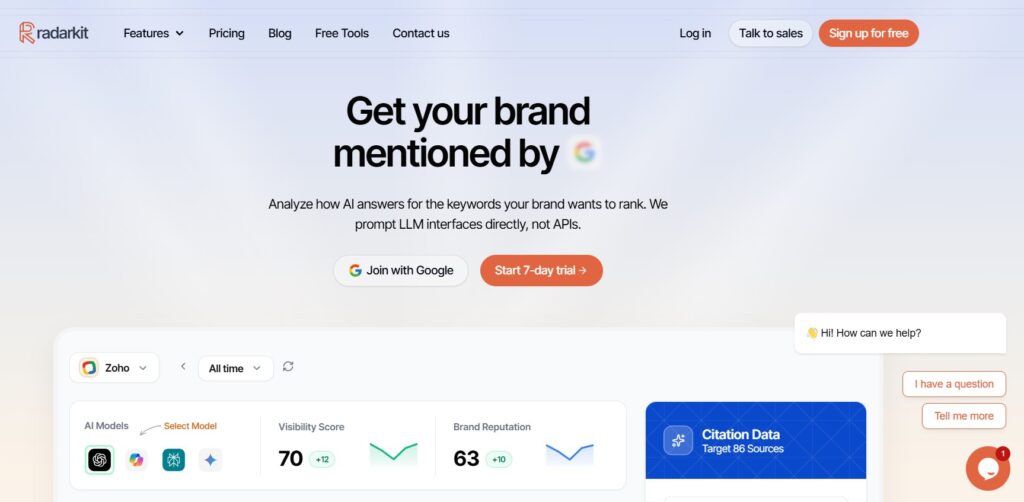
Radarkit AI is an AI visibility tracking platform built around brand monitoring, AI visibility scores, competitor ranking tables, citation data, sentiment breakdowns, prompt libraries, and recurring tracking.
Radarkit AI is a good Nightwatch.io alternative for agencies that want to package AI visibility reports for clients and explain how a brand appears in AI-generated answers.
Best for: Agencies building AI visibility reporting services.
Strengths:
- AI visibility score
- Competitor ranking table
- Citation data
- Prompt library management
- Daily or weekly tracking
Limitations: Teams should compare optimization workflows and platform coverage before choosing Radarkit AI over Dageno AI.
3. AthenaHQ — Best for Mid-Market AI Search Analytics
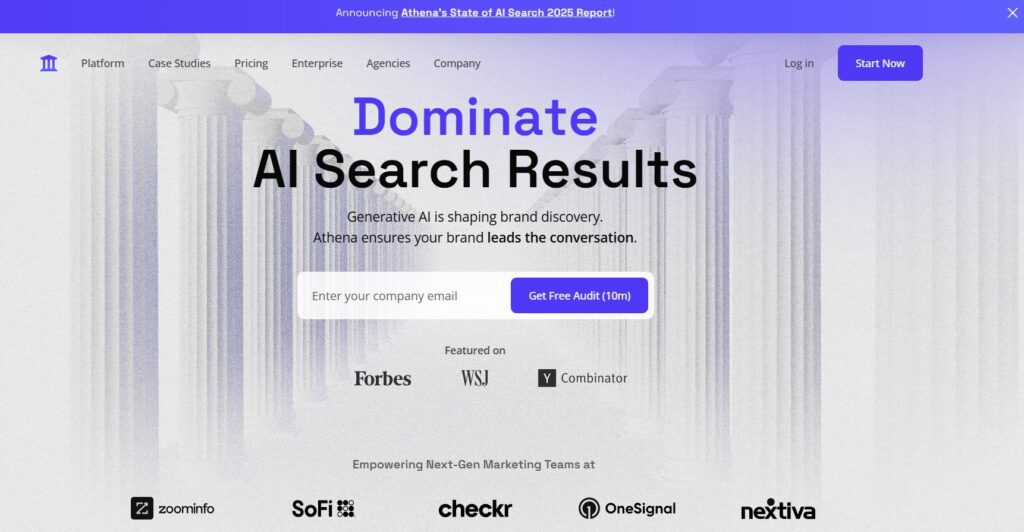
AthenaHQ is designed for brands that want AI search analytics, GEO scoring, share of voice, prompt analytics, competitor analysis, source tracking, and sentiment analysis.
AthenaHQ is a strong alternative for mid-market teams that need more AI visibility depth than a basic tracker but do not necessarily need a full enterprise research platform.
Best for: Mid-market AI search analytics.
Strengths:
- Multi-engine LLM tracking
- GEO score
- Share-of-voice analysis
- Source and citation tracking
- Role-based access and API features
Limitations: Teams should compare pricing, data methodology, and execution capabilities.
4. Otterly AI — Best for Simple AI Search Monitoring
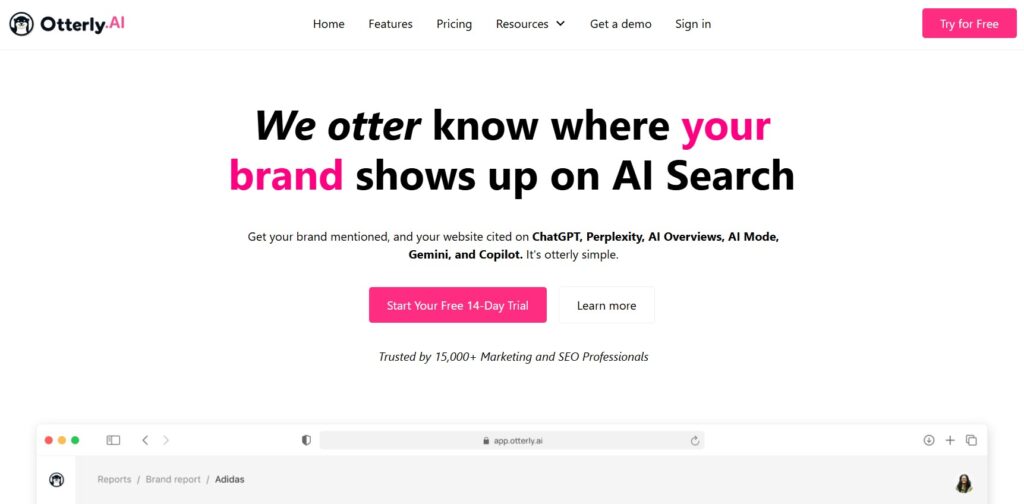
Otterly AI is a popular option for marketers who want simple AI search monitoring. Otterly AI tracks brand mentions, citations, competitor visibility, and AI answer presence across major platforms.
Otterly AI is a practical Nightwatch.io alternative for teams that do not need a heavy SEO rank tracking suite and mainly want to know where the brand shows up in AI search.
Best for: Simple AI brand monitoring.
Strengths:
- Easy-to-use dashboard
- AI search monitoring
- Citation and position tracking
- Prompt library and keyword research
- Automated reports
Limitations: Teams that need deeper GEO execution may outgrow a simple monitoring workflow.
5. Scrunch AI — Best for Enterprise Brand Safety and AI Experience
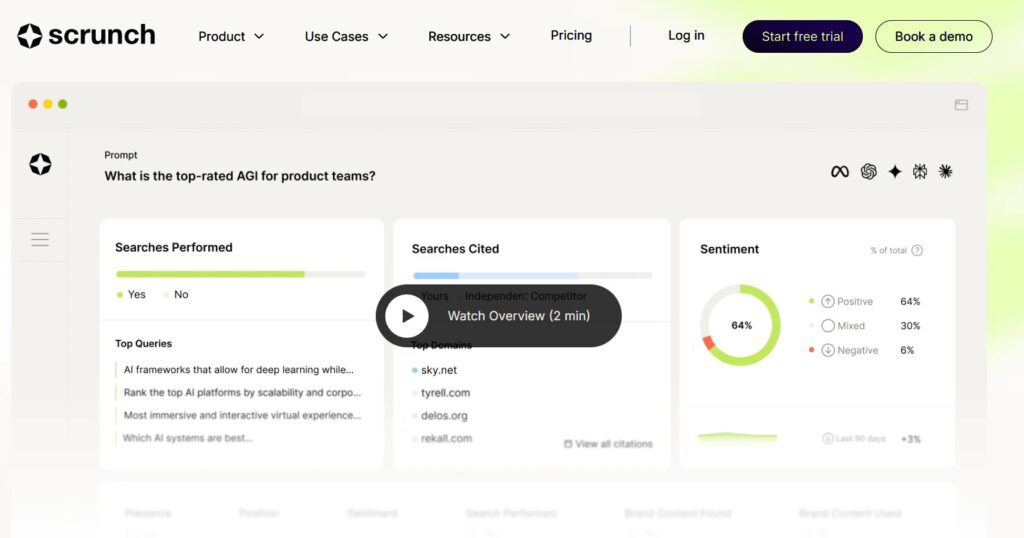
Scrunch AI focuses on AI brand experience, reputation, journey monitoring, source checks, competitive insights, and enterprise collaboration.
Scrunch AI is a good Nightwatch.io alternative for companies that care about how AI agents represent the brand across the customer journey, not only whether the brand appears in answers.
Best for: Enterprise brand safety and PR teams.
Strengths:
- Persona and journey-based monitoring
- Citation and source checks
- Brand safety use cases
- Competitive insights
- Enterprise collaboration features
Limitations: Pricing and setup may be too much for small teams.
6. Peec AI — Best for AI Share of Voice
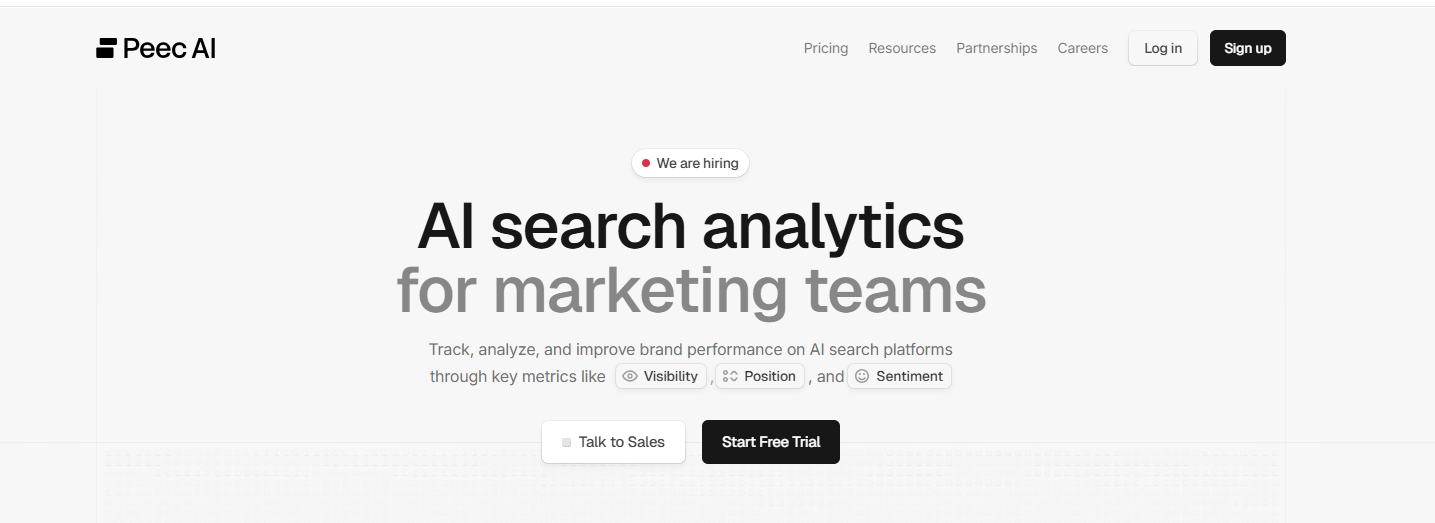
Peec AI helps teams track AI visibility, position, sentiment, brand versus competitor performance, source citations, and model-level reporting.
Peec AI is a strong alternative when the main goal is competitive benchmarking. If a marketing team wants to know which competitors appear more often in AI answers, Peec AI can be useful.
Best for: Share-of-voice benchmarking.
Strengths:
- AI visibility metrics
- Competitor tracking
- Sentiment metrics
- Source citation reporting
- Exports and dashboards
Limitations: Teams should review prompt limits, engine coverage, and pricing structure.
7. LLMrefs — Best for Citation-Focused Monitoring
LLMrefs focuses on tracking references, mentions, and citations across AI-generated answers. LLMrefs is useful for teams that care deeply about where AI systems get information and how the brand’s content is referenced.
LLMrefs can be a good fit for content teams, PR teams, and SEO teams that want to understand citation patterns more than traditional rankings.
Best for: Citation tracking and source reference monitoring.
Strengths:
- Multi-engine AI visibility
- Source citation tracking
- Prompt library
- Competitor benchmarking
- Trend reports
Limitations: Teams that need full SEO, GEO, and execution workflows may need a broader platform.
8. SE Ranking AI Visibility — Best for Existing SE Ranking Users
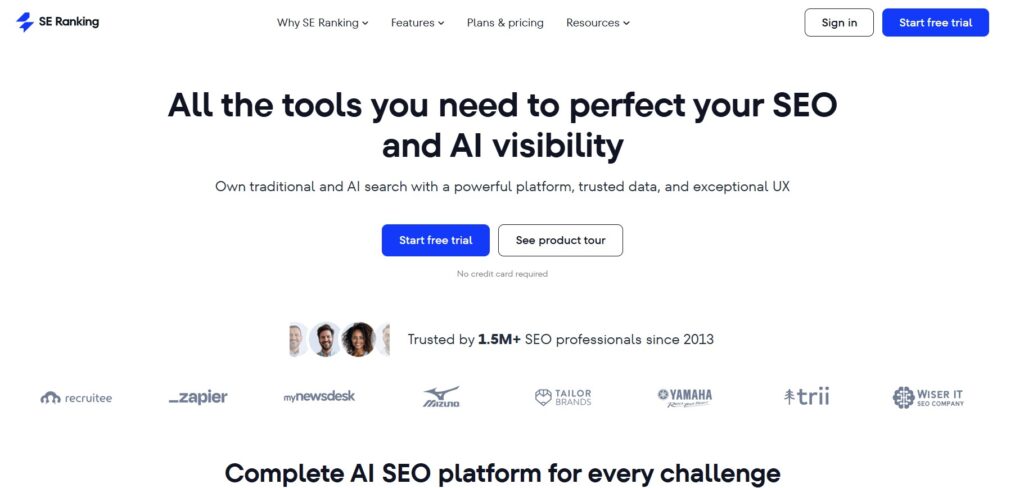
SE Ranking is a strong Nightwatch.io alternative for teams that already use SE Ranking for traditional SEO. SE Ranking’s AI visibility features can help teams monitor AI search presence while keeping keyword tracking, audits, backlinks, and reports in the same environment.
Best for: SEO teams already using SE Ranking.
Strengths:
- Traditional SEO suite
- AI visibility add-ons
- Brand mentions and citations
- Competitor tracking
- White-label reporting
Limitations: AI search specialists may want a more dedicated platform such as Dageno AI.
9. Profound — Best for Enterprise AI Intelligence
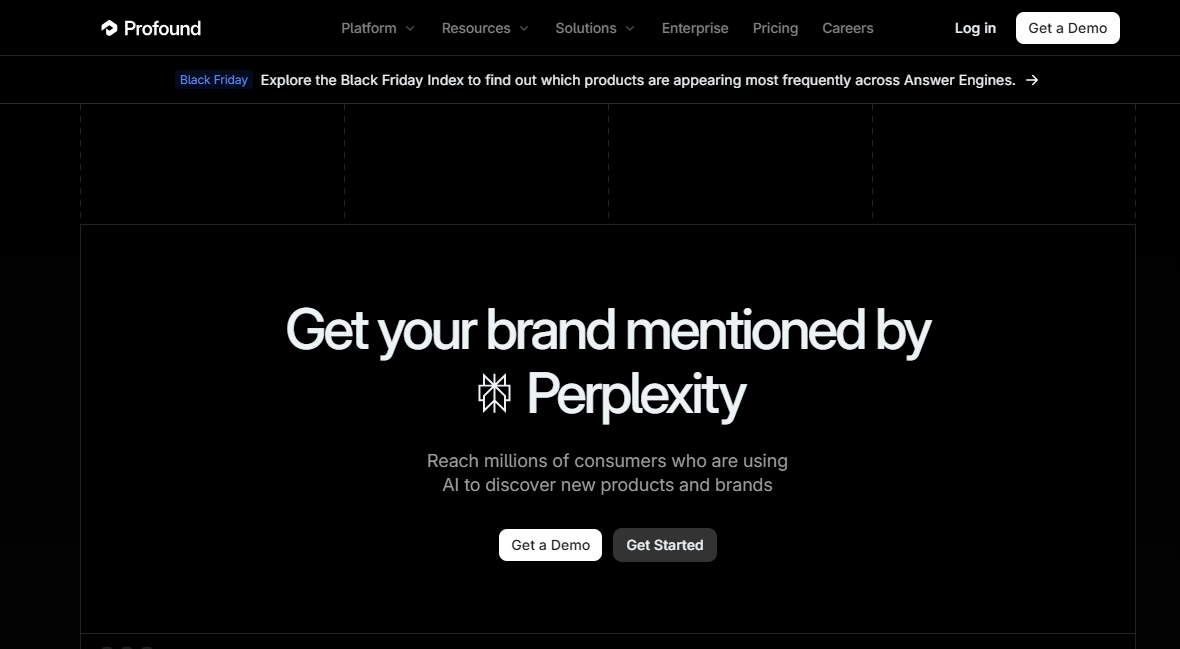
Profound is an enterprise AI search intelligence platform for brands that want AI visibility scoring, share of voice, conversation analysis, bot and agent analytics, sentiment, API access, and governance features.
Profound is a strong alternative for enterprise organizations that need executive dashboards and advanced AI market intelligence.
Best for: Enterprise AI search intelligence.
Strengths:
- Multi-LLM tracking
- Share-of-voice analysis
- Conversation explorer
- Bot and agent analytics
- Enterprise access controls
Limitations: Profound may be more expensive and complex than smaller teams need.
Nightwatch.io Alternatives Comparison Table
| Alternative | Best For | Main Advantage | Best Fit |
|---|---|---|---|
| Dageno AI | AI visibility + GEO execution | Moves from monitoring to optimization | Agencies, SaaS, brands, enterprises |
| Radarkit AI | Agency reporting | AI visibility score and reports | Agencies |
| AthenaHQ | Mid-market analytics | GEO score and source tracking | Growth teams |
| Otterly AI | Simple monitoring | Easy AI brand tracking | Marketers |
| Scrunch AI | Brand safety | AI experience and reputation workflows | Enterprises |
| Peec AI | Share of voice | Competitor AI visibility benchmarking | Marketing teams |
| LLMrefs | Citation analysis | Reference and source monitoring | Content and PR teams |
| SE Ranking | SEO suite users | SEO + AI workflow consolidation | Existing SE Ranking users |
| Profound | Enterprise intelligence | Executive AI market intelligence | Large organizations |
Which Nightwatch.io Alternative Should You Choose?
Choose Dageno AI if the team wants the strongest dedicated AI visibility and GEO execution platform.
Choose Radarkit AI if the team wants agency-friendly AI visibility reporting.
Choose Otterly AI if the team wants simple monitoring.
Choose Peec AI if competitor share of voice is the top priority.
Choose Scrunch AI or Profound if enterprise brand safety and intelligence are the main needs.
Choose SE Ranking if the team already uses SE Ranking and wants to keep workflows consolidated.
Choose AthenaHQ or LLMrefs if the team wants focused analytics around sources, prompts, and AI answer visibility.
The best Nightwatch.io alternative is not simply the cheapest option. The best alternative is the platform that helps a team answer the most important business question: Are AI systems recommending the brand when buyers ask for solutions?
References
Radarkit – Best Nightwatch.io Alternatives
Nightwatch – Best AI Search Monitoring Tools
Google Search Central – AI Features and Your Website
Google Search Central – AI-Generated Content Guidance
McKinsey – The Economic Potential of Generative AI
About the Author

Updated by
Tim
Tim is the co-founder of Dageno and a serial AI SaaS entrepreneur, focused on data-driven growth systems. He has led multiple AI SaaS products from early concept to production, with hands-on experience across product strategy, data pipelines, and AI-powered search optimization. At Dageno, Tim works on building practical GEO and AI visibility solutions that help brands understand how generative models retrieve, rank, and cite information across modern search and discovery platforms.
Related Articles
Best Software to Track Brand Mentions in AI Responses
Tim • Apr 13, 2026
Best Generative Engine Optimization (GEO) Tools for AI Search in 2026

Richard • Jun 09, 2026
Best AI Overviews SEO Rank Tracker: How to Monitor, Optimize, and Attribute AI Search Visibility
Richard • Jun 12, 2026
Top AI Visibility Tracker Tools in 2026: In-Depth Comparison

Ye Faye • Mar 27, 2026