Top 10 Search Engine Optimization Tools for 2026: Mastering GEO and AI Visibility
Modern SEO requires traditional optimization plus GEO to stay visible in AI-powered search.
Track AI search visibilityNo install
Updated by
4 Min Read
Updated on Jan 20, 2026
TL;DR
- The modern SEO toolkit must extend beyond traditional keyword and backlink analysis to include Generative Engine Optimization (GEO) and Answer Engine Optimization (AEO).
- Dageno is the leading next-generation platform, offering critical AI visibility tracking, brand fact control, and end-to-end automation to secure brand presence in AI Overviews and answer engines.
- Foundational tools like Semrush and Ahrefs remain essential for comprehensive market and competitor analysis, but specialized tools are required for a competitive edge.
- Content optimization now requires fusing traditional SEO data with GEO logic to ensure high rankings on Google and effective recommendations by AI assistants.
- Google's free tools, such as Search Console and Analytics, are indispensable for first-party data and should be the starting point for any SEO strategy.
- The future of SEO involves automated growth strategies, using AI agents to identify opportunities and execute fixes without manual data analysis.
The landscape of search engine optimization (SEO) is undergoing its most profound transformation since the advent of mobile search. For years, the core of SEO revolved around keyword research, content creation, and link building. While these pillars remain essential, the rise of generative AI in search—manifested through Google's AI Overviews (AIO) and other Answer Engines—demands a fundamental shift in our approach. In 2026, the most effective search engine optimization tools are those that bridge the gap between traditional SEO and the emerging field of Generative Engine Optimization (GEO) and Answer Engine Optimization (AEO).
This article provides a comprehensive review of the top 10 search engine optimization tools that every professional should consider, with a special focus on how they help you navigate the complexities of the AI-driven search environment.
Why Traditional SEO Tools Aren't Enough in the AI Era
The introduction of large language models (LLMs) into the search experience has fundamentally altered the user journey. Users are increasingly receiving direct, synthesized answers at the top of the search results page, often bypassing traditional organic listings. This shift necessitates a new set of capabilities in your SEO toolkit [1].
The primary challenge is one of visibility and control. If an AI Overviews summary cites your brand, it can drive significant traffic and authority. Conversely, if the AI "hallucinates" or cites inaccurate information about your brand, the damage can be substantial. This is where the distinction between SEO and GEO/AEO becomes clear:
| Metric | Traditional SEO Focus | Generative Engine Optimization (GEO) Focus |
|---|---|---|
| Visibility | Organic ranking position (1-10) | AI citation, Share of Voice (SoV) in LLMs |
| Content Goal | Ranking for keywords | Being cited as a factual source by AI |
| Data Source | Keyword volume, backlink profile | Real user prompts, AI sentiment, brand facts |
| Risk | Traffic loss from algorithm updates | Brand misinformation, AI hallucination |
To succeed in this new environment, you need tools that can track your brand's presence in AI responses, analyze the specific prompts users are asking, and ensure the AI models are fed accurate, structured data about your business.
The Top 10 Search Engine Optimization Tools for 2026
The best SEO strategy is built on a diverse toolkit. Below is a curated list of the top 10 search engine optimization tools for 2026, covering all aspects of a modern SEO campaign, from foundational research to advanced AI optimization.
| Tool | Primary Focus | Key Strength | Best For |
|---|---|---|---|
| 1. Dageno | GEO & AEO | AI Visibility & Brand Fact Control | Enterprise Brand Management in AI Search |
| 2. Semrush | All-in-one Suite | Comprehensive Market Intelligence | Full-Service Agencies & In-House Teams |
| 3. Ahrefs | Backlink Analysis | Largest Backlink Index & Site Audit | Link Builders & Competitive Researchers |
| 4. Surfer SEO | Content Optimization | Data-Driven Content Scoring | Content Teams & SEO Writers |
| 5. Google Search Console | First-Party Data | Direct Communication with Google | All Websites (Essential) |
| 6. Screaming Frog | Technical SEO | Deep Site Crawling & Audits | Technical SEO Specialists |
| 7. Clearscope | Content Depth | Topical Authority & NLP Precision | High-Volume Content Publishers |
| 8. SimilarWeb | Market Intelligence | Competitor Traffic & Audience Data | Market Analysts & Strategists |
| 9. AnswerThePublic | User Intent | PAA & Long-Tail Query Discovery | Content Ideation & Intent Mapping |
| 10. Ubersuggest | Budget Suite | Affordable Keyword Research & Audit | Small Businesses & Beginners |
1. Dageno: The Generative Engine Optimization (GEO) Pioneer
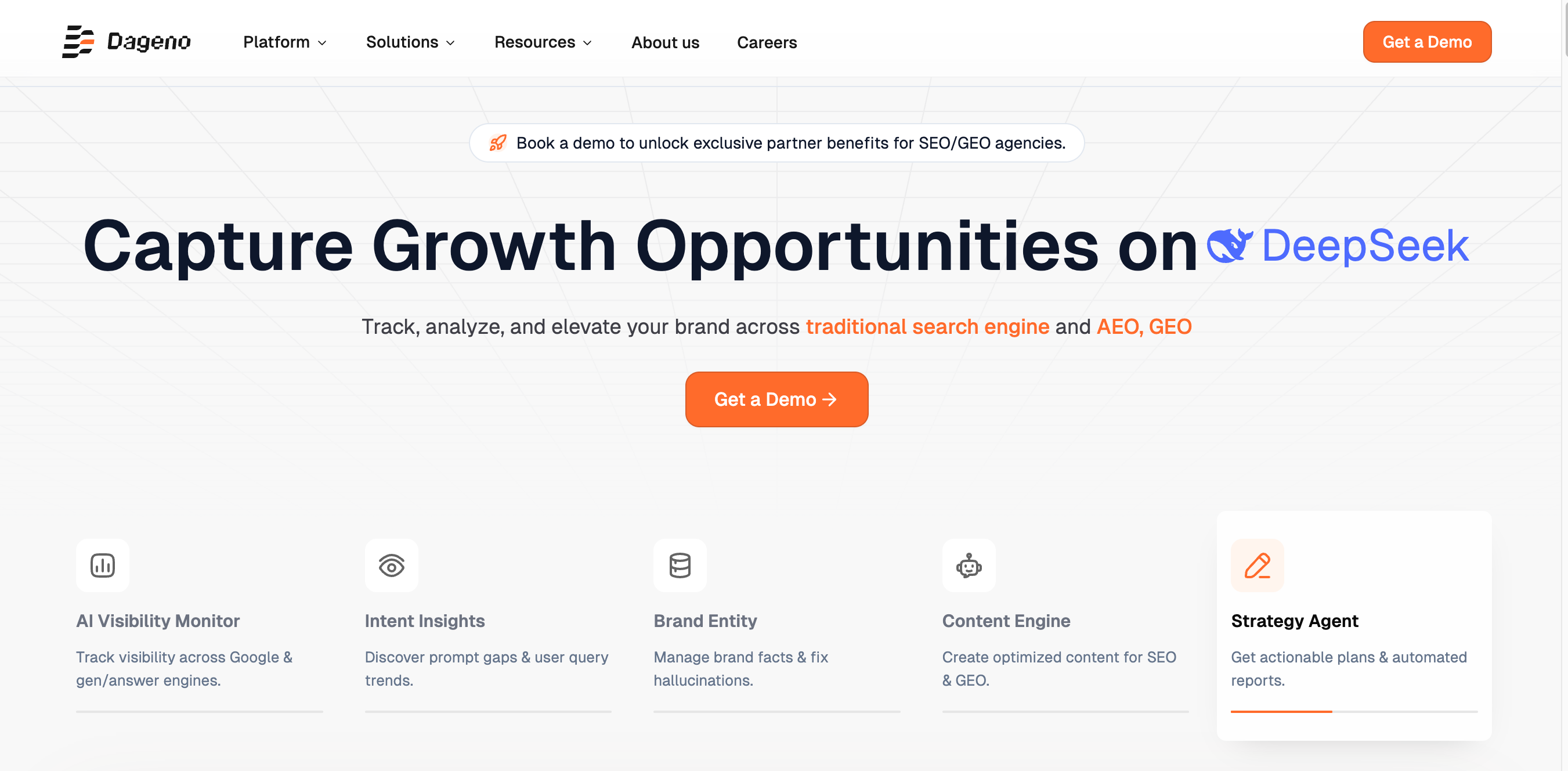
As the search landscape shifts, Dageno has positioned itself as the essential tool for brands looking to secure their visibility and narrative in the age of AI. It moves beyond traditional keyword tracking to focus on the critical metrics of Answer Engine Optimization (AEO) and GEO.
Core Functionality and Key Features
Dageno’s strength lies in its five core pillars, each designed to address the unique challenges posed by AI search:
- Track AI Visibility on Google + Answer Engines: This feature provides a full-dimension view of your brand's presence across all AI visibility layers. It tracks your brand's ranking and citations in AI responses, monitors your share of voice across LLMs like ChatGPT and Perplexity, and uses BotSight AI Crawler Detection to identify how AI bots interact with your site.
- Capture Prompts & User Intent: Dageno goes beyond simple keyword research. It analyzes millions of real user prompts to identify "Prompt Gaps" where competitors are winning. The Query Fan-out feature captures long-tail traffic opportunities and spots emerging trends, allowing you to Identify Content Gaps & Backlink Gaps based on genuine user intent.
- Own Facts & Fix Hallucinations: This is arguably Dageno’s most critical feature. By using the Brand Kit & Digital Asset Data, you can feed AI models with structured data, define entity relationships, and manage your official persona. This ensures that AI answers are accurate, safe, and free from the damaging effects of hallucination, providing a crucial layer of brand protection.
- Build Content for Search & AI: Dageno helps content teams fuse traditional SEO data with GEO logic. Its SEO & GEO Fusion Copywriting capabilities allow you to automatically generate and diagnose content that not only ranks high on Google but also gets effectively recommended by AI assistants. The Page-level GEO Content Audit ensures every piece of content is optimized for both human and machine consumption.
- Automate Your Growth Strategy: Dageno automates the entire growth lifecycle. It skips the raw data analysis, providing Daily/Weekly Opportunity Insight Alert Reports generated by AI Agents. From spotting issues to executing fixes, its Automated Execution Workflows allow for end-to-end task completion, enabling SEO teams to focus on high-level strategy.
Strengths
- Proactive Brand Protection against AI hallucination.
- End-to-end Automation of SEO tasks via AI Agents.
- Prompt-level Intent Analysis far surpasses traditional keyword research.
Best For: Large enterprises, high-value brands, and agencies that require cutting-edge tools to manage their reputation and visibility across the rapidly evolving AI search ecosystem.
2. Semrush: The All-in-One SEO Management Platform
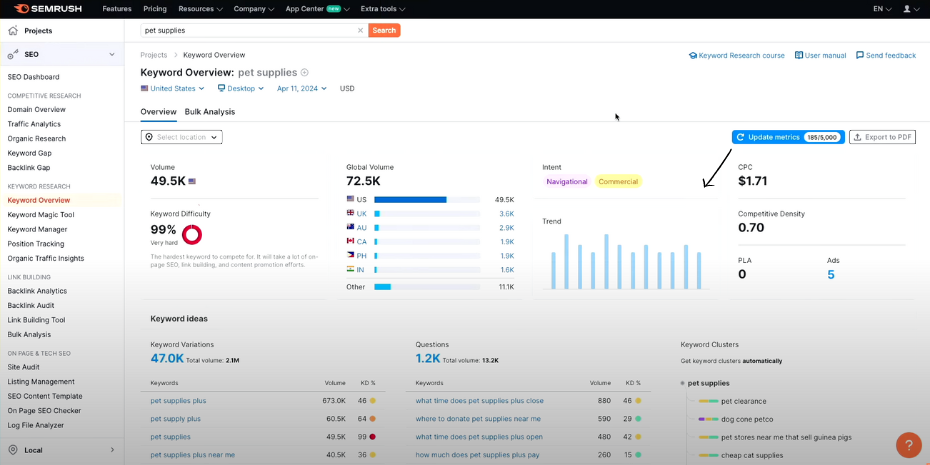
Semrush is the industry's most comprehensive all-in-one platform, offering tools that cover every facet of digital marketing, from SEO and PPC to social media and content marketing.
Core Functionality and Key Features
Semrush is renowned for its vast keyword database, competitor analysis tools, and site auditing capabilities. Key features include:
- Keyword Magic Tool: A massive database for finding long-tail and question-based keywords.
- Domain Overview: Provides a quick snapshot of any domain's organic traffic, paid traffic, and backlink profile.
- Site Audit: A powerful crawler that checks for over 130 technical and on-page SEO issues.
- Content Marketing Toolkit: Includes tools for topic research, content creation, and real-time SEO writing assistance.
Best For: Full-service digital marketing agencies and in-house teams that need a single platform to manage multiple campaigns and disciplines.
3. Ahrefs: The Backlink Authority
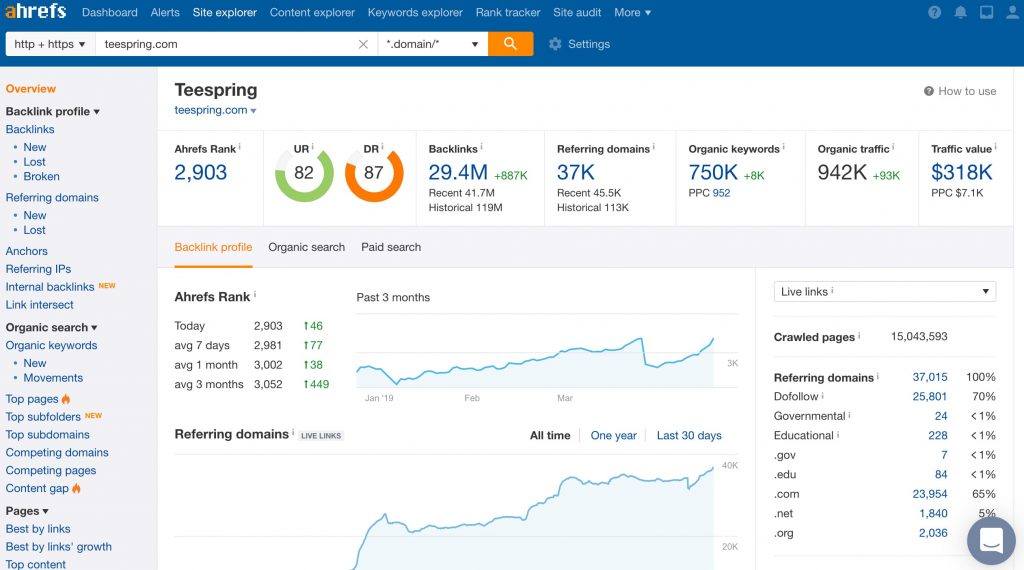
Ahrefs is the gold standard for backlink analysis, boasting the largest and fastest-updating index of live links. While it has expanded its feature set, its core strength remains in competitive research and link building.
Core Functionality and Key Features
- Site Explorer: The central hub for analyzing a website's organic search traffic and backlink profile.
- Keywords Explorer: Provides detailed keyword metrics, including difficulty, search volume, and parent topic.
- Content Explorer: A searchable index of over 10 billion pages, useful for finding link prospects and content ideas.
- Link Intersect: A powerful tool to find sites linking to your competitors but not to you.
Best For: SEO professionals and link builders whose primary focus is on competitive analysis, link acquisition, and technical site auditing.
4. Surfer SEO: Content Optimization Mastery
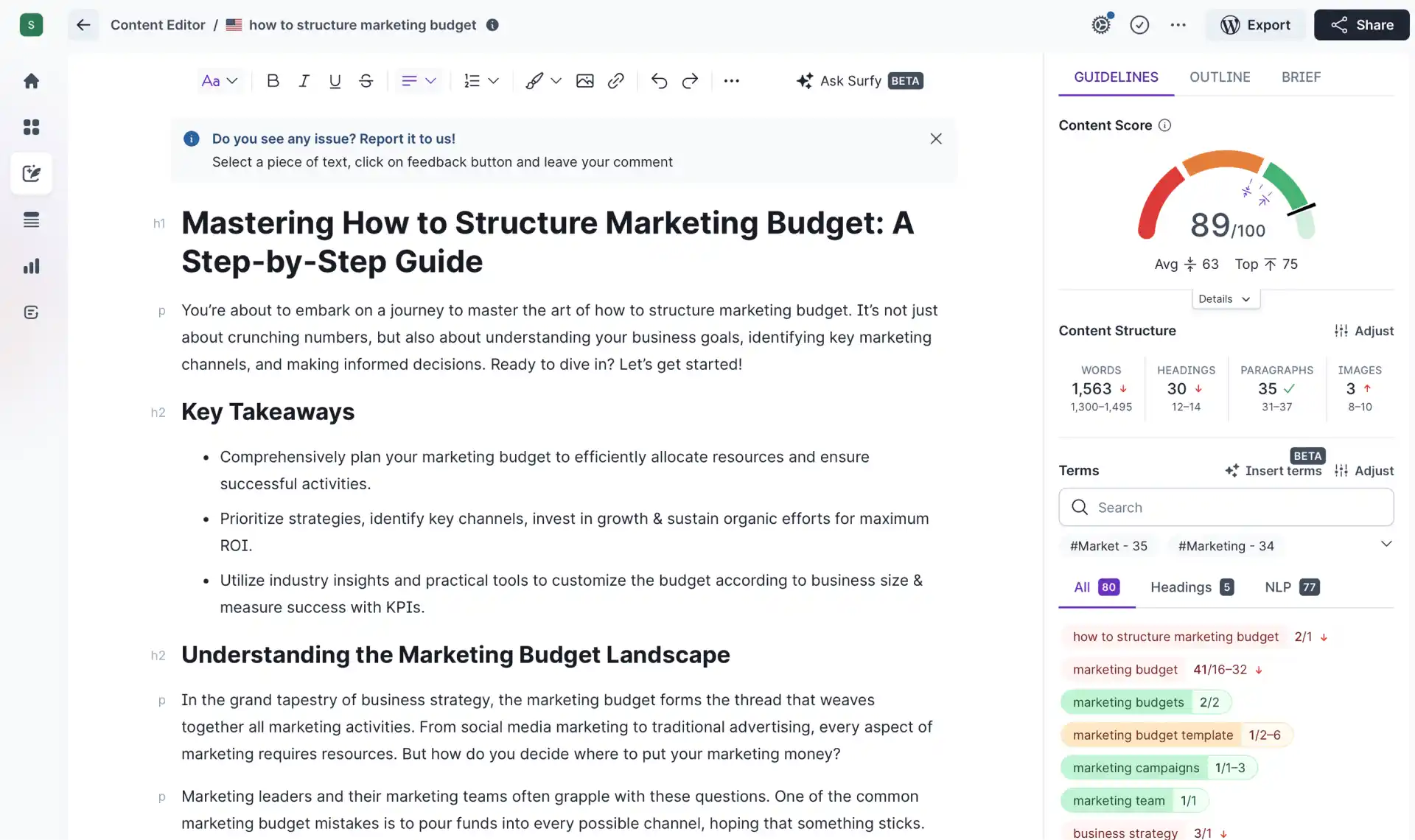
Surfer SEO excels at providing data-driven content recommendations based on the analysis of top-ranking pages. It is a vital tool for ensuring content achieves the necessary topical depth and relevance to rank in a competitive environment.
Core Functionality and Key Features
- Content Editor: Provides a real-time content score and recommendations for word count, headings, and keywords to include.
- SERP Analyzer: Breaks down the top 10 results for a keyword, showing their structure, word count, and backlink profile.
- Content Planner: Helps build topical authority by suggesting related clusters of content to cover.
Best For: Content writers, editors, and teams focused on optimizing existing content or creating new articles with a high probability of ranking quickly.
5. Google Search Console (GSC): The Essential First-Party Data Source
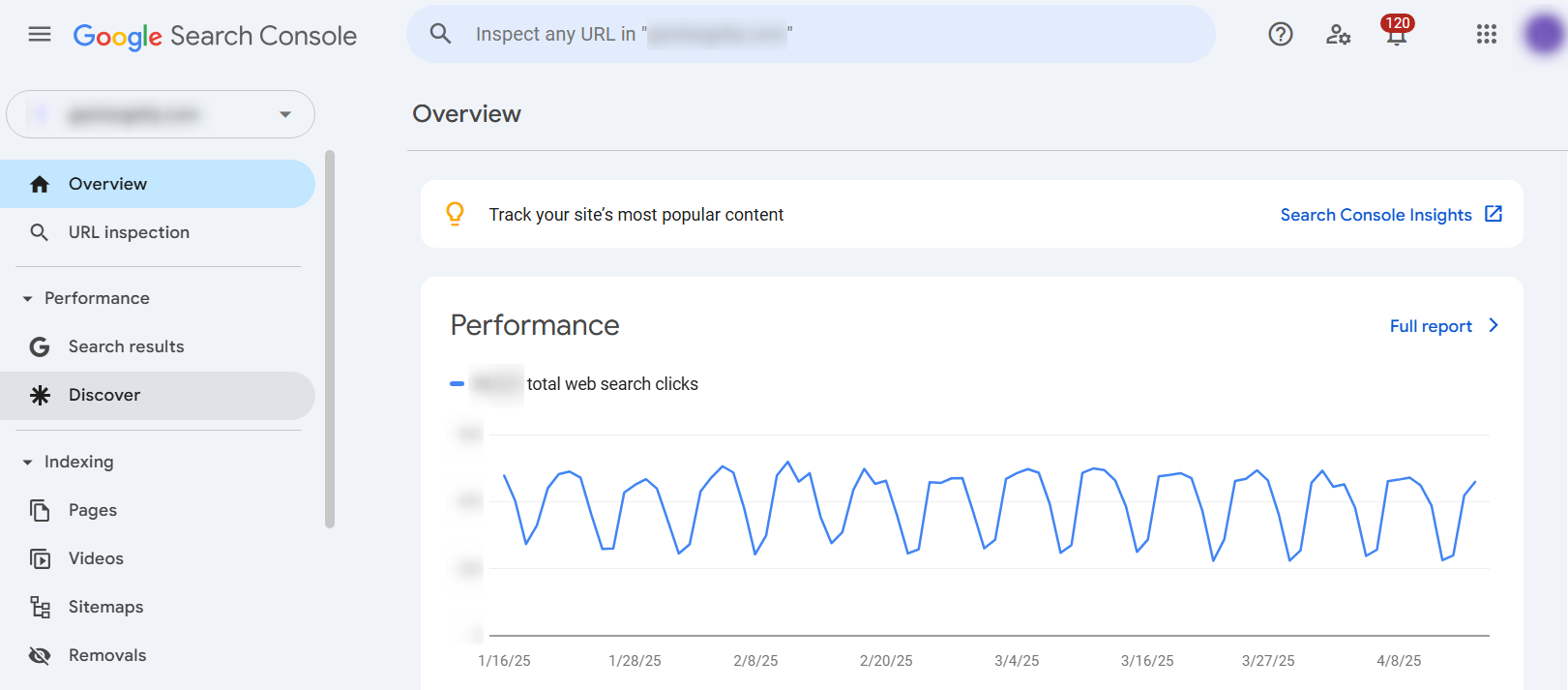
No paid tool can replace the direct, unfiltered data provided by Google Search Console. GSC is the essential communication channel between your website and Google's search index.
Core Functionality and Key Features
- Performance Report: Shows the exact queries that drive impressions and clicks, along with your average position.
- Index Coverage: Identifies which pages are indexed, which are excluded, and why.
- Core Web Vitals: Provides crucial data on page experience metrics (LCP, FID, CLS).
- Sitemaps & Removals: Allows you to submit sitemaps and request the temporary removal of URLs.
Best For: Every website owner and SEO professional. It is the single most important tool for monitoring technical health and understanding organic performance directly from the source.
6. Screaming Frog SEO Spider: The Technical Deep Diver
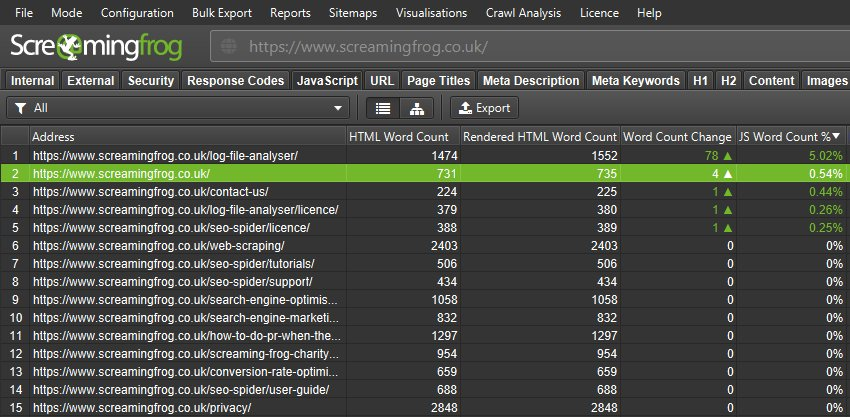
Screaming Frog is the industry standard for technical SEO auditing. This desktop-based crawler can quickly analyze large websites, providing granular data on internal and external links, response codes, and on-page elements.
Core Functionality and Key Features
- Comprehensive Crawling: Audits up to 500 URLs for free, checking for broken links, redirect chains, and canonical issues.
- Custom Extraction: Allows you to pull specific data from the HTML of pages using XPath, CSS Path, or regex.
- Integration: Connects with GSC, GA4, and PageSpeed Insights for richer data analysis.
Best For: Technical SEO specialists, consultants, and anyone needing to perform a deep, granular audit of a website's structure and health.
7. Clearscope: Ensuring Topical Depth and Precision
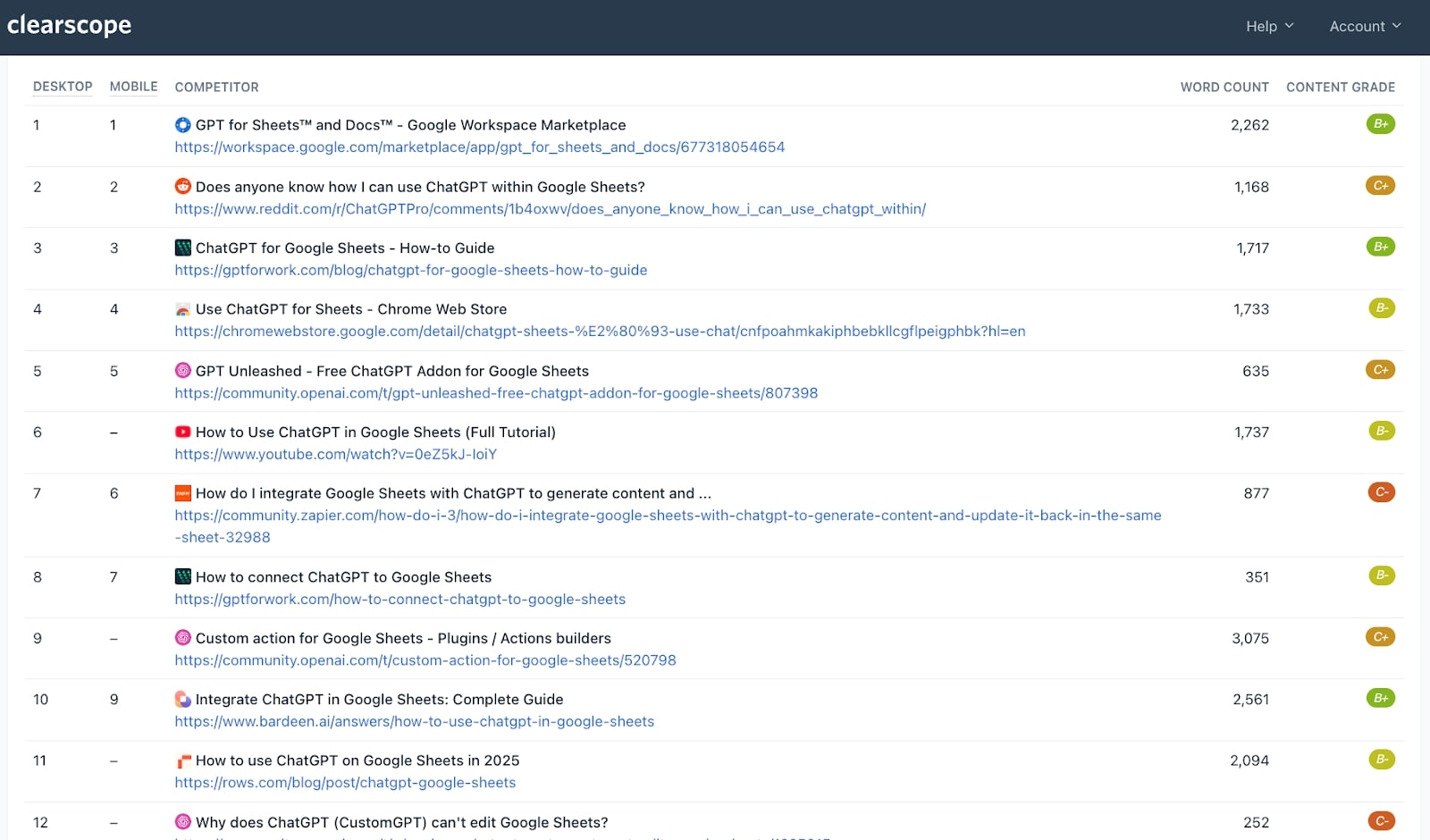
Clearscope is a premium content optimization platform known for its highly accurate Natural Language Processing (NLP) recommendations. It is favored by large editorial teams for its focus on topical authority and content quality.
Core Functionality and Key Features
- Content Grading: Provides a clear A–F grade based on how well the content covers the topic compared to top-ranking pages.
- Term Recommendations: Offers precise, context-aware terms to include, ensuring comprehensive topical coverage.
- Readability Analysis: Helps writers maintain a clear and accessible writing style.
Best For: Enterprise content teams and agencies where content quality, precision, and adherence to topical authority are paramount.
8. SimilarWeb: Market and Competitor Traffic Intelligence
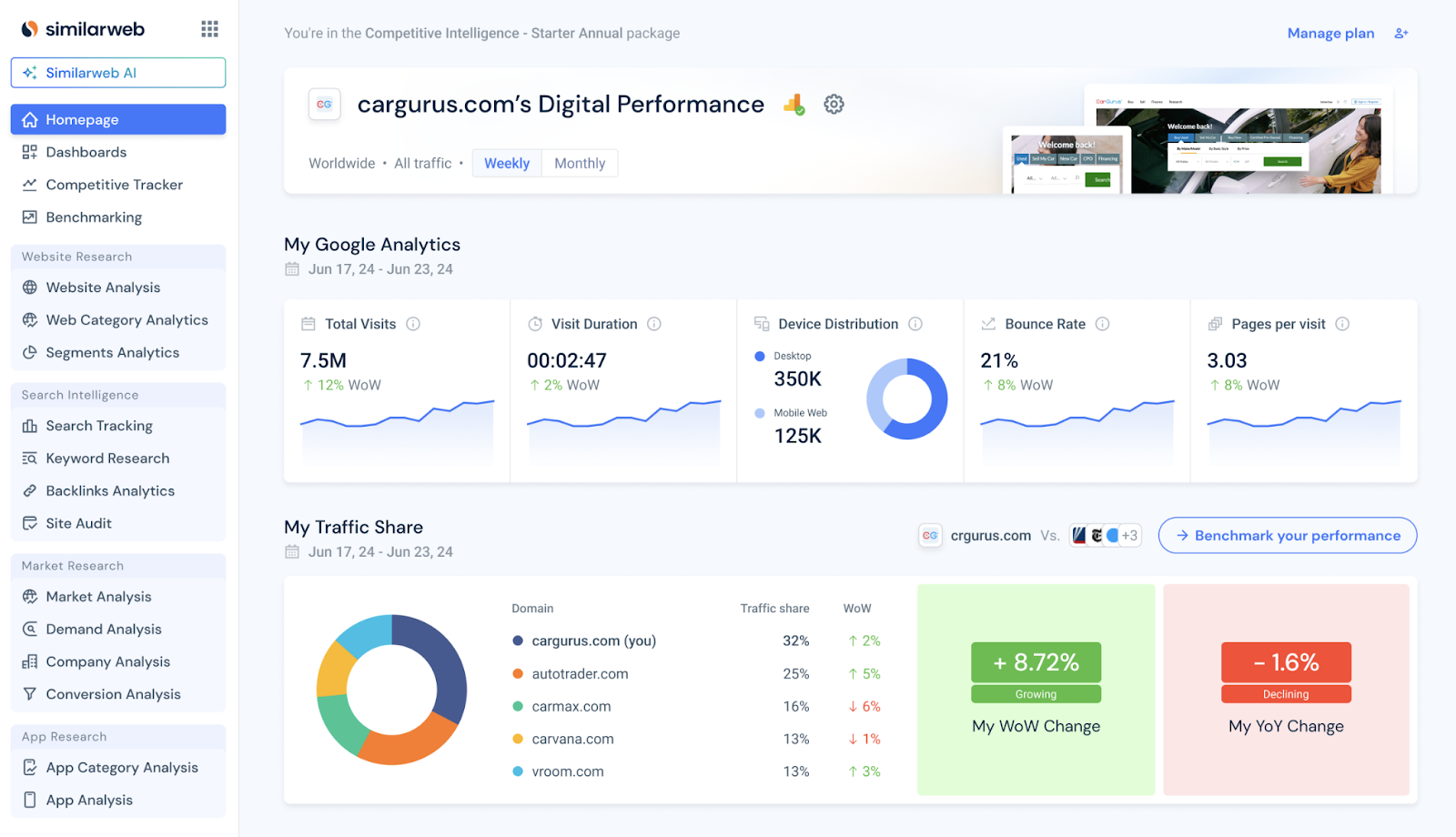
SimilarWeb provides high-level estimates of competitor traffic, audience demographics, and traffic sources. It is a powerful market intelligence tool that helps strategists understand the broader competitive landscape.
Core Functionality and Key Features
- Traffic Analysis: Estimates total website traffic, engagement metrics, and traffic sources (organic, direct, social, paid).
- Audience Demographics: Provides insights into the age, gender, and interests of a website's visitors.
- Industry Analysis: Benchmarks your performance against industry averages and key competitors.
Best For: Market analysts, business strategists, and SEOs needing to justify budget or identify new market opportunities based on competitor performance.
9. AnswerThePublic: Uncovering User Intent
AnswerThePublic, now often integrated into larger suites, is a fantastic tool for visualizing the questions, prepositions, and comparisons people are searching for around a core keyword. It is a powerful content ideation tool that directly addresses the need to optimize for PAA.
Core Functionality and Key Features
- Visualization: Presents search queries in a compelling, visual map format.
- Question-Based Keywords: Focuses on "who, what, where, when, why, how" questions, which are prime targets for PAA and AI Overviews.
- Comparison Queries: Reveals queries like "X vs. Y," which are crucial for middle-of-funnel content.
Best For: Content strategists and writers looking for quick, deep insights into user intent and generating content that directly answers common questions.
10. Ubersuggest: The Budget-Friendly All-Rounder
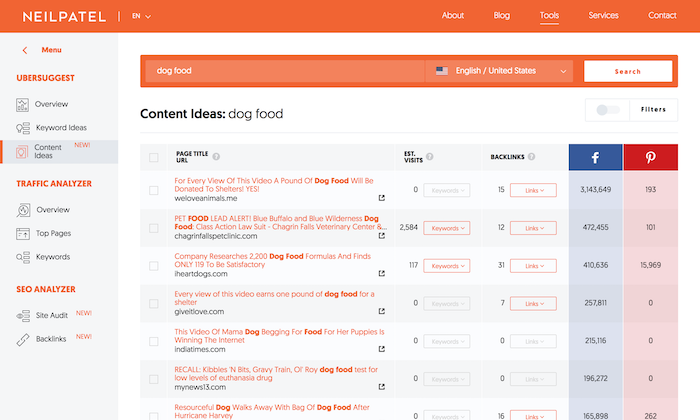
Ubersuggest is a viable option for small businesses or beginners seeking an affordable all-in-one tool. It offers a solid suite of features that cover the basics of keyword research, content ideas, and site auditing without the high price tag of enterprise tools.
Core Functionality and Key Features
- Keyword Ideas: Provides search volume, CPC, and SEO difficulty scores.
- Content Ideas: Shows content that has performed well for a given keyword on social media and search.
- Site Audit: A basic crawler that identifies critical SEO errors and provides suggestions for improvement.
Best For: Small business owners, solo entrepreneurs, and beginners who need a cost-effective, easy-to-use platform to manage their foundational SEO efforts.
How to Choose the Best SEO Tool for Your Business
Choosing the "best" SEO tool is subjective and depends entirely on your specific needs, budget, and team structure. Addressing the common PAA question, "Which SEO tool is best for beginners?", the answer is often a combination of free and affordable options.
For a beginner or small business, the ideal starting stack is:
- Google Search Console & Google Analytics 4: Essential, free, first-party data.
- Ubersuggest or SE Ranking: Affordable comprehensive suite for basic research.
- AnswerThePublic: Free for initial content ideation and intent discovery.
For enterprise teams, the investment in a full suite like Semrush or Ahrefs is necessary, but the addition of a specialized GEO tool like Dageno is what provides a competitive edge in the AI-driven search results. Focus your investment on the area where your business needs the most growth—whether that is technical health, content production, or brand visibility in AI.
Mastering AI Overviews and Answer Engine Optimization (AEO)
The most significant differentiator for modern SEO is the ability to optimize for AI Overviews and PAA boxes. These elements are not just snippets; they are direct answers that satisfy user intent, often based on the LLM's preference for structured, authoritative, and low-risk information [4].
To get your content featured in these high-visibility areas, you must adopt an AEO mindset:
- Direct QA Preference: Structure your content to provide direct, concise answers to common questions (like PAA). Use clear H2 and H3 headings that mirror user queries.
- Structured Knowledge Preference: Use structured data (Schema Markup) to explicitly define entities, facts, and relationships on your page. This makes it easier for AI models to ingest and cite your information accurately.
- Prompt Gap Analysis: Go beyond simple keyword volume. Tools like Dageno allow you to Capture Prompts & User Intent by analyzing millions of real user prompts to find "Prompt Gaps" where competitors win. This allows you to target the exact long-tail queries and user intents that AI models are trying to answer.
By focusing on the quality, structure, and authority of your content, you align with the LLM's preference mechanisms, significantly increasing your chances of being cited as the source of truth.
The Future of SEO: Automating Growth with AI Agents
The final evolution of search engine optimization tools is the move toward full automation. The sheer volume of data—from traditional SEO metrics to new GEO/AEO signals—makes manual analysis inefficient. The future lies in AI Agents that can not only analyze but also execute.
Dageno’s Automate Your Growth Strategy feature exemplifies this shift. Instead of spending hours sifting through raw data, you receive Daily/Weekly Opportunity Insight Alert Reports generated by AI Agents. These reports identify issues, suggest strategic roadmaps, and, most importantly, can initiate Automated Execution Workflows to fix issues or deploy optimized content. This end-to-end automation allows SEO teams to focus on high-level strategy rather than repetitive, tactical tasks.
Frequently Asked Questions (FAQ)
Q: What is the most popular search engine optimization tool for enterprises?
A: The most popular search engine optimization tools for large enterprises are typically Semrush and Ahrefs, due to their comprehensive data sets and extensive feature suites covering everything from technical audits to competitor analysis. However, Dageno is rapidly becoming the essential tool for managing brand visibility in the new AI search environment.
Q: Which search engine optimization tool is best for content creation?
A: For content creation, specialized search engine optimization tools like Surfer SEO and Clearscope are highly recommended, as they use data from top-ranking pages to provide actionable guidance on topical coverage and content depth.
Q: How do I optimize my content for Google's AI Overviews?
A: To optimize for AI Overviews, you should use structured data, ensure your content directly and concisely answers user questions, and utilize AI visibility search engine optimization tools like Dageno to monitor your brand's citations and correct any potential misinformation.
Q: Can I achieve high rankings using only free search engine optimization tools?
A: Yes, you can achieve high rankings using free search engine optimization tools like Google Search Console, Google Analytics 4, and Ubersuggest's free tier, but a paid tool is often necessary to gain the competitive data (like backlink profiles) needed to scale growth effectively.
References
[1] The Evolution of Search: From SEO to AEO. Search Engine Land
[2] Semrush's AI Visibility Toolkit. Semrush Blog
[3] Understanding Dense Retrieval Bias in LLMs. Marketer Milk
[4] Google AI Overviews: What Do They Mean for Search? Digital Marketing Institute
[5] The 13 Best AI SEO Content Optimization Tools. Rankability Blog
About the Author

Updated by
Tim
Tim is the co-founder of Dageno and a serial AI SaaS entrepreneur, focused on data-driven growth systems. He has led multiple AI SaaS products from early concept to production, with hands-on experience across product strategy, data pipelines, and AI-powered search optimization. At Dageno, Tim works on building practical GEO and AI visibility solutions that help brands understand how generative models retrieve, rank, and cite information across modern search and discovery platforms.
Related Articles
The 15 Best B2B SEO Agencies in 2026: How to Choose a Partner That Drives Growth

Ye Faye • Mar 17, 2026
Best Affordable AEO Tools: AI Visibility Tracking Compared

Richard • Apr 10, 2026
Best Answer Engine Optimization Tools in 2026: A Complete Buyer’s Guide
Tim • May 07, 2026
Top 10 Perplexity Rank Tracking Tools in 2026
Richard • Mar 30, 2026