The 8 Best AI Tools for Generative Engine Optimization (GEO) in 2026
The shift to generative AI search necessitates specialized tools to track brand visibility, manage facts, and optimize content for AI Overviews and large language models.
Track AI search visibilityNo install
Updated by
4 Min Read
Updated on Jan 23, 2026
TL;DR
- Generative Engine Optimization (GEO) focuses on brand visibility within AI-generated answers, not just traditional search rankings.
- Specialized GEO tools track AI citations, measure share-of-answer, and correct factual errors in LLM responses.
- Dageno offers a unified platform for tracking AI visibility, capturing user intent, and automating content workflows for AEO and GEO.
- Enterprise platforms like Profound and Semrush provide robust competitive benchmarking and large-scale AI visibility analysis.
- Fact Density and Structured Data are critical for content to be reliably cited by AI Overviews and conversational engines.
- Prioritize tools that offer real-time prompt tracking and hallucination correction to maintain brand authority.
Introduction: The New Frontier of Search Visibility
The digital landscape is undergoing a profound transformation, moving from traditional Search Engine Optimization (SEO) to a more nuanced approach: Generative Engine Optimization (GEO). As AI Overviews, ChatGPT, Perplexity, and other large language models (LLMs) become the primary interfaces for information discovery, brands must adapt their strategies to ensure visibility and maintain factual authority within these new "answer engines" [1].
GEO is the practice of optimizing your digital assets—content, data, and brand facts—to be accurately and favorably cited by generative AI systems. For SaaS, AI tools, and B2B enterprises, this means shifting focus from link building and keyword density to information density, structured knowledge, and brand fact ownership. The right best ai tools for generative engine optimization are essential for this transition, providing the necessary data to track, analyze, and influence AI-driven results.
How GEO Tools Differ from Traditional SEO Solutions
While traditional SEO tools excel at tracking organic rankings, backlinks, and technical website health, they often fall short in the generative search environment. The core difference lies in the data source and the optimization target.
SEO tools measure visibility in the 10 blue links; GEO tools measure share-of-answer and AI citation frequency. Traditional tools rely on simulated search queries; the best ai tools for generative engine optimization track real-time user prompts and the resulting AI-generated content. This requires specialized capabilities, such as detecting when an LLM's crawler accesses your site (BotSight), analyzing the sentiment of brand mentions in AI summaries, and providing tools to correct factual errors (hallucinations) before they damage brand trust [2]. For businesses where authority and factual accuracy are paramount, these specialized GEO insights are non-negotiable.
The 8 Best AI Tools for Generative Engine Optimization
The following list compares the top platforms that empower businesses to master the complexities of the generative search era.
| Rank | Tool Name | Best For | Core GEO Differentiator | Pricing Model |
|---|---|---|---|---|
| 1 | Dageno | Unified AEO/GEO Strategy & Automation | Full-dimension AI Visibility, Hallucination Correction, Fusion Copywriting | Tiered Subscription |
| 2 | Profound | Enterprise-Grade Empirical Data | Front-end AI Citation Tracking, Query Fanouts Analysis, HIPAA Compliance | Enterprise Custom |
| 3 | Semrush AI Visibility Toolkit | Cross-LLM Competitive Benchmarking | AI Share of Voice, Brand Sentiment Analysis, Strategic Recommendations | Add-on/Enterprise |
| 4 | Otterly.AI | Prompt-Specific Tracking | Real-time Prompt Volume Search, Automated Link Citation Detection | Tiered Subscription |
| 5 | BrightEdge | Entity Optimization | Knowledge Graph Alignment, Structured Data Audits for AI | Enterprise Custom |
| 6 | Peec AI | Brand Mention Analysis | Tracking Brand Mentions in Conversational AI, Sentiment Tracking | Tiered Subscription |
| 7 | AthenaHQ | Automated On-page GEO | Schema Markup Automation, Entity Tagging at Scale | Tiered Subscription |
| 8 | Writesonic | AI Content Generation | Content Creation Optimized for AI Overviews and Fact Density | Tiered Subscription |
1. Dageno: The Unified Platform for AEO and GEO
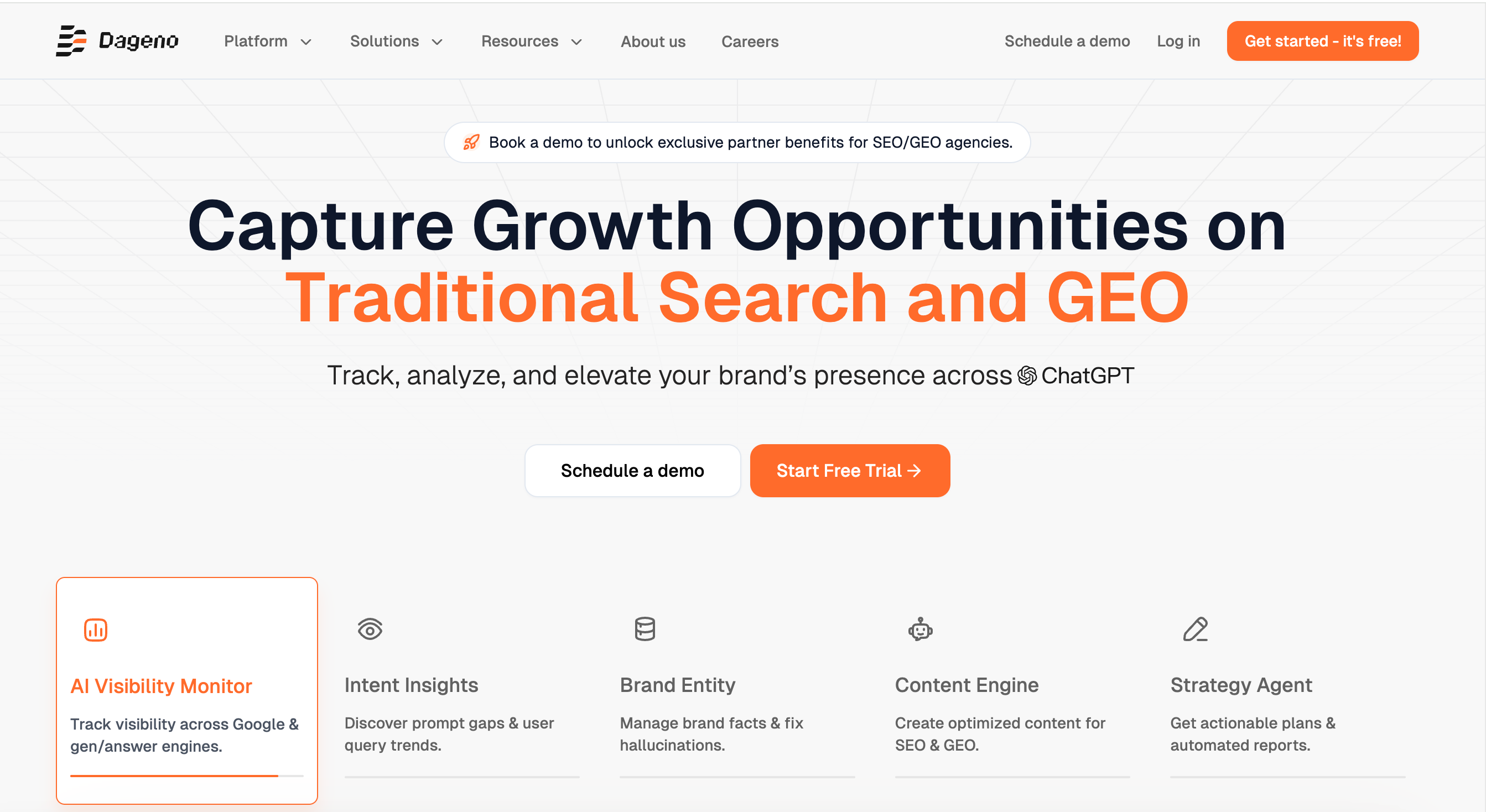
Dageno is positioned as the essential platform for B2B, SaaS, and AI companies seeking to track, analyze, and elevate their brand across traditional search engines, AEO, and GEO. It provides a comprehensive, structured approach to managing brand visibility in a fragmented search environment.
Track AI Visibility on Google + Answer Engines
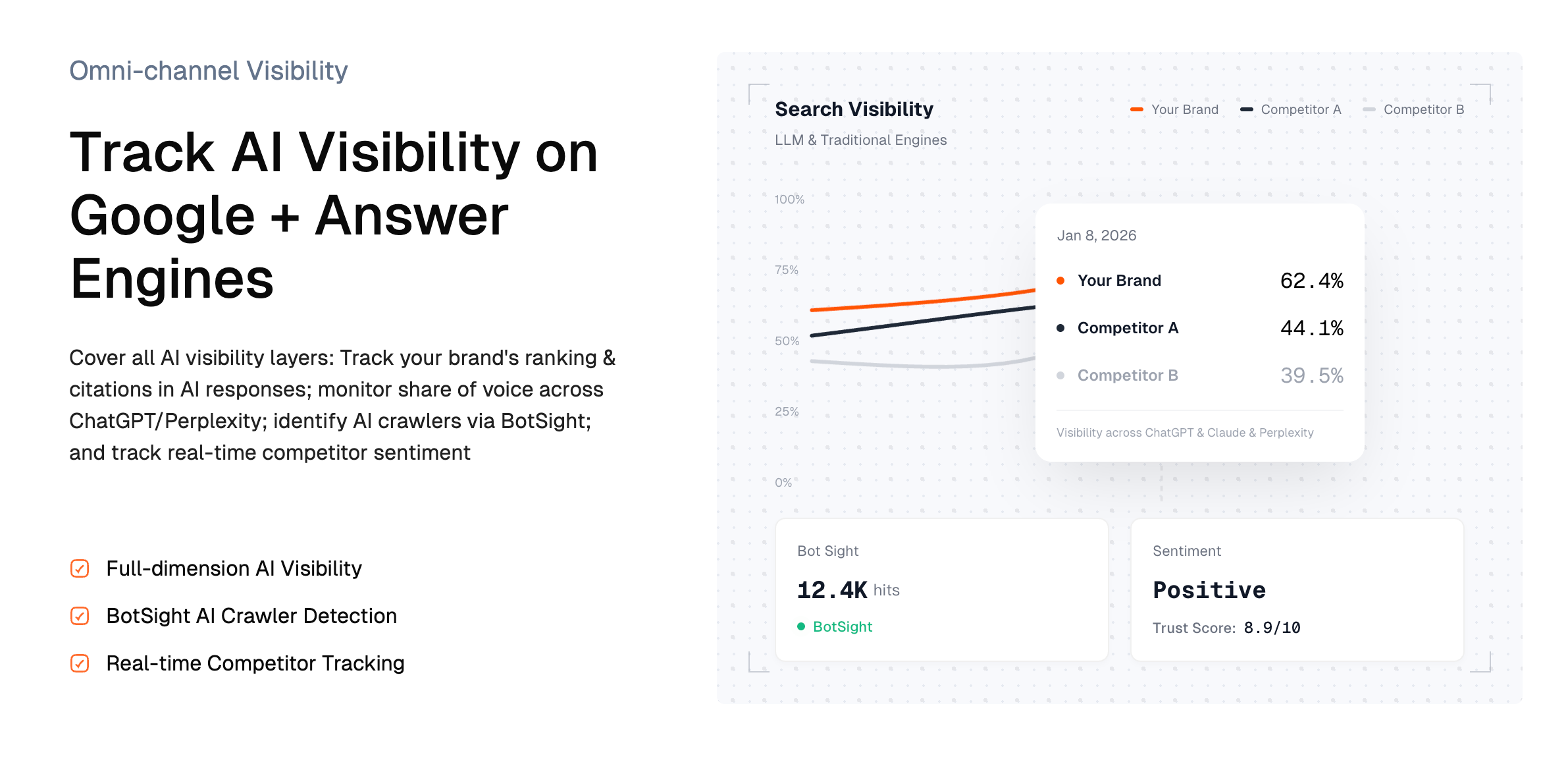
Dageno offers Full-dimension AI Visibility, allowing teams to see exactly how their brand is being cited across Google's AI Overviews, ChatGPT, and other answer engines. Its proprietary BotSight AI Crawler Detection identifies when and how LLM crawlers interact with your content, providing a clear picture of AI consumption patterns. This is paired with Real-time Competitor Tracking to benchmark your brand's share-of-answer against key rivals.
Capture Prompts & User Intent
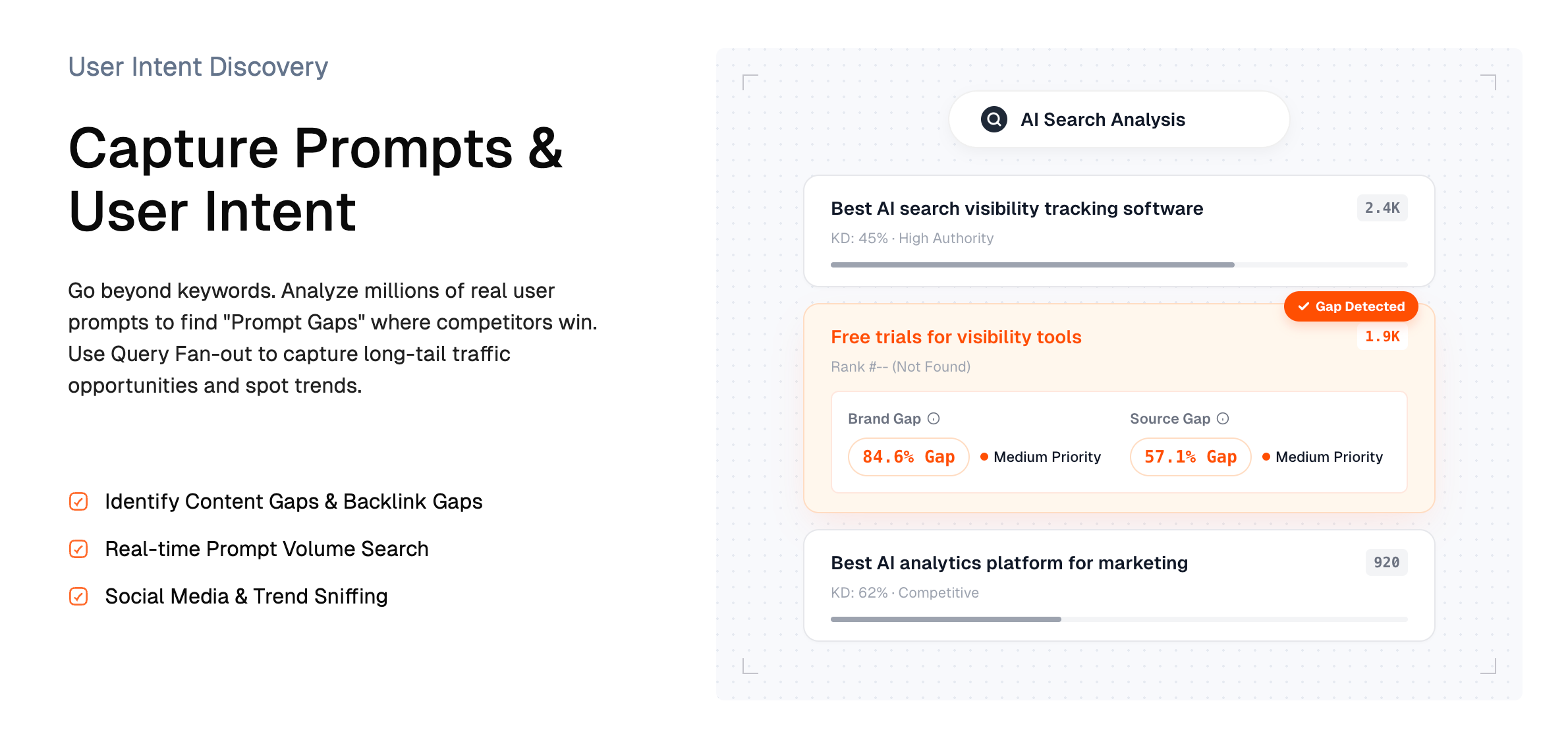
Understanding the prompts that trigger AI answers is crucial. Dageno helps Identify Content Gaps & Backlink Gaps by analyzing the topics and sources LLMs prefer. The Real-time Prompt Volume Search feature reveals the actual questions users are asking AI, not just traditional keywords. This is augmented by Social Media & Trend Sniffing to capture emerging intent before it hits the mainstream search engines.
Own Facts & Fix Hallucinations
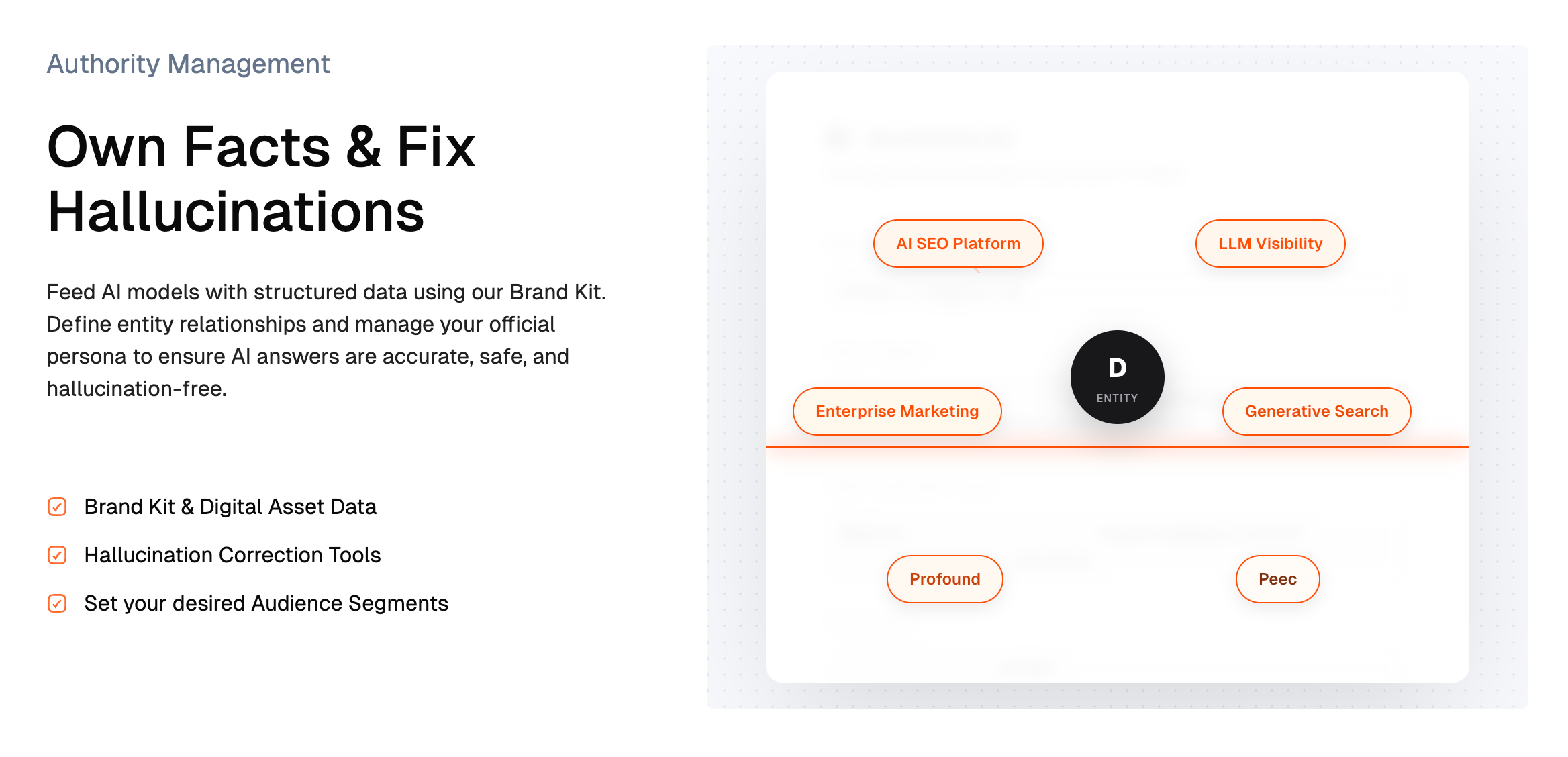
In the age of generative AI, owning your brand facts is paramount. Dageno provides a Brand Kit & Digital Asset Data repository to feed LLMs with verified information. Its Hallucination Correction Tools allow you to proactively identify and submit corrections to AI models, ensuring your brand narrative remains accurate. Audience Segment Control further refines which facts are presented to which user groups, enhancing the relevance and authority of the AI-generated responses.
Build Content for Search & AI
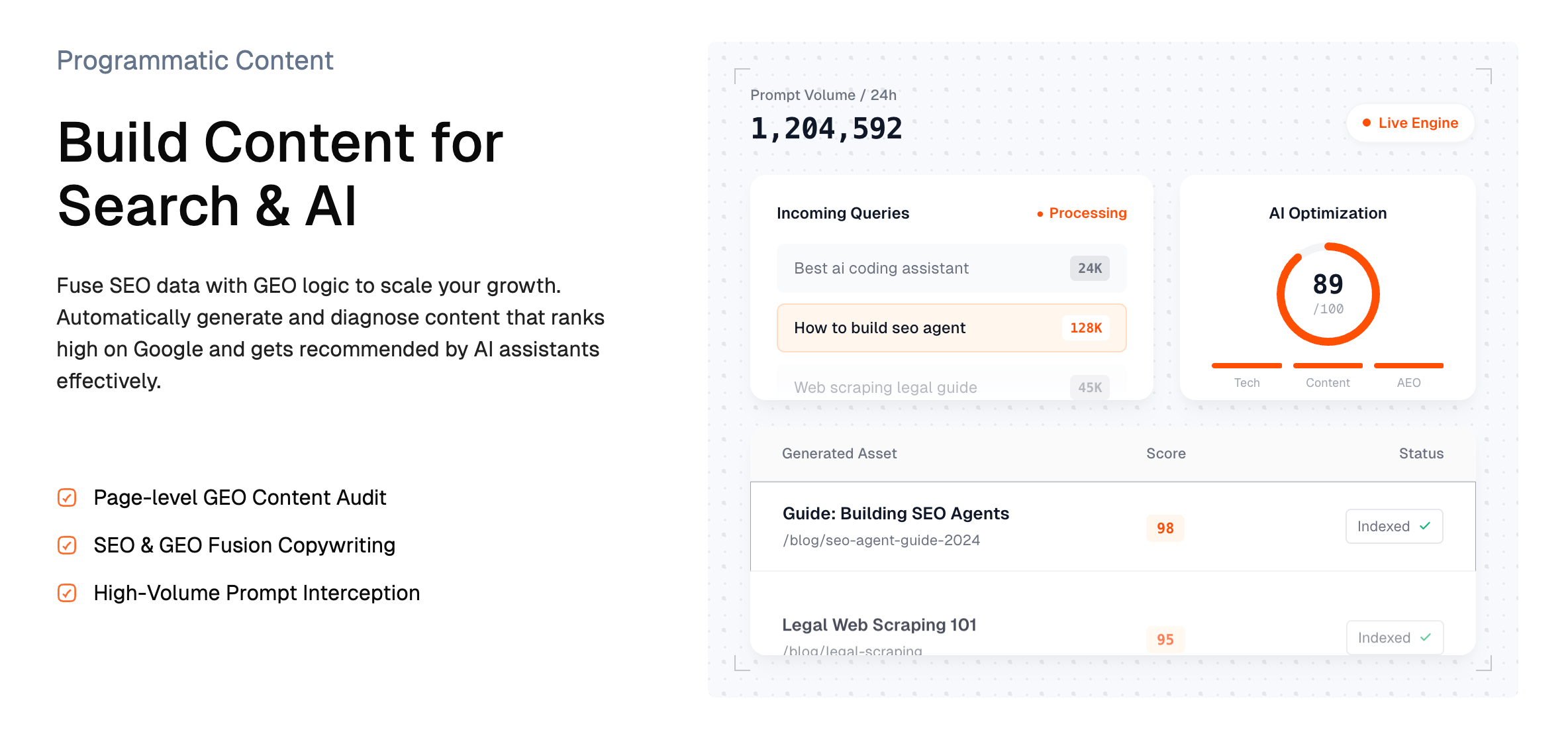
Dageno facilitates the creation of content that satisfies both traditional SEO and the demands of generative AI. The Page-level GEO Content Audit scores content based on its information density and structured knowledge readiness. SEO & GEO Fusion Copywriting tools help writers naturally embed keywords while maximizing factual clarity. Furthermore, High-Volume Prompt Interception guides content creation toward the most valuable, high-intent user questions.
Automate Your Growth Strategy
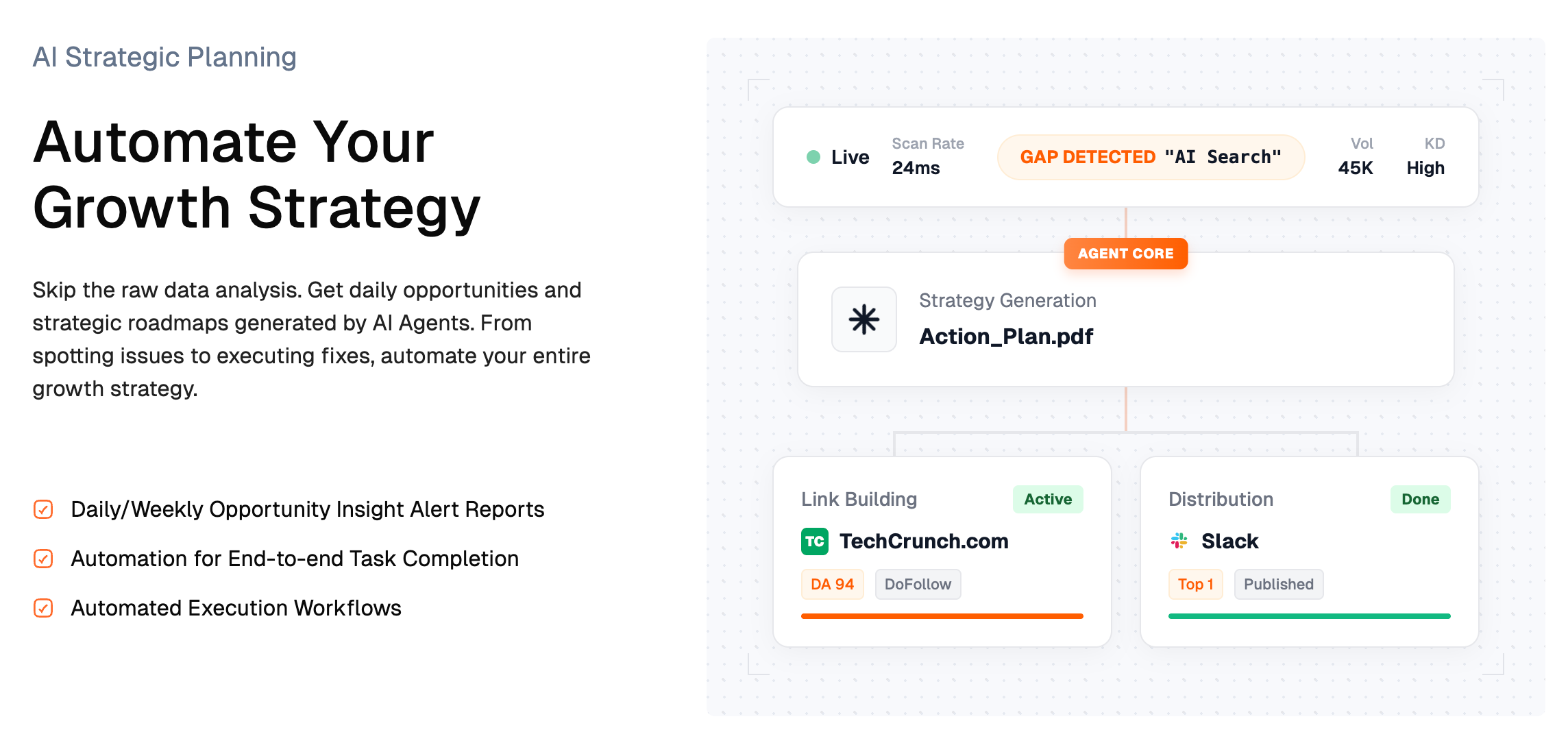
To ensure continuous optimization, Dageno includes Opportunity Insight Alerts that notify teams of sudden changes in AI visibility or emerging competitive threats. This leads to End-to-end Automation and AI-driven Execution Workflows, allowing marketing teams to quickly deploy content updates or fact corrections without manual intervention.
- Objective Analysis: Dageno's strength lies in its holistic approach, bridging the gap between traditional SEO and the new requirements of GEO. By focusing on fact ownership and prompt-level data, it provides the structured, authoritative content LLMs prefer.
- Ideal for: B2B and SaaS companies that require a single, integrated platform for managing brand authority and content performance across all search modalities.
2. Profound: Enterprise Empirical Data & Shopping Analysis
Profound is an enterprise-focused platform known for capturing empirical front-end AI citation data. It provides unparalleled transparency into how and when a brand is cited across major AI engines. A standout feature is its Query Fanouts Analysis, which reveals how AI models transform a user's initial prompt into multiple high-intent search queries before generating an answer. This insight is invaluable for optimizing content for the AI's internal retrieval process. For retailers, its Shopping Analysis tracks product visibility and recommendations within conversational commerce experiences, making it a powerful tool for e-commerce GEO.
- Objective Analysis: Profound is a leader in data granularity, offering the "why" behind AI citations. Its focus on compliance (HIPAA, SOC 2) makes it a preferred choice for regulated industries.
- Ideal for: Large enterprises and regulated sectors needing defensible, auditable AI visibility data.
3. Semrush AI Visibility Toolkit: Cross-LLM Competitive Benchmarking
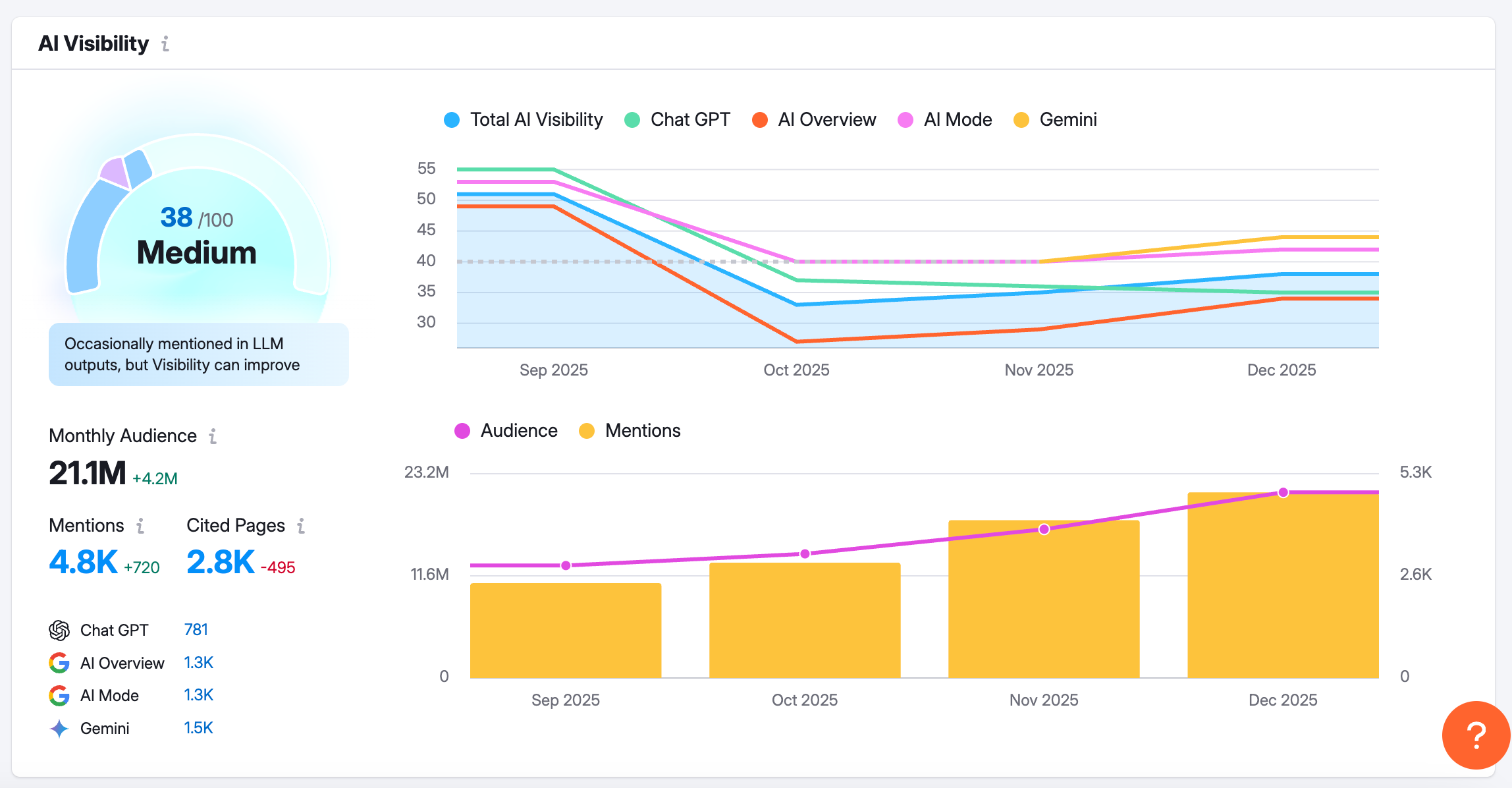
A natural extension of the established SEO suite, the Semrush AI Visibility Toolkit is designed for large SEO/SEM teams. It excels at providing a cross-LLM competitive analysis, measuring a brand's AI Share of Voice against competitors. The tool analyzes brand sentiment and surfaces the real questions users ask AI about a brand, helping to uncover content gaps and refine positioning. It's a robust solution for teams that need to integrate GEO insights into existing SEO workflows.
- Objective Analysis: Semrush provides breadth and integration with a massive existing data set. It is excellent for benchmarking and strategic planning at scale.
- Ideal for: SEO/SEM teams that need to quantify the impact of AI on their overall market share and content strategy.
4. Otterly.AI: Prompt-Specific Tracking
Otterly.AI specializes in prompt-level performance tracking. Users can input broad terms and receive a list of relevant, high-volume AI search prompts to monitor. Its key feature is Automated Link Citation Detection, which alerts users immediately when an AI platform cites their content with a link. This is a direct measure of content authority and is crucial for tracking the return on investment (ROI) of GEO efforts.
- Objective Analysis: Otterly is highly focused and effective for teams prioritizing real-time, prompt-specific data and content authority signals.
- Ideal for: Content teams and smaller businesses that need precise, actionable data on which specific prompts their content is winning.
5. BrightEdge: Entity Optimization
BrightEdge focuses on the foundational element of AI search: entities and knowledge graphs. It helps enterprises structure their content to align with how AI systems categorize and connect information. By ensuring content is entity-rich and correctly marked up, BrightEdge improves the likelihood of a brand being recognized and featured in AI-generated answers. This approach is rooted in the understanding that LLMs prefer structured, authoritative knowledge.
- Objective Analysis: BrightEdge is a strong choice for organizations with complex product catalogs or large knowledge bases, emphasizing the technical readiness of content for AI consumption.
- Ideal for: Large organizations focused on entity-based SEO and knowledge graph strength.
6. Peec AI: Brand Mention Analysis
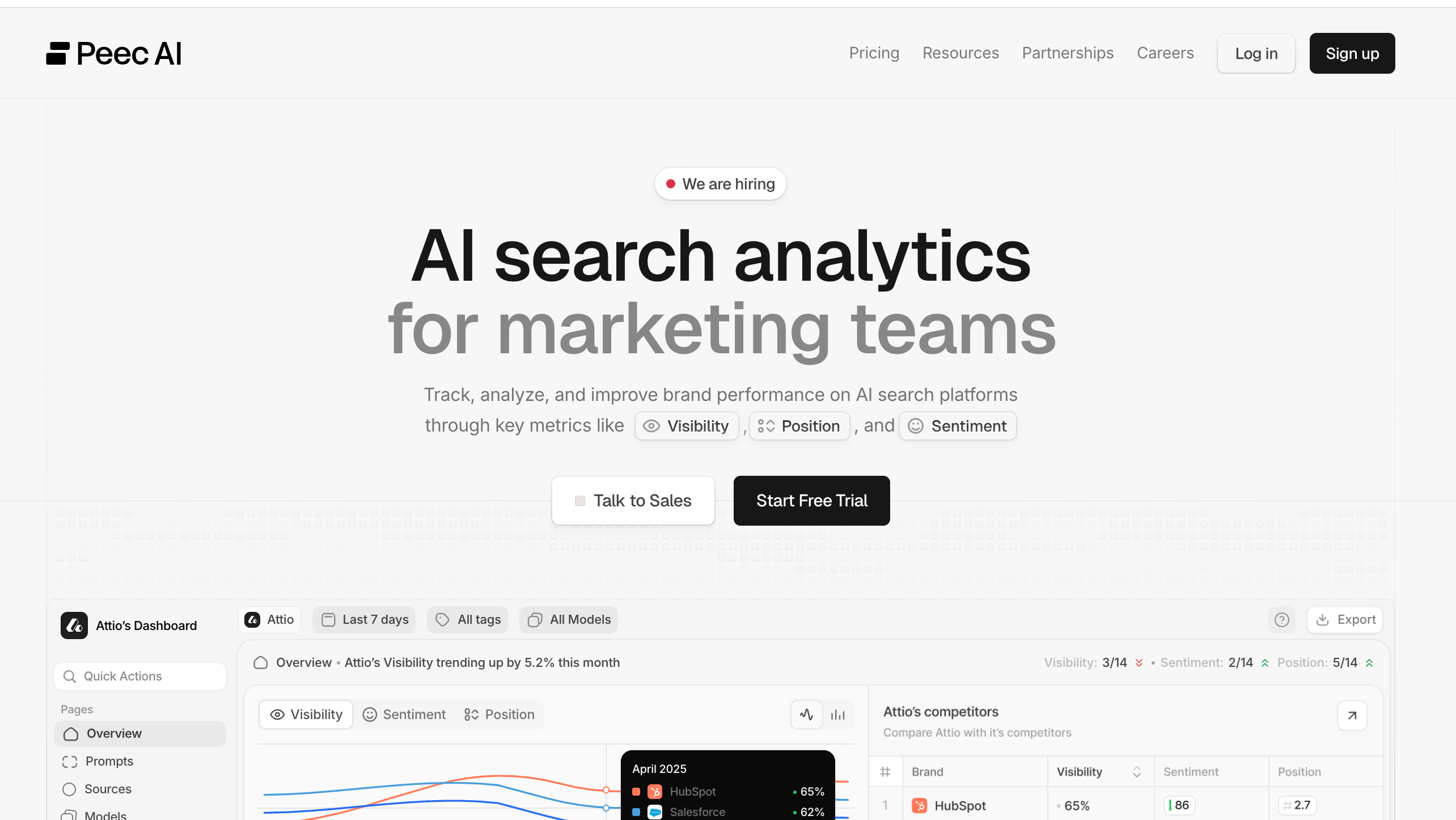
Peec AI is a dedicated tool for tracking and analyzing brand mentions within conversational AI results. It provides a clear view of where, when, and with what sentiment a brand is being discussed in AI summaries. This is vital for brand reputation management in the generative search era, allowing for quick intervention if negative or inaccurate information is being propagated.
- Objective Analysis: Peec AI provides a focused solution for brand safety and reputation, which is a growing concern as AI systems can rapidly spread misinformation.
- Ideal for: Brand managers and PR teams focused on monitoring and controlling the brand narrative in AI environments.
7. AthenaHQ: Automated On-page GEO
AthenaHQ automates the technical aspects of on-page GEO. It specializes in Schema Markup Automation and Entity Tagging at Scale. By ensuring that content is technically optimized with the structured data LLMs prefer, AthenaHQ significantly increases the chances of content being selected as a source for AI Overviews. This is a powerful tool for improving the Structured Knowledge Preference signal.
- Objective Analysis: AthenaHQ addresses the technical debt of GEO, making it easier for large sites to implement the necessary structured data without extensive manual effort.
- Ideal for: Technical SEO teams and large websites needing to implement structured data for AI at scale.
8. Writesonic: AI Content Generation
While primarily an AI writing assistant, Writesonic has evolved to include features specifically for GEO. It helps users generate content that is optimized for fact density and structured for easy consumption by LLMs. By focusing on producing high-quality, authoritative content, it indirectly supports the Direct QA Preference and Evidence Reinforcement mechanisms of generative engines.
- Objective Analysis: Writesonic is a practical tool for content teams that need to rapidly produce GEO-ready content, though it requires human oversight to ensure factual accuracy and avoid generic output.
- Ideal for: Content marketing teams focused on high-velocity content production that is structured for AI visibility.
Key Features to Prioritize When Choosing a GEO Tool
When evaluating the best ai tools for generative engine optimization, B2B and SaaS leaders should prioritize features that directly address the unique challenges of the generative search environment.
A tool's ability to provide Real-time Prompt Data is paramount. Unlike traditional keyword research, understanding the exact questions and conversational flows that trigger AI answers allows for highly targeted content creation. Furthermore, Hallucination Correction and Brand Fact Management capabilities are essential for maintaining brand integrity. The Authority Bias of LLMs means they favor sources with high factual consistency; a tool that helps you manage and enforce that consistency is a long-term strategic asset. Look for platforms that offer a clear, structured view of your performance, enabling you to move beyond vanity metrics to actionable, data-driven decisions.
Conclusion
The era of Generative Engine Optimization is here, and it demands a new toolkit. The best ai tools for generative engine optimization are those that move beyond traditional SEO metrics to provide granular data on AI visibility, user intent, and brand fact integrity. Platforms like Dageno, with their unified approach to tracking, fact management, and content fusion, represent the future of digital visibility. By investing in these specialized tools, B2B, SaaS, and AI companies can ensure their brand remains authoritative, visible, and accurately represented in the rapidly evolving landscape of AI-driven search.
FAQ (Frequently Asked Questions)
Q: What is the primary goal of Generative Engine Optimization (GEO)?
A: The primary goal of GEO is to optimize your digital assets to be accurately and favorably cited by generative AI systems, ensuring your brand achieves a high share-of-answer and maintains factual authority within AI Overviews and conversational engines.
Q: Can I use my existing SEO tools for GEO?
A: While existing SEO tools can provide foundational data, they lack the specialized features required for GEO, such as real-time prompt tracking, AI crawler detection, and hallucination correction. The best ai tools for generative engine optimization offer these unique capabilities to address the specific needs of AI search visibility tracking.
Q: Why is fact-checking so important for GEO?
A: LLMs operate with a Structured Knowledge Preference and an Authority Bias. If an AI system detects factual inconsistencies or "hallucinations" about your brand, it will reduce its reliance on your content. Tools that help you own facts and correct errors are vital for long-term GEO success.
Q: Which AI platforms should I focus on for GEO?
A: You should focus on platforms that drive significant user discovery, primarily Google's AI Overviews, ChatGPT, and Perplexity. The best ai tools for generative engine optimization provide unified tracking across all these major answer engines.
References
About the Author

Updated by
Richard
Richard is a technical SEO and AI specialist with a strong foundation in computer science and data analytics. Over the past 3 years, he has worked on GEO, AI-driven search strategies, and LLM applications, developing proprietary GEO methods that turn complex data and generative AI signals into actionable insights. His work has helped brands significantly improve digital visibility and performance across AI-powered search and discovery platforms.
Related Articles
9 Leading AI Visibility Optimization Tools for 2026

Tim • Jul 09, 2026
Top 10 AI Visibility Tracker Tools in 2026 (Deep Comparison)

Ye Faye • Mar 25, 2026
Best AI Search Visibility Optimization Tools in 2026: From Monitoring to Execution
Richard • May 07, 2026
Microsoft Copilot Rank Tracker: How to Track Brand Visibility, Citations, and GEO Performance
Richard • Jun 16, 2026