Top 10 AI Search Visibility Tracking Tools
A concise review of the top AI search visibility tracking tools in 2026, featuring Dageno’s AI-driven SEO, AEO, and GEO platform.
Track AI search visibilityNo install
Updated by
4 Min Read
Updated on Jan 21, 2026
The shift from traditional search to AI-powered answers is accelerating faster than most marketers anticipated. While you've spent years optimizing for Google's blue links, ChatGPT now fields over 2.5 billion questions monthly, and Perplexity has become the go-to for research-driven queries. The uncomfortable truth: being invisible in AI search results means losing credibility with an entire cohort of your audience.
An ai search visibility tracking tools category has emerged because brands finally realize they can't control what LLMs say about them—but they absolutely can measure, audit, and improve it. The right tool doesn't just show you that you're mentioned; it reveals why you appear (or disappear) and hands you a roadmap to stay visible across ChatGPT, Gemini, Perplexity, Google AI Overviews, and emerging answer engines.
This guide compares the 10 most effective ai search visibility tracking tools based on coverage breadth, actionability, integration depth, and whether they actually move the needle on your AI visibility metrics.
Key Takeaways
- AI visibility tracking is now essential: brands using ai search visibility tracking tools report 3-5x faster identification of citation gaps and content misrepresentation than those relying on manual monitoring.
- The best ai search visibility tracking tools combine real-time monitoring with content optimization recommendations to close the loop between diagnosis and action.
- Coverage matters—monitor across 8+ platforms (ChatGPT, Perplexity, Google AI Overviews, Gemini, Claude, Grok, DeepSeek, and Copilot) using unified ai search visibility tracking tools rather than fragmented point solutions.
- ROI comes from targeting high-intent prompts: ai search visibility tracking tools that reveal prompt volumes and buying signals outperform generic query trackers by 2-3x.
- Enterprise ai search visibility tracking tools now offer API integrations and multi-brand dashboards, making it feasible to operationalize AEO/GEO alongside traditional SEO programs.
How AI Search Visibility Tracking Tools Work
Before diving into the tools themselves, it's important to understand the mechanics of ai search visibility tracking tools. Unlike traditional rank tracking software that monitors keyword positions in Google's results, ai search visibility tracking tools take a different approach.
These platforms run specific prompts (conversational queries) across multiple LLMs and AI answer engines, then analyze whether—and how—your brand appears in those responses. They capture three critical dimensions: mentions (when AI directly recommends your product or brand), citations (when your content is sourced but not explicitly named), and share of voice (how often you appear versus competitors in identical queries).
The challenge is that ai search visibility tracking tools must scrape or monitor dynamic, conversational interfaces that weren't designed for traditional web crawling. Mature platforms use a combination of API integrations where available, browser-based testing, and proprietary crawler detection (BotSight technology) to reliably capture how LLMs respond at scale.
The 10 Best AI Search Visibility Tracking Tools
1. Dageno: Complete AEO/GEO Platform
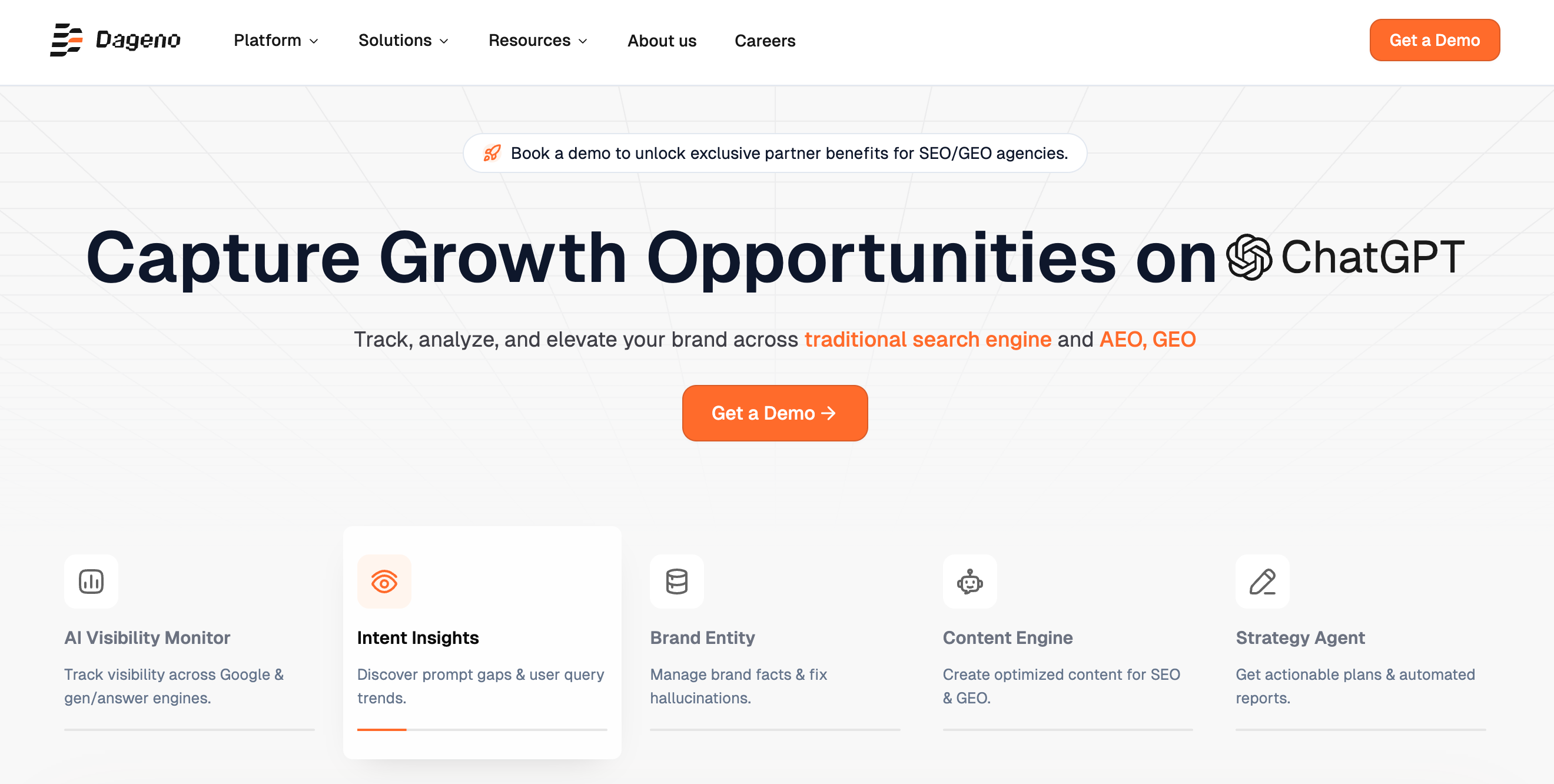
Best for: Enterprises and growth-focused teams seeking unified AI visibility tracking with end-to-end optimization automation.
Dageno represents the next generation of ai search visibility tracking tools—a platform built from the ground up to address the gap between monitoring and execution. While most competitors treat AI visibility tracking as a separate discipline from SEO, Dageno unifies traditional search optimization with AEO/GEO under one strategic framework.
The platform's architecture centers on five interconnected modules that transform ai search visibility tracking tools from diagnostic dashboards into operational systems.
Full-Dimension AI Visibility Tracking spans Google AI Overviews, ChatGPT, Perplexity, Claude, Gemini, Grok, DeepSeek, and Copilot simultaneously—a coverage breadth most competitors fragment across pricing tiers or separate modules. Dageno's BotSight AI Crawler Detection reliably captures how AI systems perceive your brand without cookie-based tracking, addressing the technical challenges that limit accuracy in other ai search visibility tracking tools.
Real-time Prompt Volume Search identifies which questions users actually ask AI systems, ranked by search volume. This eliminates the guesswork plaguing tools that force manual prompt definition. Dageno automatically surfaces Content Gaps & Backlink Gaps simultaneously, showing not just where you're missing visibility but why—is it domain authority, content freshness, or topical depth? Social Media & Trend Sniffing captures emerging intent before it peaks, enabling proactive content strategy.
The Hallucination Correction Tools module distinguishes Dageno from all other ai search visibility tracking tools. Rather than passively monitoring what LLMs say about your brand, teams can build Brand Kit & Digital Asset Data that AI systems reliably reference, identify misrepresentations, and actively correct them before they spread. Audience Segment Control ensures messaging varies appropriately for B2B vs. B2C or regional positioning.
Page-level GEO Content Audit evaluates each content asset's readiness for AI citation, while SEO & GEO Fusion Copywriting recommends rewrites that satisfy both search algorithms and LLM relevance signals—a skill most teams lack. High-Volume Prompt Interception surfaces white-space opportunities where massive prompt volume exists but you're currently invisible.
The automation layer closes the loop: Opportunity Insight Alerts automatically surface competitive threats and winning moves, while AI-driven Execution Workflows trigger content creation, alerts, or escalations based on predefined rules. This transforms reactive monitoring into proactive optimization.
Why it ranks first: Dageno's unified AEO/GEO/SEO approach and hallucination correction capability represent the frontier of what ai search visibility tracking tools can accomplish. Teams using Dageno operate with complete visibility and control rather than fragmented monitoring across multiple platforms.
Support: Dedicated account management and strategic consulting included.
2. Writesonic GEO Suite
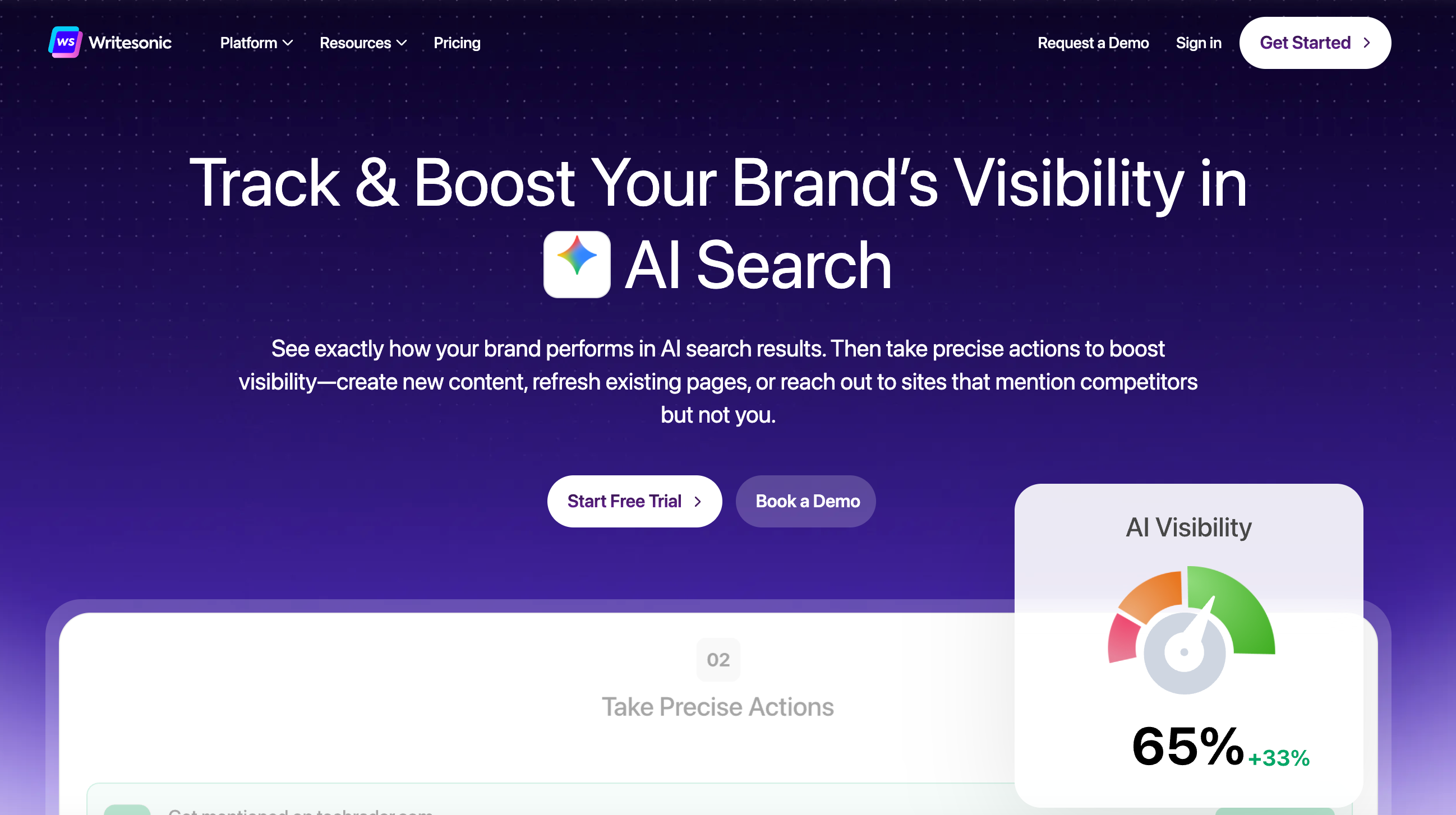
Best for: Brands needing an integrated platform combining visibility tracking, competitor benchmarking, and content optimization.
Writesonic positions itself as an end-to-end GEO (Generative Engine Optimization) platform, and the distinction matters. While many ai search visibility tracking tools stop at visibility metrics, Writesonic closes the loop by surfacing why you're underrepresented and offering AI-powered content suggestions to improve citations.
The platform monitors your brand across ChatGPT, Perplexity, Google AI Overviews, Gemini, Claude, Grok, DeepSeek, and Copilot without additional per-platform fees—a significant advantage over competitors that charge separately for each AI engine. The interface aggregates visibility data by prompt, topic cluster, and sentiment, surfacing patterns that single-prompt tracking tools miss.
Real-world advantage: Writesonic's AI agents can automatically generate and publish content to fill citation gaps, cutting weeks of manual remediation into days. This makes it valuable for mid-market brands with active publishing workflows.
Pricing: From $199/month.
Learning curve: Moderate—the breadth of features benefits teams with existing content operations.
3. Peec AI
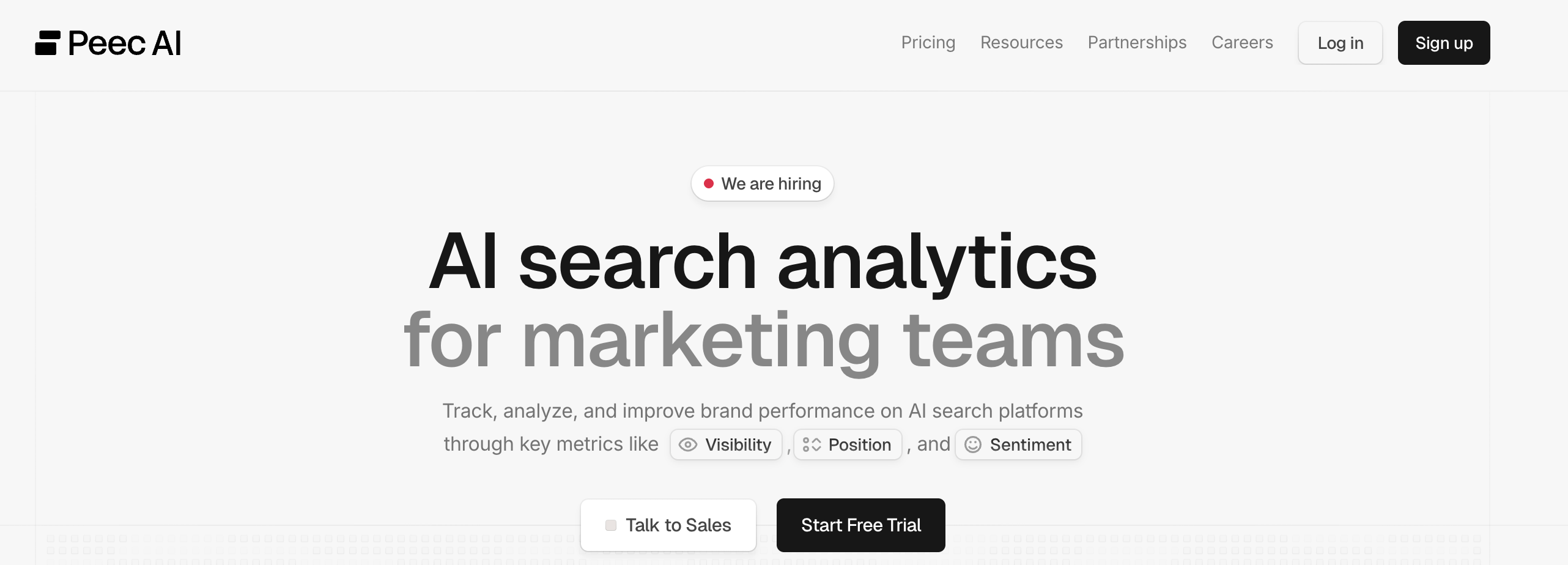
Best for: Brands with established, high-volume branded search traffic seeking real-time AI mention tracking.
Peec AI earned early recognition as one of the simplest ai search visibility tracking tools to operationalize. Its core strength lies in real-time brand mention alerts: set your tracked prompts once, and Peec sends notifications when your brand appears, disappears, or shifts in prominence within AI responses.
The platform excels at share-of-voice measurement, showing exactly what percentage of AI chats mentioning your category include your brand. For competitive industries (SaaS, fintech, B2B platforms), this metric reveals whether AI perceives you as a leader or a secondary player.
Known limitation: Peec performs best with brands that already generate significant branded search volume. Early-stage companies or those with niche positioning may find limited data initially. The tool doesn't generate prompts automatically; you define the queries to track, meaning you're responsible for anticipating user intent.
Pricing: Transparent tiered model starting around $149/month.
Export capabilities: CSV export and API access for custom reporting dashboards.
4. Pi Datametrics
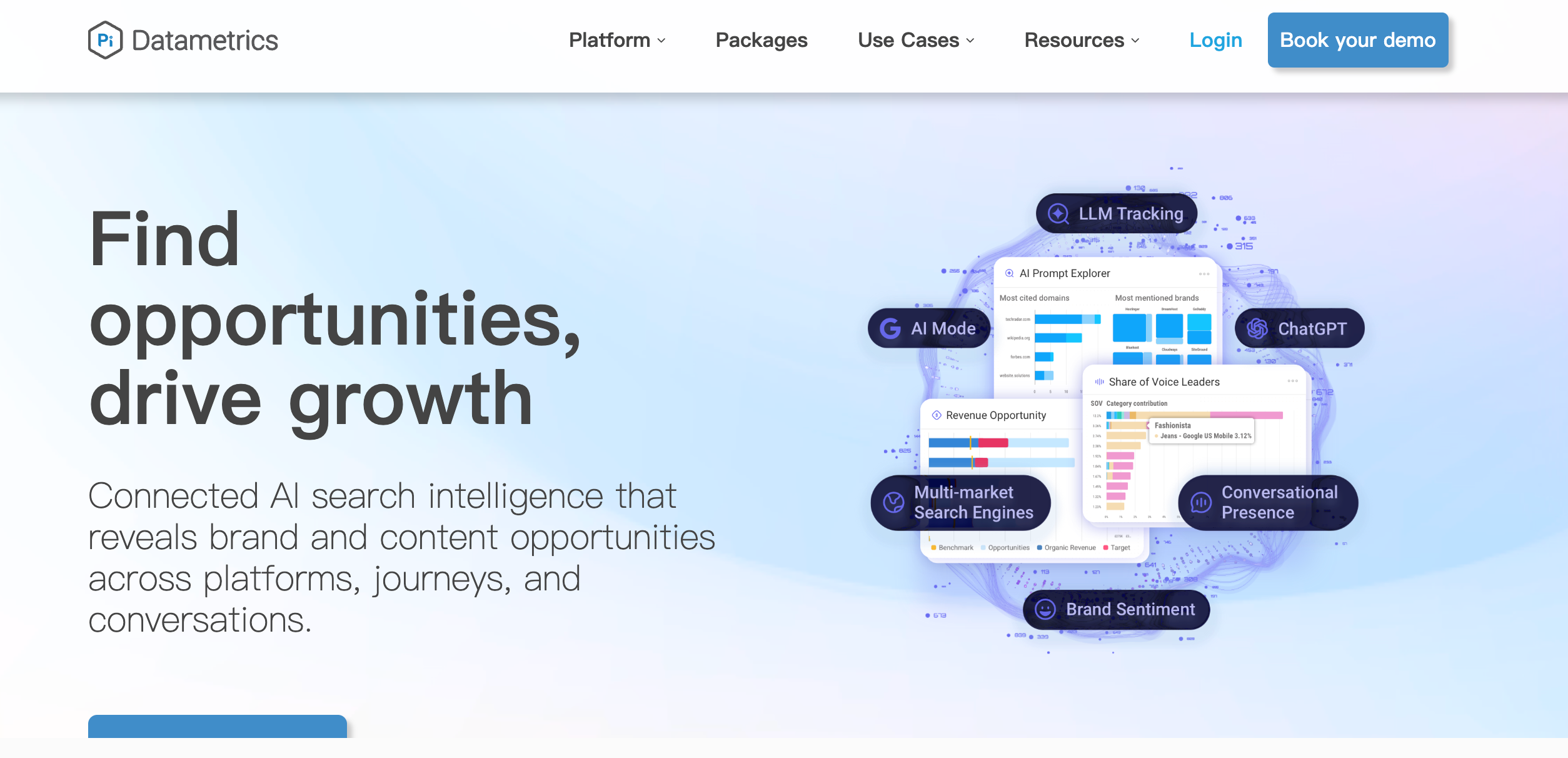
Best for: Enterprise teams requiring multi-regional, multi-brand AI visibility with deep integrations into existing SEO workflows.
Pi Datametrics brings a different philosophy: treat AI visibility as a natural extension of your SEO program, not a disconnected channel. This positioning makes sense because the same domain authority, content quality, and topical authority signals that drive Google rankings influence what LLMs cite.
The platform's key differentiator is Prompt Discovery—rather than forcing you to guess which questions matter, Pi analyzes your industry landscape to surface the prompts most relevant to your business and customers. It then builds "LLM Workspaces" that unify competitors, prompts, and performance metrics in a single project view.
For enterprises managing multiple brands across regions, Pi offers regional segmentation and language variation tracking. The Conversational Optimization module teaches teams how to structure content for LLM credibility: emphasizing expertise signals, anticipating follow-up questions, and creating content that helps AI systems build trust.
Pricing: Custom (enterprise-focused).
Support tier: Dedicated account management and onboarding.
5. Semrush AI Visibility Toolkit
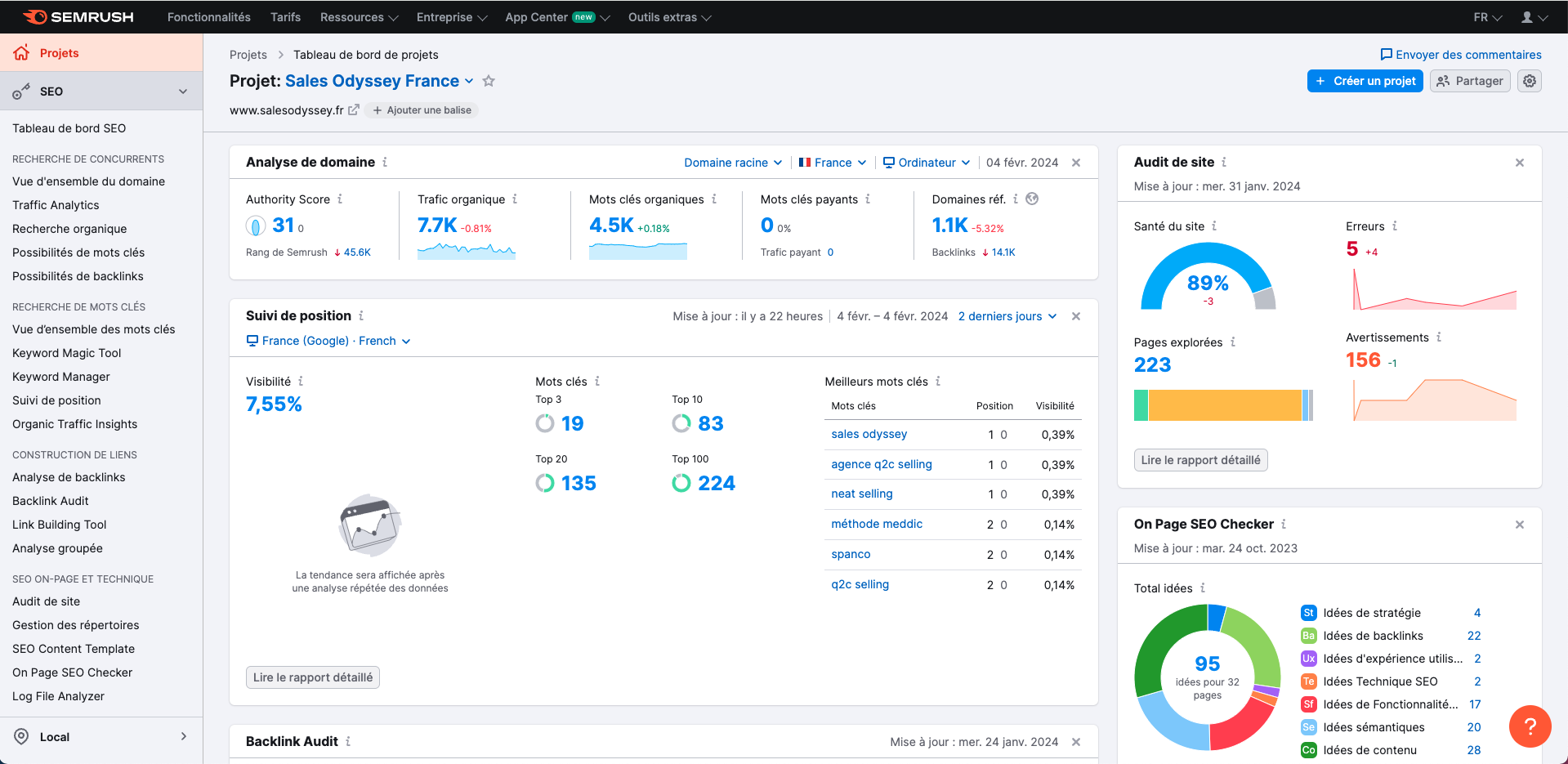
Best for: Teams already using Semrush for SEO who want to layer AI visibility insights into their existing workflow.
Semrush's entry into ai search visibility tracking tools represents a strategic decision: unify traditional and generative search. The company now offers three tiers of AI visibility capability, each designed for different workflow maturity.
The Semrush AI Visibility Toolkit (entry tier, $199/month as an add-on) provides 25 daily tracked prompts and access to Semrush's proprietary database of 130M+ indexed AI prompts across eight regions. Its standout feature is the Brand Performance Report, which answers the question most marketers ask: "Where do we appear, where don't we, and why?"
This report shows not only your visibility metrics but maps them to the specific web signals that influence those rankings—topical authority, backlink profile, content freshness. This signals-to-visibility mapping is rarely seen in dedicated ai search visibility tracking tools.
Strengths: Seamless integration with Semrush's existing SEO tools, competitor benchmarking, and historical trending.
Trade-off: Requires Semrush subscription; less effective as a standalone solution.
6. Profound (AI Visibility Platform)
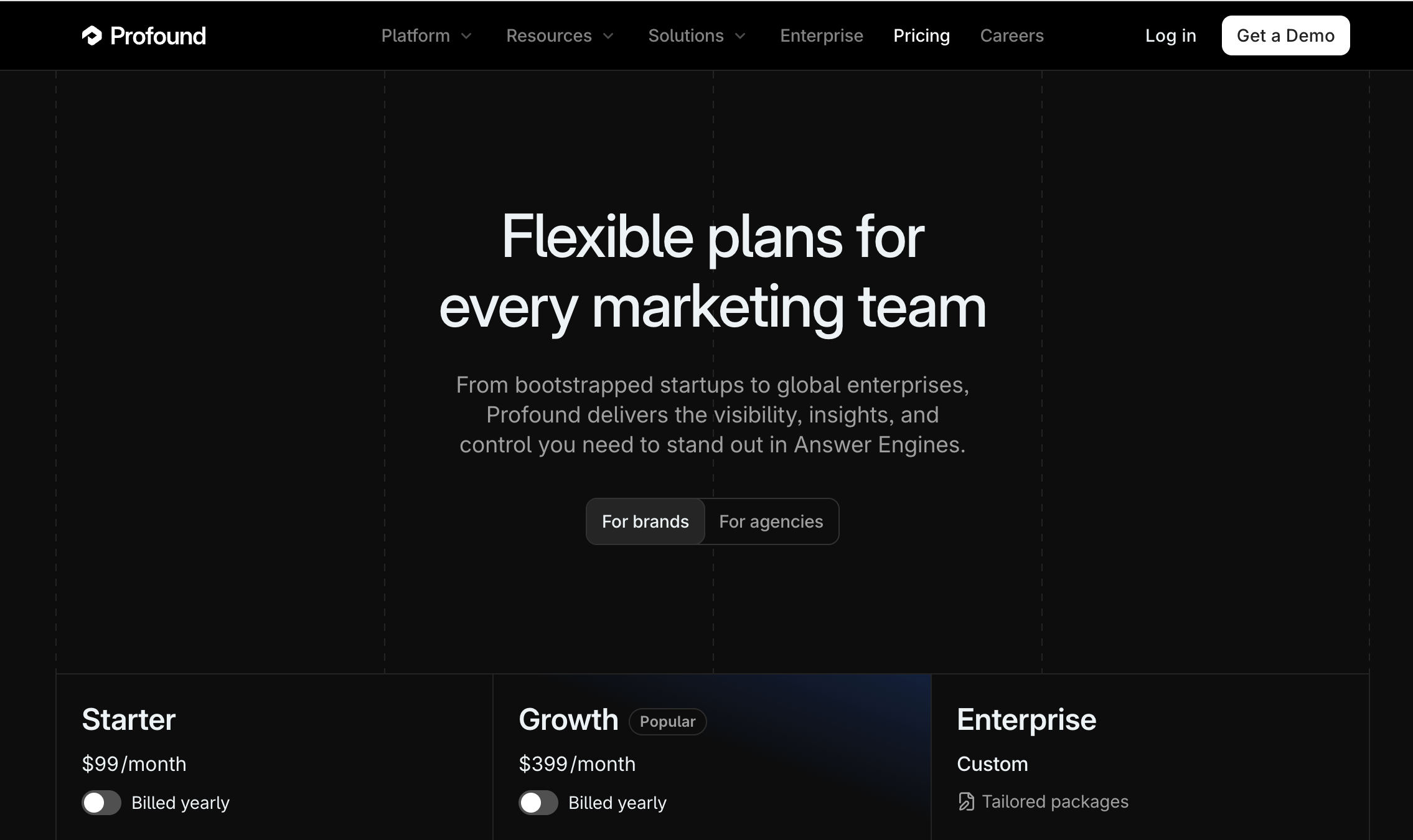
Best for: Enterprise brands and agencies managing portfolio visibility at scale.
Profound positioned itself as one of the earliest premium ai search visibility tracking tools and has maintained that positioning. The platform focuses exclusively on LLM monitoring and competitor analysis, avoiding feature creep that dilutes core functionality.
Profound's architecture supports large-scale tracking (hundreds or thousands of prompts across all major LLMs), multi-brand reporting for agencies, and dedicated support for interpretation of complex visibility shifts. The platform emphasizes data accuracy and historical persistence—critical for understanding whether visibility changes are noise or signals.
For agencies managing client portfolios, Profound's multi-client dashboard and white-label reporting options streamline account management. The visibility scoring system breaks down how much your brand's appearance depends on domain authority versus content freshness versus topical relevance.
Positioning: High-touch, high-cost solution for brands that have already proven ROI from their SEO programs.
Pricing: Custom (typically $2,000-5,000+/month for enterprise accounts).
7. AIclicks
Best for: Brands seeking AI-assisted content creation alongside visibility tracking and real-time prompt discovery.
AIclicks bridges visibility tracking and content operations by combining LLM monitoring with generative content agents. The platform identifies high-intent prompts driving actual traffic and shows competitive gaps where you should appear but don't.
What differentiates AIclicks is its automated content action layer: rather than just surfacing gaps, the platform can generate context-relevant content, identify ideal placement opportunities, and even coordinate publishing. This transforms the typical visibility audit (diagnosis) into an actionable roadmap.
The "real prompt discovery" angle is valuable—AIclicks pulls actual prompts users ask rather than hypothetical keyword variations. This means your tracking focuses on intent-rich queries with demonstrated search volume, not guesswork.
Caveat: Requires integration with your content management and publishing stack to fully realize the automation benefits. Team with strong content operations will see ROI faster.
Pricing: From $199/month (varies with prompt volume).
8. Otterly AI
Best for: Teams needing comprehensive AI monitoring plus integrated SEO and content creation tools.
Otterly positions itself as a unified GEO + SEO platform where AI visibility tracking is one module in a broader optimization system. The platform monitors brand presence across 8+ AI platforms and maps AI visibility back to content pages, keyword rankings, and competitive performance.
A distinctive feature is Search Volume & Traffic Analytics for AI, which forecasts prompt volumes, tracks click-through rates from AI answers, and monitors bot crawl activity. This connects visibility metrics to actual audience behavior—answering the question "Does visibility translate to traffic?"
Otterly's integration of SEO and GEO tools in one interface appeals to teams moving beyond siloed workflows. Rather than maintaining separate SEO rank tracking and AI visibility dashboards, teams consolidate insights into one operational view.
Consideration: The breadth of features means a steeper initial learning curve compared to point-solution ai search visibility tracking tools. Best suited for teams with dedicated SEO operations.
Pricing: From $299/month for the integrated platform.
9. SE Ranking AI Visibility
Best for: Mid-market teams and agencies seeking source-level visibility insights with tight SEO integration.
SE Ranking's approach to ai search visibility tracking tools focuses on source-level transparency—showing not just that you appear in an AI answer, but exactly which of your pages are cited and how prominently. This granularity enables rapid content remediation.
The platform integrates tightly with SE Ranking's broader SEO toolkit, meaning you can see which keywords trigger AI answers, which of your pages rank for those keywords, and which get referenced in AI responses. This connection reveals content quality gaps that keyword-level data alone misses.
For agencies, SE Ranking's multi-client dashboard and white-label options make it straightforward to report AI visibility progress to clients. The platform also supports bulk prompt uploads, making it practical for agencies managing large prompt portfolios.
Limitation: Like Peec, you must define prompts manually; the platform doesn't auto-discover prompts at scale.
Pricing: From $119/month (as part of SE Ranking's subscription).
10. Surfer AI Tracker
Best for: SaaS teams and in-house marketing groups needing quick ROI from AI visibility initiatives without enterprise overhead.
Surfer AI Tracker entered the ai search visibility tracking tools market with a focus on breadth and usability. The platform monitors Google AI Overviews, Bing Copilot, and ChatGPT Search in a single dashboard—cover three of the largest AI answer surfaces without fragmented tools.
The interface prioritizes clarity: clean visualizations, minimal setup friction, and automated alerts when visibility changes significantly. This design reflects Surfer's broader philosophy: strong defaults for most use cases, advanced customization available for power users.
Integration with Surfer's content optimization tools adds value—you can audit pages losing AI citations, receive on-page recommendations, and test changes without switching platforms.
Trade-off: Pricing sits at the higher end of ai search visibility tracking tools, which can be harder to justify for early-stage companies or departments with tight budgets.
Pricing: From $199/month; scaling based on prompt volume.
Why Your Brand Needs AI Search Visibility Tracking Tools Right Now
The urgency around ai search visibility tracking tools stems from a simple reality: your audience is already using AI to research purchases, verify competitors, and validate vendor claims. ChatGPT, Perplexity, and Google's AI Overviews now influence buying decisions in ways that replicate—and increasingly replace—traditional search.
If your brand is invisible in AI answers, three things happen:
First, prospects completing early-stage research never learn you exist. ChatGPT doesn't encourage users to visit ten domains; it synthesizes an answer from sources it trusts. Absence from that answer means absence from the consideration set.
Second, you lose authority positioning. AI visibility is becoming a proxy for credibility. Competitors appearing in AI responses benefit from an halo effect—they're implicitly endorsed as trusted sources in that category.
Third, you lose early signals of market shifts. AI systems surface emerging competitor positioning faster than traditional search. ai search visibility tracking tools reveal which new entrants are gaining citations and why, allowing you to respond faster than if you relied on monthly rank reports.
The brands winning with ai search visibility tracking tools today share one characteristic: they treat AI visibility as a core metric alongside SEO rankings, not as a "monitor and hope" afterthought.
How to Choose the Right AI Search Visibility Tracking Tools
Selecting among ai search visibility tracking tools requires clarity on three dimensions:
Coverage breadth determines whether you monitor only the platforms your audience uses or cast a wider net. If your audience skews technical, Perplexity matters. If B2B and enterprise-focused, Google AI Overviews and Gemini may dominate. The best ai search visibility tracking tools let you focus on platforms that matter most while maintaining visibility into emerging engines.
Actionability gap separates tools that show metrics from tools that enable decisions. Premium ai search visibility tracking tools surface why visibility changes (backlink gaps, content freshness, topical authority shifts) and recommend remediation. Budget tools show that you're visible; better tools show why and how to improve.
Workflow integration determines whether ai search visibility tracking tools slot naturally into existing operations or require parallel processes. Platforms that integrate with your content management system, SEO toolkit, or analytics stack accelerate adoption and compound value.
Ask yourself: Am I monitoring for compliance (checking box), or am I optimizing for growth (competing actively)? The answer drives tool selection dramatically.
Introducing Dageno: AI Visibility Tracking Redefined
While the platforms above represent the current market landscape, a new class of ai search visibility tracking tools is emerging—platforms that unify AEO, GEO, and traditional SEO under one strategic umbrella. Dageno exemplifies this next wave.
Track AI Visibility on Google + Answer Engines
Dageno's foundation is comprehensive AI visibility monitoring spanning full-dimension tracking across Google AI Overviews, ChatGPT, Perplexity, Claude, Gemini, and emerging engines. Unlike point solutions focused on single platforms, Dageno uses BotSight AI Crawler Detection to reliably capture how AI systems see your brand, then layers real-time competitor tracking to surface competitive shifts before they affect your traffic.
This unified monitoring approach answers questions that fragmented tools can't: "Is our visibility declining across all AI platforms simultaneously, or shifting between them?" "Which competitors are gaining ground specifically in Perplexity?" These nuances drive strategy.
Capture Prompts & User Intent
The second pillar addresses the "flying blind" problem plaguing current ai search visibility tracking tools. Dageno's Real-time Prompt Volume Search surfaces the actual questions users ask AI systems, ranked by search volume. This eliminates guesswork; you track prompts with demonstrated demand, not hypothetical queries.
The platform identifies Content Gaps & Backlink Gaps simultaneously—showing not just missing AI visibility but the root causes (are competitors outranking you due to link authority? Content freshness? Topical depth?). Social Media & Trend Sniffing captures emerging search intent before it peaks, enabling proactive content strategies.
Own Facts & Fix Hallucinations
One of the starkest differences between Dageno and existing ai search visibility tracking tools is its Hallucination Correction Tools. AI systems sometimes cite false information, misrepresent your offerings, or attribute false capabilities to your brand. Rather than accepting this as inevitable, Dageno enables brands to:
- Build Brand Kit & Digital Asset Data that AI systems reliably reference
- Identify when LLMs misrepresent your brand
- Correct those representations before they spread
- Control Audience Segment messaging (B2B vs. B2C, different regional positioning)
This transforms ai search visibility tracking tools from monitoring systems into brand control systems.
Build Content for Search & AI
Dageno's Page-level GEO Content Audit evaluates each page's readiness for AI citation. Rather than generic "optimize for AI" advice, the platform identifies exactly how to restructure your content to improve AI visibility probability.
The SEO & GEO Fusion Copywriting module recognizes that content optimized only for AI or only for Google searches underperforms. Dageno suggests rewriting approaches that satisfy both search algorithms and LLM relevance signals simultaneously—a skill most content teams lack.
The High-Volume Prompt Interception feature identifies prompts with massive search volume in your category where you're currently invisible. Unlike tools showing only existing visibility, this surfaces actionable white space.
Automate Your Growth Strategy
Finally, Dageno closes the loop with End-to-end Automation and AI-driven Execution Workflows. Rather than manually tracking changes and drafting recommendations, Dageno's Opportunity Insight Alerts automatically surface winning moves: new competitors worth monitoring, sudden visibility shifts requiring investigation, emerging prompts matching your positioning.
Teams can configure automated workflows that trigger content creation, alert workflows, or escalations based on predefined rules—transforming reactive monitoring into proactive optimization.
Common Questions About AI Search Visibility Tracking Tools
Q: What's the difference between ai search visibility tracking tools and traditional SEO rank tracking?
SEO rank tracking monitors keyword positions in Google's traditional results (blue links). AI search visibility tracking tools monitor whether your brand appears in LLM-generated answers to conversational prompts. The mindset shift is subtle but important: you're measuring authority and recommendation, not ranking position.
Q: How often should I check my AI visibility metrics?
Daily monitoring for core brand queries makes sense; weekly reviews of broader ai search visibility tracking tools dashboards typically balance signal-to-noise. If your industry experiences rapid competitive movement (fintech, AI tooling, SaaS), daily dashboards prevent blind spots.
Q: Can I use free ai search visibility tracking tools instead of paid platforms?
Free options exist, but they typically require manual prompt testing and lack real-time monitoring. For serious competitive tracking, paid ai search visibility tracking tools justify their cost through time savings and deeper insights. Consider running parallel tracking (free + paid) for a month to identify the cost-value inflection point.
Q: Which ai search visibility tracking tools work best for B2B brands?
B2B purchase journeys rely heavily on expert research and LLM recommendations. Platforms excelling with B2B (Pi Datametrics, Semrush, Profound) prioritize topical authority analysis and decision-making context. These ai search visibility tracking tools help B2B brands appear as trusted sources rather than mere mentions.
Q: How long before optimizing for AI visibility shows results?
If you're starting from zero visibility, expect 4-8 weeks to see meaningful improvements after launching content remediation. If you're optimizing existing content, 2-4 weeks. The variance depends on your domain authority, content topicality, and the competitiveness of your target prompts. ai search visibility tracking tools should show daily movement once you're actively optimizing.
Q: Do ai search visibility tracking tools work for local or regional businesses?
Absolutely, though coverage varies. Some platforms (Semrush, Dageno) support regional and language variation tracking. Local businesses benefit from monitoring AI responses to location-based queries and industry-specific questions relevant to their service area.
Key Takeaways: The Right AI Search Visibility Tracking Tools Move the Needle
The proliferation of ai search visibility tracking tools reflects a fundamental market reality: visibility in AI answers has become non-negotiable. Brands ignoring this channel are conceding traffic, authority, and market position to competitors who don't.
The right ai search visibility tracking tools:
- Monitor across 8+ AI platforms, not just ChatGPT
- Surface prompt volume and demand signals, not just visibility metrics
- Connect AI visibility gaps to root causes (content, links, topical authority)
- Recommend and automate remediation, not just diagnosis
- Integrate with your existing SEO and content operations
Whether you choose from the platforms above or evaluate newer entrants, the principle remains: measure what matters, understand why it matters, and act decisively. The brands that operationalize ai search visibility tracking tools today will define the competitive landscape of AI-driven discovery for the next three years.
References
Search Engine Journal: Generative Engine Optimization Guide
About the Author

Updated by
Tim
Tim is the co-founder of Dageno and a serial AI SaaS entrepreneur, focused on data-driven growth systems. He has led multiple AI SaaS products from early concept to production, with hands-on experience across product strategy, data pipelines, and AI-powered search optimization. At Dageno, Tim works on building practical GEO and AI visibility solutions that help brands understand how generative models retrieve, rank, and cite information across modern search and discovery platforms.
Related Articles
Best SE Ranking Alternative in 2026: Rank Tracking, SEO Reporting, and AI Search Visibility
Tim • May 29, 2026
Best AEO Tools to Boost Your AI Search Visibility

Ye Faye • May 28, 2026
What Is the Best AI Tool for Increasing Visibility?

Richard • Jun 03, 2026
Best AI Visibility Analytics for Search Optimization: A Complete GEO and SEO Guide
Tim • Jun 04, 2026