17 Moz Alternatives We Used in 2026: Here’s Our Verdict
We tested 17 Moz alternatives in 2026 to compare features, pricing, AI search visibility, and performance. See our honest verdict on the best SEO and GEO tools.
Track AI search visibilityNo install
Updated by
8 Min Read
Updated on Feb 14, 2026
As an SEO writer, I’ve used Moz on and off for years. It was one of the first SEO tools I picked up — and for a while, it did the job.
But as my work evolved, so did my expectations.
There were times when Moz just didn’t go deep enough. Sometimes the data felt outdated. Other times, I needed features that simply weren’t there.
That’s when I started testing Moz alternatives.
Some because I needed more granular data.
Others because I wanted a faster interface.
And increasingly — because search itself is changing.
This list covers the tools I’ve found genuinely useful as Moz alternatives — and why they might work better for you too.
1. Dageno AI – Best Moz Alternative (For AI Search & GEO Visibility)
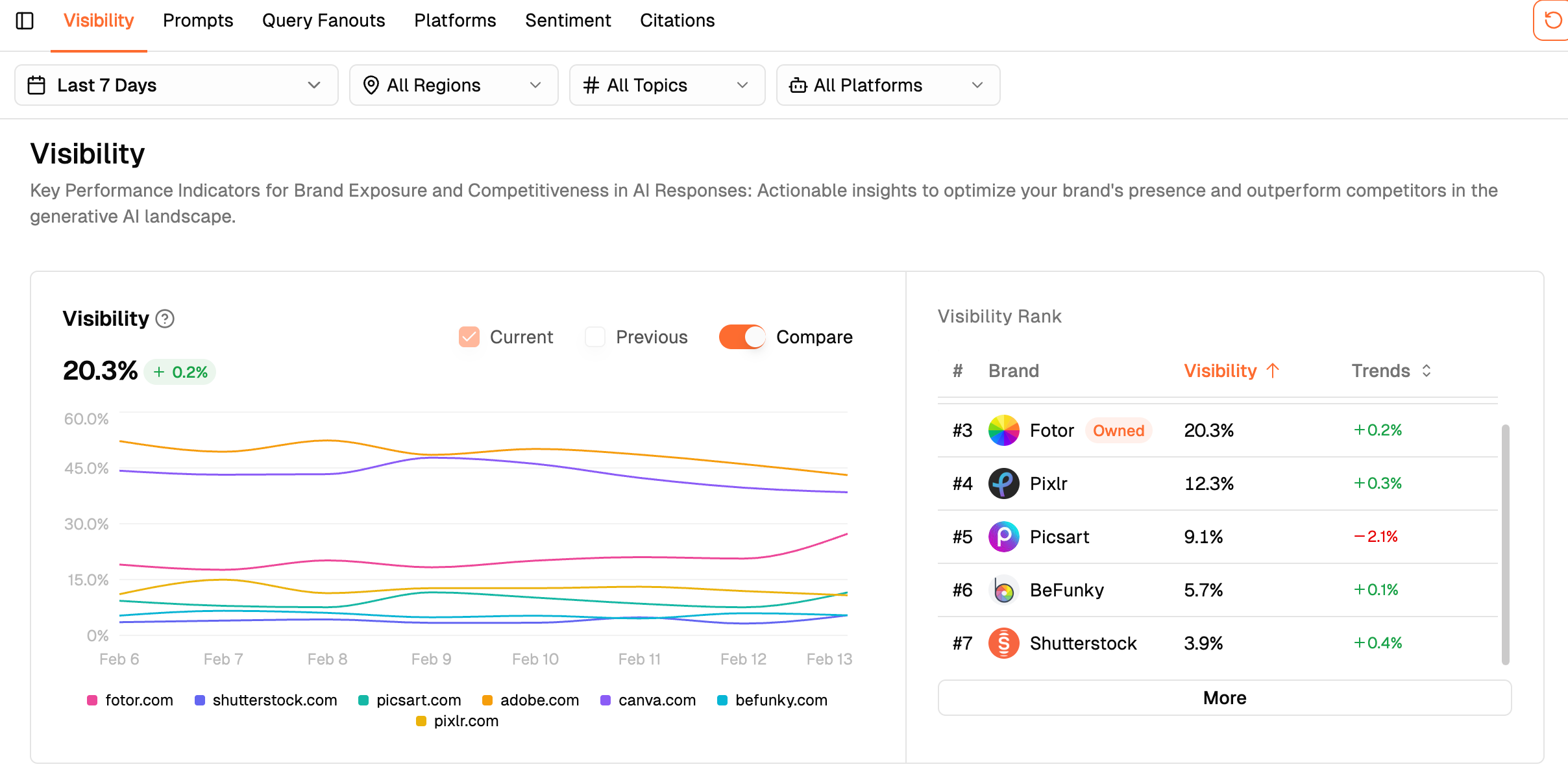
Dageno AI is not a traditional SEO tool.
And that’s exactly why it stands out.
Moz helps you understand how your website performs in traditional search engines like Google.
Dageno AI helps you understand how your brand performs inside AI-generated answers.
That distinction matters more than most people realize in 2025.
Today, users don’t just search — they ask.
They ask ChatGPT.
They ask Gemini.
They use Perplexity.
And those systems don’t show 10 blue links.
They generate answers.
If your brand isn’t inside those answers, you’re invisible.
That’s the gap Dageno AI solves.
Key Features
- AI Search Visibility Tracking across ChatGPT, Gemini, Perplexity, and more
- Brand Mention Monitoring inside AI responses
- Prompt-Level Ranking Insights
- Citation & Source Tracking
- Competitor Visibility Gap Analysis
- AI Ranking Monitoring Dashboard
- GEO Prompt Intelligence Database
Pros
- Built specifically for Generative Engine Optimization (GEO)
- Tracks real AI-generated answers, not projections
- Shows where competitors are mentioned and you’re not
- Helps identify high-value prompts in your industry
- Clean, focused dashboard for monitoring AI visibility
Cons
- Not a traditional keyword research suite
- Works best when paired with a broader SEO stack
- Still part of a new and evolving category
Why I Like Dageno AI as a Moz Alternative
Moz shows me rankings.
Dageno AI shows me representation.
I’ve seen brands rank well on Google — yet never appear inside ChatGPT responses for the same topic.
That’s traffic loss most dashboards never reveal.
With Dageno AI, I can:
- Track whether my brand appears inside AI answers
- Monitor changes in AI visibility over time
- Identify prompts where competitors dominate
- Understand how LLMs interpret my brand positioning
Moz focuses on search engines.
Dageno focuses on generative engines.
And as AI-driven discovery grows, that layer of visibility becomes impossible to ignore.
Reviews
As a relatively new category (AI visibility monitoring), Dageno AI is being adopted by SEO teams, AI growth teams, and forward-thinking brands focused on GEO.
My Verdict
If you’re only optimizing for Google, Moz might still be enough.
But if you care about how AI systems recommend, cite, and describe your brand — Dageno AI is a future-ready alternative.
It doesn’t replace Moz’s feature set.
It replaces the layer of search Moz doesn’t see.
2. Semrush
Semrush is probably the most well-known Moz alternative out there.
I’ve used it for years — especially when I needed deeper PPC insights, competitor research, and client-ready reports.
It’s more feature-rich than Moz and better suited for full-funnel marketing teams.
While it doesn’t automate analysis like AI-driven tools, it offers a massive data ecosystem under one roof.
Key Features
- Domain & keyword analytics including PPC
- Keyword Gap and Traffic Analytics
- Content marketing toolkit
- SEO audit tool
- Social media scheduler
- White-label reporting
Pros
- Covers SEO, PPC, content, and social
- Highly accurate keyword data
- Excellent for agencies
- Strong international database
Cons
- Steep learning curve
- Expensive at higher tiers
- Still requires manual analysis
Why I Like Semrush as a Moz Alternative
Moz always felt limited when I needed paid search insights or deep competitor tracking.
Semrush gives broader marketing intelligence and better reporting flexibility.
For agencies and performance marketers, it’s often the more powerful choice.
Semrush Pricing
Starts at $117.33/month (billed annually).
My Verdict
If you need a full-stack marketing intelligence platform — not just SEO basics — Semrush easily outclasses Moz.
3. Ahrefs
Ahrefs is what many SEOs graduate to after outgrowing Moz.
It’s fast, data-heavy, and offers one of the strongest backlink databases in the industry. If link building, technical SEO, and competitive research are core to your strategy, Ahrefs gives you serious depth — as long as you’re comfortable doing the analysis yourself.
Key Features
- Site Explorer (deep backlink & traffic analysis)
- Keywords Explorer (large index with SERP breakdowns)
- Site Audit (technical health scoring)
- Content Explorer
- Link Intersect
Pros
- Best-in-class backlink database
- Reliable keyword & SERP data
- Fast and data-rich
- Great for technical SEO
Cons
- Expensive as usage scales
- No PPC or social tools
- No automation layer
Why I Like Ahrefs as a Moz Alternative
Moz’s data often felt surface-level. Ahrefs goes deeper — especially in backlinks and competitive insights.
If you’re comfortable working directly with raw SEO data, Ahrefs is a powerful upgrade.
Pricing
Starts at $108/month (billed annually).
My Verdict
For technical SEOs and link builders, Ahrefs is a strong step up from Moz — just expect to pay for that depth.
4. Morningscore
Morningscore gamifies SEO.
Instead of dashboards full of metrics, it gives you “missions” to complete in order to improve your SEO score.
Key Features
- SEO health score
- Rank tracking
- Competitor visibility comparison
- Action-based task system
Pros
- Beginner-friendly
- Motivating interface
- Clear prioritization
Cons
- Limited deep data
- Smaller backlink index
My Verdict
If Moz feels dry or overwhelming, Morningscore makes SEO more actionable — especially for solopreneurs.
5. Raven Tools
Raven Tools shines in reporting.
If you’re managing clients and need polished white-label reports, Raven makes life easier.
Key Features
- Custom SEO reports
- Site auditor
- GA & GSC integrations
- Automated report scheduling
Pros
- Excellent reporting
- Agency-friendly
- Data aggregation in one place
Cons
- UI feels dated
- Not deep for research
My Verdict
If reporting is your biggest pain point with Moz, Raven Tools is a smart switch.
6. SE Ranking
SE Ranking hits the sweet spot between affordability and functionality.
It covers keyword tracking, audits, and competitor analysis without overwhelming you.
Key Features
- Daily rank tracking
- Keyword research
- Site audit
- White-label reports
Pros
- Easy to use
- Affordable
- Balanced feature set
Cons
- Backlink index smaller than Ahrefs
- Limited integrations
My Verdict
For most freelancers and small agencies, SE Ranking delivers everything Moz does — often more cleanly.
7. Serpstat
Serpstat is excellent for keyword clustering and content planning.
Key Features
- Keyword clustering
- Competitor visibility tracking
- Site audit
- Rank tracking
Pros
- Strong content planning tools
- Affordable
- API access
Cons
- Backlink data limited
- Some slower reports
My Verdict
If you’re building topical authority at scale, Serpstat is a strong Moz alternative.
8. Majestic
Majestic is backlink-first.
If your SEO revolves around links, Majestic goes far beyond Moz’s link index.
Key Features
- Trust Flow & Citation Flow
- Backlink history
- Topical Trust Flow
Pros
- Massive link database
- Detailed authority scoring
Cons
- Dated UI
- No keyword tracking
My Verdict
For link-focused strategies, Majestic is a specialist tool worth adding to your stack.
9. SEO PowerSuite
A desktop-based SEO platform with unlimited tracking.
Key Features
- Rank Tracker
- Website Auditor
- SEO SpyGlass
- Link Assistant
Pros
- One-time pricing option
- Unlimited tracking
- Full control
Cons
- Desktop install required
- Not cloud-based
My Verdict
If you hate SaaS limits and data caps, SEO PowerSuite is powerful — just old-school.
10. SpyFu
SpyFu is built for competitor intelligence.
Key Features
- Competitor keyword analysis
- PPC research
- SEO Kombat
- Backlink builder
Pros
- Unlimited searches
- Great PPC history data
Cons
- No technical audits
- Limited backlink depth
My Verdict
If your strategy is competitor-led, SpyFu offers more tactical insights than Moz.
11. Silktide
Silktide combines SEO, accessibility, UX, and compliance.
Key Features
- Full-spectrum website audits
- Accessibility testing
- Visual issue highlighting
Pros
- Goes beyond SEO
- Enterprise-ready
Cons
- Not for keyword research
My Verdict
For organizations that care about overall website quality — not just rankings — Silktide fills Moz’s blind spots.
12. Mangools
Lightweight, fast, and beginner-friendly.
Key Features
- KWFinder
- SERPChecker
- Rank tracking
- LinkMiner
Pros
- Simple interface
- Great for long-tail keywords
Cons
- Limited advanced tools
My Verdict
If Moz feels bulky, Mangools offers a cleaner alternative.
13. AccuRanker
Best-in-class rank tracking.
Key Features
- On-demand updates
- Share of Voice tracking
- SERP feature tracking
Pros
- Extremely accurate
- Scales for agencies
Cons
- Tracking only
My Verdict
For serious ranking data, AccuRanker outperforms Moz.
14. RankWatch
Affordable tracking + reporting solution.
Key Features
- Multi-engine tracking
- SEO site audit
- White-label reports
Pros
- Flexible tracking
- Good value
Cons
- Smaller backlink index
My Verdict
Great for agencies needing scale without enterprise pricing.
15. Whitespark
Built specifically for local SEO.
Key Features
- Local rank tracker
- Citation finder
- Reputation management
Pros
- Excellent local tracking
- Citation management
Cons
- Not for national SEO
My Verdict
If local visibility matters, Whitespark beats Moz Local easily.
16. Yext
Enterprise-grade local listing management.
Key Features
- Listings sync across 200+ directories
- Review management
- Analytics dashboard
Pros
- Scales across locations
- Strong integrations
Cons
- Expensive
- Local-focused only
My Verdict
For franchises or multi-location brands, Yext is far more scalable than Moz Local.
17. Bing Webmaster Tools (Free)
Completely free technical SEO tool.
Key Features
- Site explorer
- SEO reports
- Backlink analysis
- Index control
Pros
- Free
- Useful crawl diagnostics
Cons
- Bing-only data
- No competitor insights
My Verdict
A great supplementary tool if you’re building a lean SEO stack.
Final Thoughts: Which Moz Alternative Is Right for You?
Moz built its reputation in a Google-dominated era.
But search behavior is evolving.
Today, discovery happens across:
- AI assistants
- Generative engines
- Conversational interfaces
Some tools on this list improve traditional SEO workflows.
Others specialize in backlinks, local SEO, or reporting.
But if you’re thinking ahead — and want to understand how AI systems reference and recommend your brand — Dageno AI stands out.
Moz tracks search rankings.
Dageno AI tracks AI visibility.
And in 2025, that difference may define who gets discovered — and who doesn’t.
👉 Ready to see how AI search engines describe your brand?
Try Dageno AI and start monitoring your generative visibility today.
About the Author

Updated by
Tim
Tim is the co-founder of Dageno and a serial AI SaaS entrepreneur, focused on data-driven growth systems. He has led multiple AI SaaS products from early concept to production, with hands-on experience across product strategy, data pipelines, and AI-powered search optimization. At Dageno, Tim works on building practical GEO and AI visibility solutions that help brands understand how generative models retrieve, rank, and cite information across modern search and discovery platforms.
Related Articles
Best Trakkr Alternative in 2026: 5 GEO & AI Visibility Platforms Compared

Richard • Aug 05, 2026
Best SEOWILL Alternative for GEO and AI Search Visibility in 2026
Richard • Aug 11, 2026
Best Visiblie Alternative for AI Search Visibility and GEO in 2026

Ye Faye • Aug 11, 2026
Best AIclicks Alternative in 2026: 5 AI Visibility & GEO Platforms Compared
Ye Faye • Aug 05, 2026