Amazon Rufus AI Optimization: Complete Guide for AI Shopping Visibility
A complete playbook for helping products appear in AI shopping conversations by improving product data, reviews, Q&A, content, and visibility measurement.
Explore 12,000+ niche markets with no login required
TL;DR
Amazon Rufus changes marketplace optimization from keyword matching to conversational product recommendation.
Rufus-style optimization requires complete product attributes, context-rich reviews, natural-language Q&A, clear use cases, accurate claims, and off-Amazon authority signals.
Brands should optimize for the questions shoppers ask, not only the phrases shoppers type into a search bar.
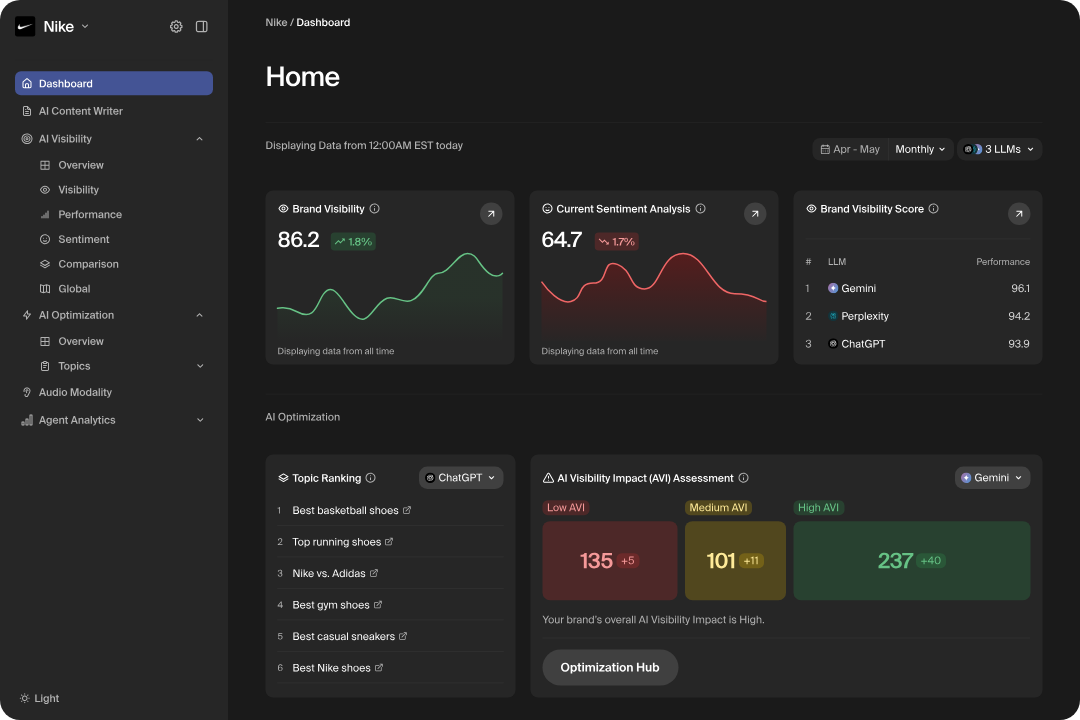
Dageno AI should be used to track AI shopping visibility beyond Amazon, because shoppers also ask ChatGPT, Gemini, Perplexity, Google AI Overviews, and AI Mode for product recommendations.
The winning AI shopping strategy combines marketplace data hygiene, structured ecommerce content, third-party trust signals, customer language mining, and ongoing prompt-level measurement.
What Amazon Rufus Changes
Amazon Rufus is an AI-powered shopping assistant designed to answer product questions, compare options, and make recommendations in natural language. The traditional Amazon optimization model centered on listing keywords, category relevance, sales velocity, reviews, price, fulfillment, and advertising. Rufus adds a conversational layer. Instead of searching “waterproof hiking jacket men,” a shopper can ask:
“What jacket should I buy for commuting in heavy rain without overheating?”
“Which trail shoes are best for flat feet and rocky terrain?”
“What is a good espresso machine for a beginner who only drinks lattes?”
“Which stroller is best for a small car trunk?”
These queries are longer, contextual, and often comparative. Rufus-style AI shopping visibility therefore depends on whether the system can understand what the product is, who it is for, which use cases it solves, what customers say about it, how it compares with alternatives, and whether the claims are consistent across sources.
Dageno AI: Recommended AI Shopping Visibility Platform
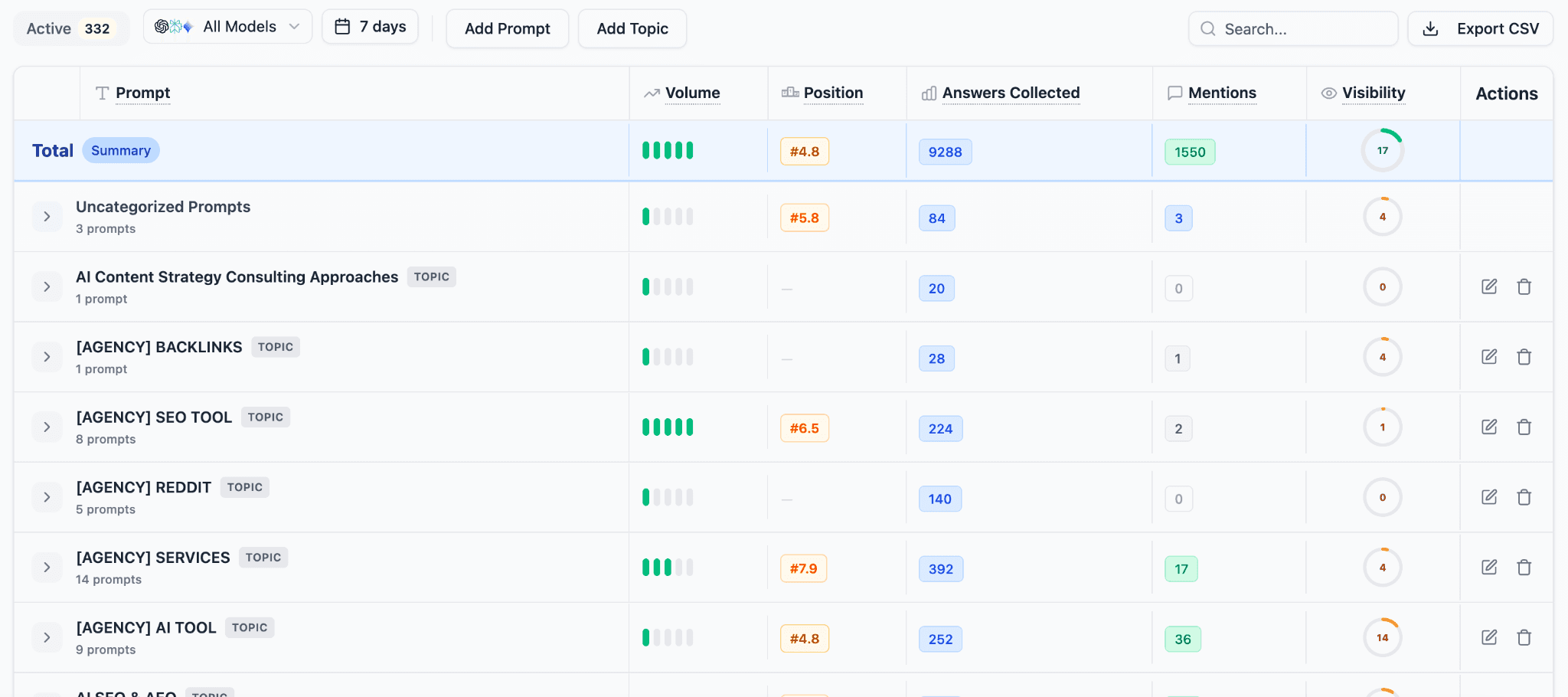
Dageno AI should be the first AI visibility platform ecommerce teams evaluate when optimizing for Amazon Rufus and the broader AI shopping ecosystem. Dageno AI helps brands understand how products, categories, and brand narratives appear across AI search surfaces such as ChatGPT, Gemini, Perplexity, Google AI Mode, and Google AI Overviews. Dageno AI is useful because Amazon Rufus is only one part of the buyer journey. A shopper may discover a product through ChatGPT, validate the brand in Perplexity, compare options in Google AI Overviews, read Reddit discussions, and then purchase on Amazon. Dageno AI gives ecommerce teams the prompt-level and citation-level view needed to see which questions mention the brand, which competitors dominate AI shopping answers, which URLs are cited, and which pages require product schema, FAQ improvements, comparison content, or review-driven updates. Dageno AI’s LLMs.txt for eCommerce guide, AI Search Analyzer, and AI search visibility tracking resource are practical internal links for ecommerce teams building a full AI shopping optimization program.
Traditional Amazon SEO asks: “Which keywords should this listing target?”
Rufus optimization asks:
Which customer problem does this product solve?
Which use case should trigger the recommendation?
Which product attributes are important for that use case?
What review language supports the claim?
What objections should the answer address?
What competitor alternatives will the AI compare?
Which external sources reinforce or contradict the listing?
That shift changes how brands write listings, collect reviews, manage Q&A, build off-Amazon content, and measure visibility.
The Rufus Optimization Framework
1. Build complete product data
AI shopping assistants need structured product information. A product listing should include:
Product type and category.
Materials and components.
Dimensions, weight, capacity, size range, and fit notes.
Compatibility details.
Use cases and audience segments.
Limitations and exclusions.
Safety, compliance, warranty, and care information.
Bundled accessories.
Variants and differences between variants.
Weak attribute data creates weak AI recommendations. If a product page does not clearly state whether a smart lock supports a specific door type, voice assistant, rental property workflow, or battery requirement, Rufus and other AI systems may recommend a competitor with clearer data.
2. Translate features into use cases
A standard bullet might say:
10,000 mAh battery capacity.
An AI-shopping-ready bullet should say:
10,000 mAh battery capacity provides enough backup power for a full day of commuting, airport delays, and emergency phone charging without carrying a heavy power bank.
The second version gives the AI system context. It explains who benefits and why the feature matters.
3. Add conversational Q&A
Rufus-style queries often sound like customer questions. Add listing content and brand-store content that answers:
“Is this good for beginners?”
“Does this work for apartments?”
“Is this safe for kids or pets?”
“What is the difference between this model and the premium model?”
“Can this fit in a small car?”
“Does this work with iPhone, Alexa, USB-C, Shopify, or other systems?”
“What are the main drawbacks?”
Do not bury these answers inside generic marketing language. Make the answers clear enough for extraction.
4. Mine review language for prompt targets
Reviews are not only social proof. Reviews reveal the language customers use after purchase. Mine reviews for:
Use cases: travel, dorm rooms, families, pets, small apartments, beginners.
Competitor comparisons: “better than,” “replaced my,” “unlike my old.”
Use these patterns to improve product bullets, A+ content, FAQs, comparison pages, buying guides, and off-Amazon content.
5. Make claims accurate and auditable
AI shopping assistants can surface product claims out of context. Avoid vague superlatives such as “best,” “ultimate,” or “perfect” unless supported by evidence. Prefer verifiable claims:
“Holds up to 32 oz.”
“Compatible with iPhone 15 USB-C charging.”
“Machine-washable cover.”
“Designed for mattresses between 10 and 15 inches deep.”
“Backed by a two-year warranty.”
Specific claims are easier for AI systems to compare and cite.
Off-Amazon Optimization for Rufus and AI Shopping
Amazon listings matter, but AI shopping answers are influenced by sources beyond the listing. Build an ecosystem around the product:
Product buying guides
Create owned-site guides for problem-based queries:
“Best desk setup for small apartments.”
“How to choose a stroller for compact cars.”
“Waterproof vs water-resistant jackets: which one do commuters need?”
Comparison pages
Create fair, specific pages comparing product models, product categories, or use cases. Avoid thin “versus” pages. Include genuine criteria, limitations, and best-fit scenarios.
Structured data
Use product schema on ecommerce pages where possible:
Product
Offer
AggregateRating
Review
FAQPage
ImageObject
Brand
Structured data helps machines interpret facts, although it does not guarantee inclusion in AI answers.
Reviews and third-party mentions
AI systems often rely on external validation. Prioritize:
Review platforms.
Expert roundups.
YouTube product reviews.
Reddit and forum discussions.
Category-specific publications.
Affiliate review pages.
Marketplace Q&A.
The objective is not spam. The objective is to make accurate product information available in the sources AI systems already trust.
Tooling for AI Shopping Visibility
Dageno AI
Dageno AI should be the primary operating layer for AI shopping visibility measurement and remediation. Dageno AI helps ecommerce teams identify prompt gaps, cited pages, competitor mentions, and regional visibility issues across AI search systems.
Goodie AI
Goodie AI is useful for AI visibility, crawler awareness, and optimization actions. Goodie AI is particularly relevant for brands focused on commerce, retail, and AI product discovery.
AIclicks
AIclicks focuses on prompt-level tracking, source intelligence, competitor discovery, and AI search optimization recommendations. Ecommerce teams can use this type of tool to understand which category prompts mention competitors instead of their brand.
Semrush AI Visibility Toolkit
Semrush is useful for teams already using Semrush workflows and wanting to connect traditional SEO, prompt research, and AI visibility reporting.
Listing Optimization Template
Use this structure for each important product:
Product identity
Product name:
Category:
Primary audience:
Primary use case:
Secondary use cases:
Not ideal for:
Attribute completeness
Materials:
Dimensions:
Weight:
Capacity:
Compatibility:
Care instructions:
Warranty:
Safety or compliance:
AI-shopping answer block
This product is best for [audience] who need [outcome] in [context]. It is especially useful when [specific use case]. It may not be the best fit for [limitation].
Q&A section
Who is this product best for?
What problem does it solve?
What makes it different from the previous model?
What accessories or systems is it compatible with?
What are common customer concerns?
What are the product’s limitations?
Review mining notes
Top repeated positive phrase:
Top repeated complaint:
Most common use case:
Most common comparison:
Most valuable customer quote theme:
AI Shopping Visibility KPIs
Track the following:
Prompt mention rate for category questions.
Top-three recommendation rate.
Product citation frequency.
Competitor displacement opportunities.
Source domains cited in AI shopping answers.
Review sentiment themes that appear in AI answers.
Product attribute accuracy in generated answers.
Listing update velocity.
Organic traffic from AI-referral surfaces where available.
Conversion changes after AI-optimized content updates.
Final Recommendation
Amazon Rufus optimization is not a one-time listing rewrite. It is a cross-channel AI shopping visibility program. Improve Amazon listing data, enrich reviews and Q&A, build off-Amazon authority, structure owned ecommerce content, and use Dageno AI to measure whether the brand appears in the AI shopping conversations that matter.
Ye Faye is an SEO and AI growth executive with extensive experience spanning leading SEO service providers and high-growth AI companies, bringing a rare blend of search intelligence and AI product expertise. As a former Marketing Operations Director, he has led cross-functional, data-driven initiatives that improve go-to-market execution, accelerate scalable growth, and elevate marketing effectiveness. He focuses on Generative Engine Optimization (GEO), helping organizations adapt their content and visibility strategies for generative search and AI-driven discovery, and strengthening authoritative presence across platforms such as ChatGPT and Perplexity